Journal
Published 5/8/2025
Published 5/6/2025
Published 5/7/2025
Published 5/8/2025
Published 5/16/2025
Published 5/27/2025
Published 6/25/2025
Published 7/18/2025
Published 10/21/2025
Published 12/19/2025
Published 2/2/2026
Published 2/5/2026
Published 2/11/2026
Published 2/16/2026
Published 5/30/2025
Published 2/25/2026
Published 3/2/2026
Published 10/3/2022
Published 3/23/2026
Published 3/25/2026
Published 4/9/2026
Published 4/13/2026
Published 5/4/2020
Published 4/23/2026
Published 4/29/2026
Published 5/7/2026
Published 5/13/2026
Published 5/19/2026
Published 5/26/2026
Published 11/1/2024
Published 10/12/2022
Published 6/12/2026
Published 10/1/2024
Published 6/24/2026
Published 7/3/2026
Published 11/1/2023
Published 7/17/2026
Published 7/20/2026
Published 8/5/2025
Published 11/17/2022
Published 8/6/2026
Published 11/6/2025
Published 11/7/2024
Published 11/5/2024
Published 11/3/2024
Published 8/6/2020
Published 8/6/2020
Published 8/6/2026
Published 8/6/2026
Published 8/6/2026
Published 8/6/2026
Published 1/4/2026
Published 9/5/2024
Published 9/7/2021
Published 1/1/2025
Published 2/2/2025
Published 8/17/2026
Published 8/24/2026
Published 9/1/2026
Published 8/20/2026
Published 9/9/2026
Published 10/22/2026
Published 10/30/2026
Published 11/5/2021
Published 11/5/2026
Frieze Abu Dhabi Feature: The Bottle at Burlington House
Published 11/11/2026
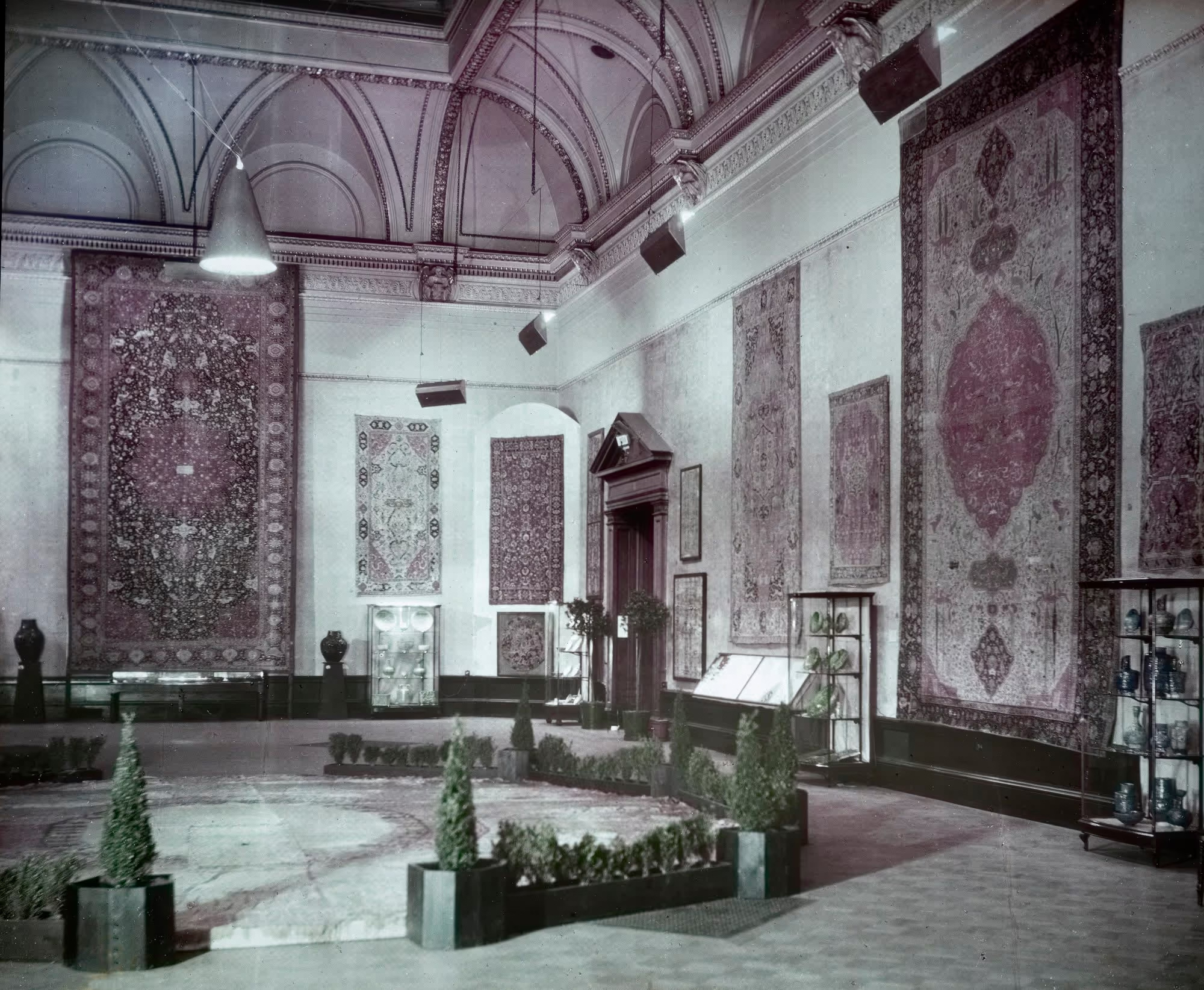
In January 1931, the Royal Academy of Arts opened the doors of Burlington House to the International Exhibition of Persian Art. Under the patronage of King George V and Reza Shah Pahlavi, the exhibition brought together thousands of objects from collections across Europe, Asia and America. More than a quarter of a million visitors came to see it.
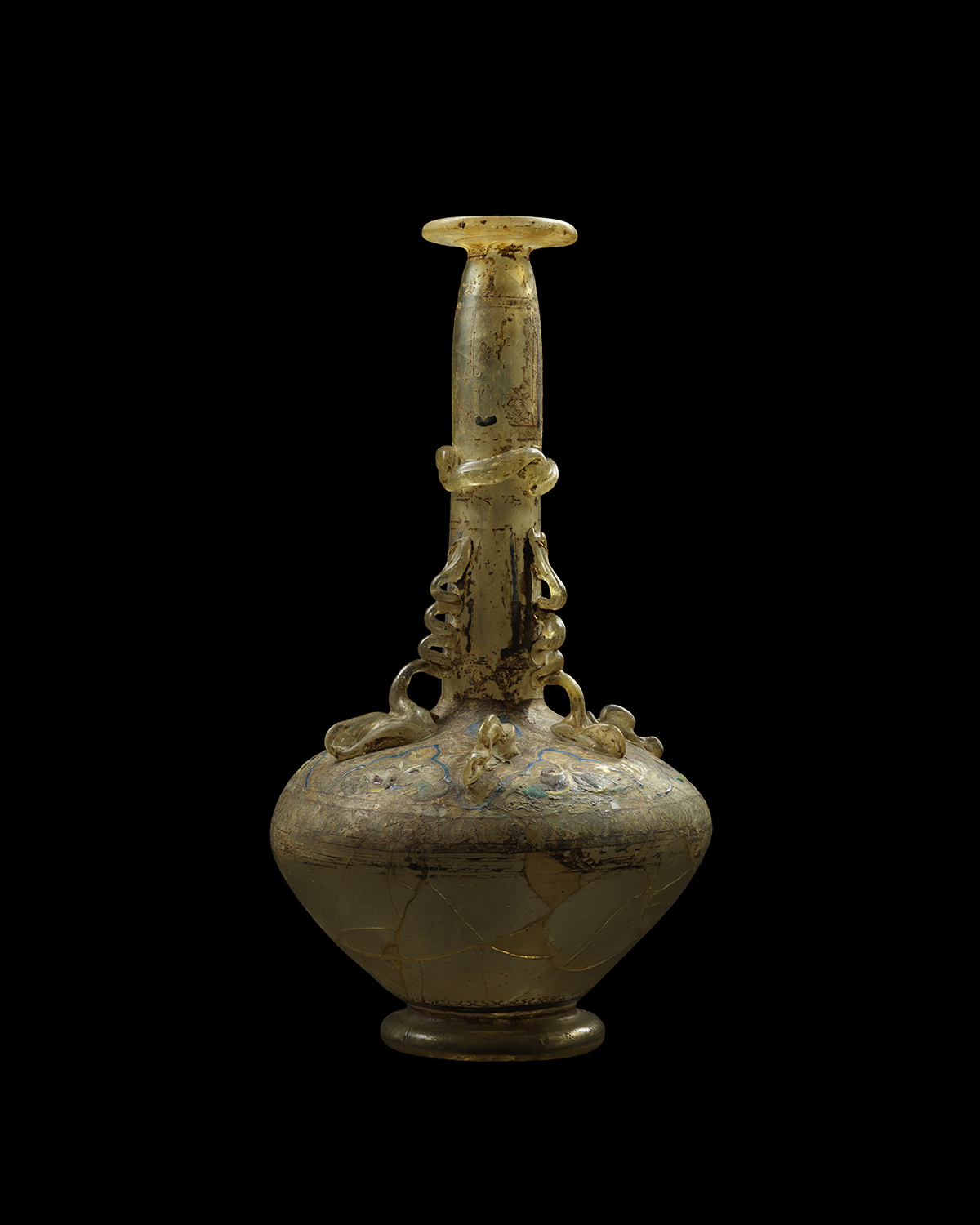
Among the works displayed in Gallery VII was a slender glass bottle, just 28 cm high, with looping threads of applied glass and traces of blue enamel and gilding. Its exhibition number was 291 P.
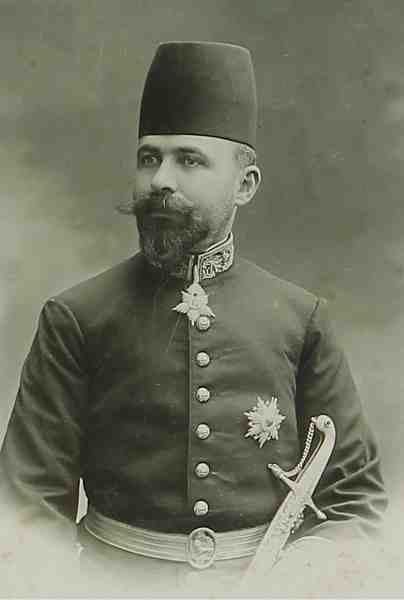
Dikran Khan Kelekian, a celebrated collector and dealer
The lender was Dikran Khan Kelekian, the celebrated Armenian-born collector and dealer whose influence on the formation of major museum collections was immense.
Nearly a century later, the bottle can be identified not only in the Royal Academy catalogue but in a contemporary illustrated article, a monumental history of Persian art and Kelekian’s own handwritten inventories.
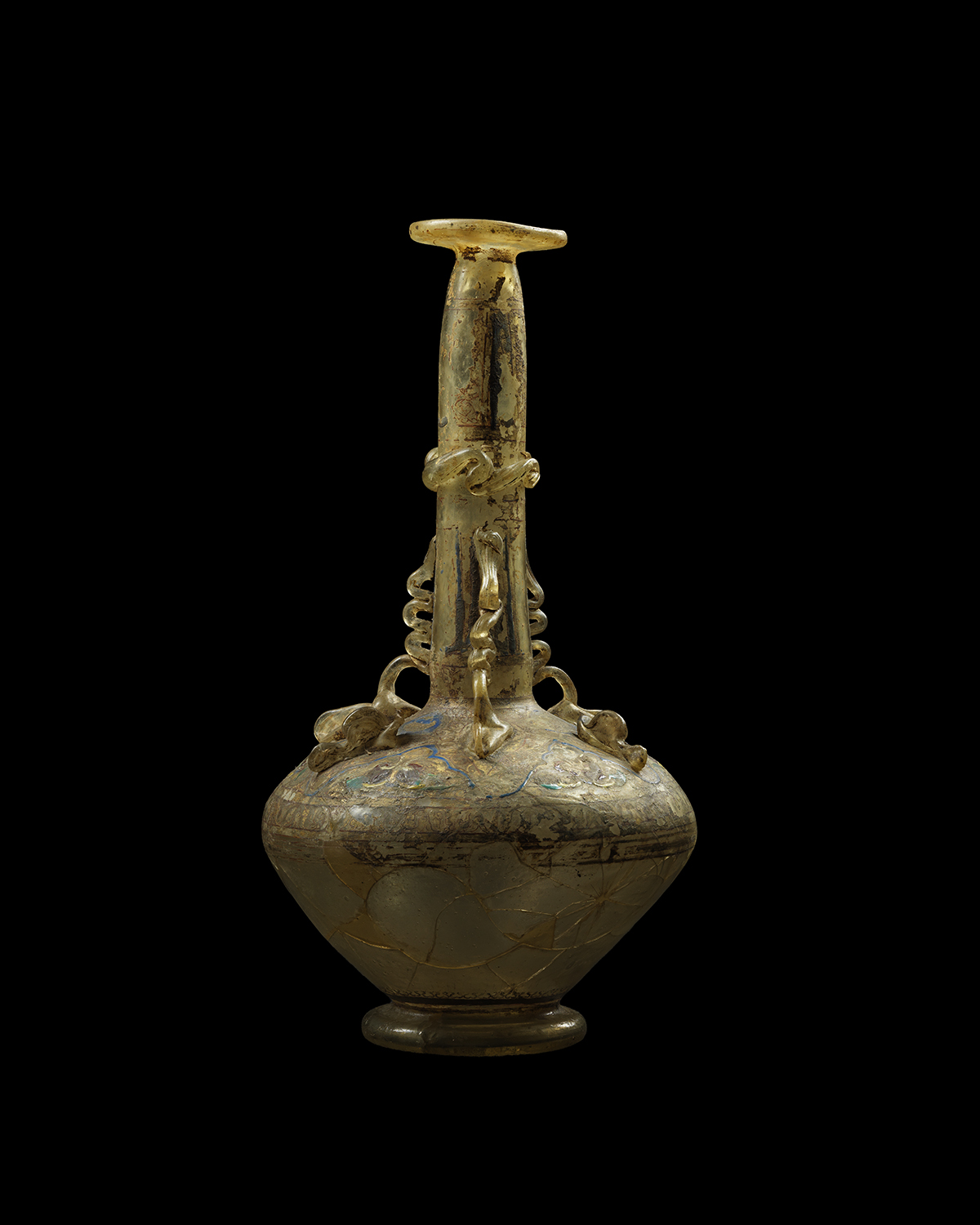
Bottle with Applied Decoration, Mamluk, circa 13th–14th century. Enamelled and gilt glass, height 28 cm. David Aaron.
At the Royal Academy in 1931
Organised under the direction of the American art historian Arthur Upham Pope, the 1931 exhibition was one of the Royal Academy’s most ambitious winter shows. Its galleries presented Persian architecture, ceramics, metalwork, manuscripts and textiles to a vast public audience. In Gallery VII, dedicated to glass, the Kelekian bottle appeared alongside historic vessels lent by museums and private collectors.
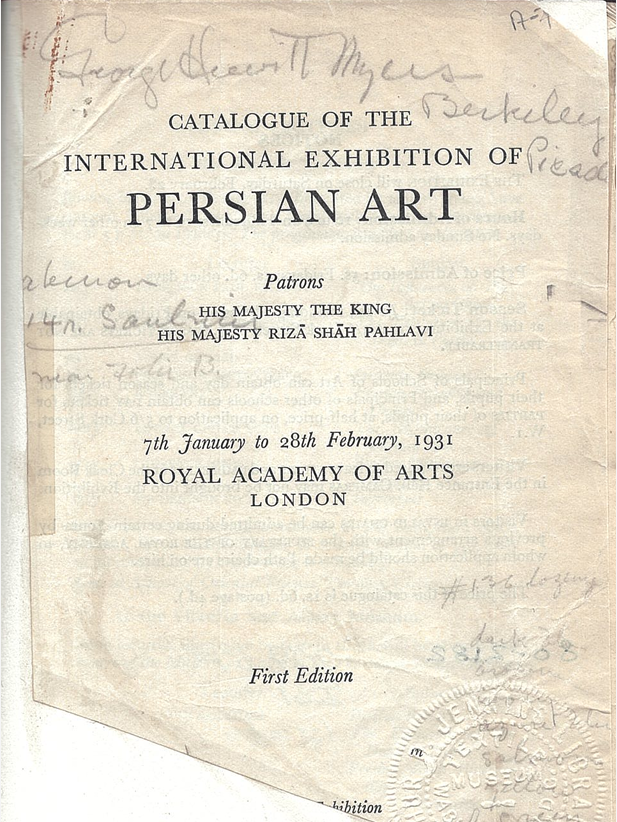
The official catalogue lists no. 291 P as an enamelled glass bottle with figures and birds among scrolling decoration, measuring 28 cm in height, lent by D. K. Kelekian of Paris. The combination of its dimensions, distinctive form and named lender securely identifies the object. It was among seventeen loans from the Kelekian Collection.
 |
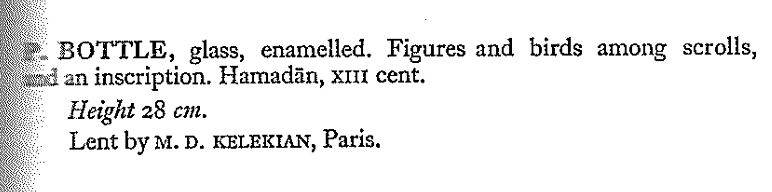 |
The bottle recorded as no. 291 P in Gallery VII of the International Exhibition of Persian Art catalogue, Royal Academy of Arts, 1931, p. 167.
The catalogue classified the bottle as thirteenth-century Persian glass associated with Hamadan. This attribution reflects the nascency of the scholarship in 1931. The bottle is now understood within the traditions of enamelled and gilded glass produced in Mamluk Egypt or Syria, where the decoration of glass reached extraordinary technical sophistication during the thirteenth and fourteenth centuries.
The Kelekian Bottle in the Art Historical Record
The Royal Academy exhibition was only one stage in the bottle’s early scholarly recognition. In 1931, Pope illustrated it as figure V in his article “More about Persian Glass” in Apollo. The caption named the Kelekian Collection and announced its forthcoming inclusion in the Royal Academy exhibition. The image is especially useful today: it captures the bottle’s unmistakable silhouette and applied glass threads more than ninety years ago.
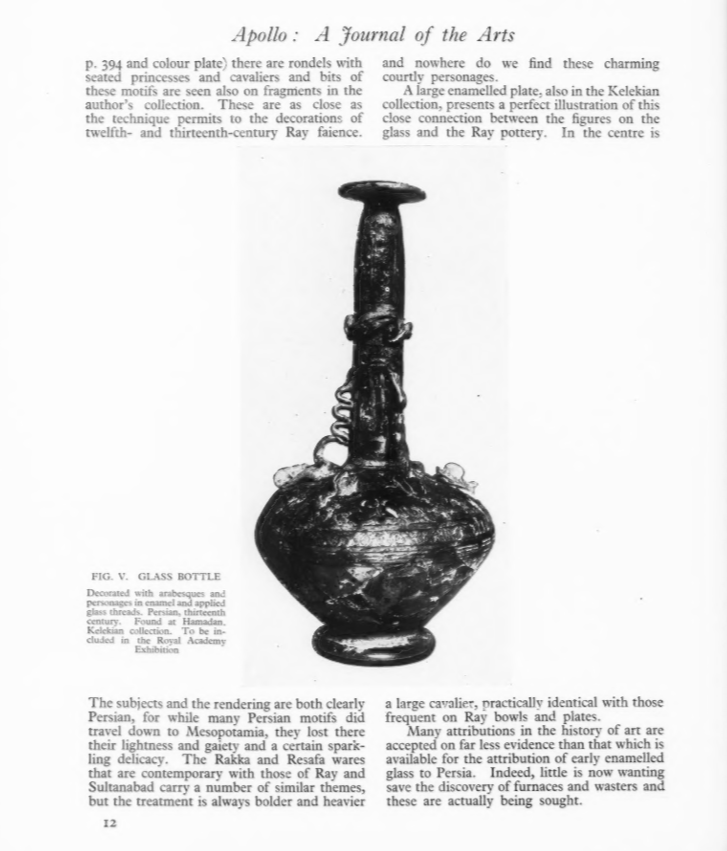
Arthur Upham Pope, “More about Persian Glass”, Apollo, vol. 13, 1931, p. 12, fig. V. The caption identifies the Kelekian bottle and its forthcoming Royal Academy exhibition.
The bottle was illustrated again in 1939 in A Survey of Persian Art from Prehistoric Times to the Present, Pope’s monumental six-volume reference work. Carl Johan Lamm’s chapter on glass discussed the movement of enamelled and gilt vessels from Syria into Persia, and the bottle appeared in the plate volume as no. 1445D. The caption retained its Royal Academy number, “Lon. Ex. No. 291 P”, linking the two publications unequivocally.
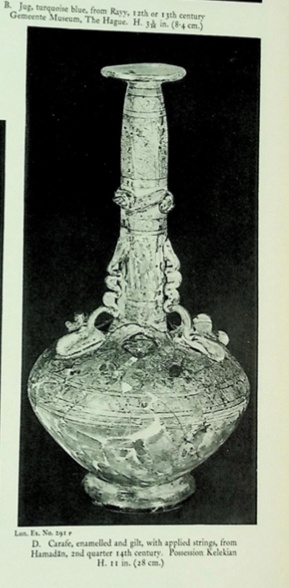
The Kelekian bottle reproduced as plate 1445D in Arthur Upham Pope (ed.), A Survey of Persian Art, vol. VI, 1939. The original caption retains its 1931 exhibition number.
These successive publications chart the development of the study of Islamic glass. They also establish that this particular bottle was recognised and reproduced by some of the period’s most influential scholars.
The Kelekian Collection and Its Paper Trail
The story can be traced still further back. On 8 July 1930, Kelekian acquired the bottle from the collection of Aziz Ezra. The transaction survives in his handwritten inventory, which describes it in French as a painted glass vase from Rhages, under entry no. 4240. The date falls only months before the opening of the Royal Academy exhibition.
Detail of Dikran Kelekian’s 1930 inventory, recording the acquisition from Aziz Ezra on 8 July, entry no. 4240. Original record preserved in the Kelekian archive; duplicate supplied through the Metropolitan Museum of Art.
Kelekian had established his business in the 1890s and became a major intermediary between collectors, museums and the Islamic art market. He advised figures including Henry Walters, George Blumenthal and the Havemeyers, and his collections featured in defining international exhibitions of Islamic art. The Metropolitan Museum of Art has described his influence on the history of collecting as difficult to overstate. He was the subject of a 1944 exhibition at the Durand-Ruel Galleries, Kelekian: As the Artist Sees Him, paying tribute to his relationship with important contemporary artists who took his portrait, including Milton Avery, André Derain and André Masson.
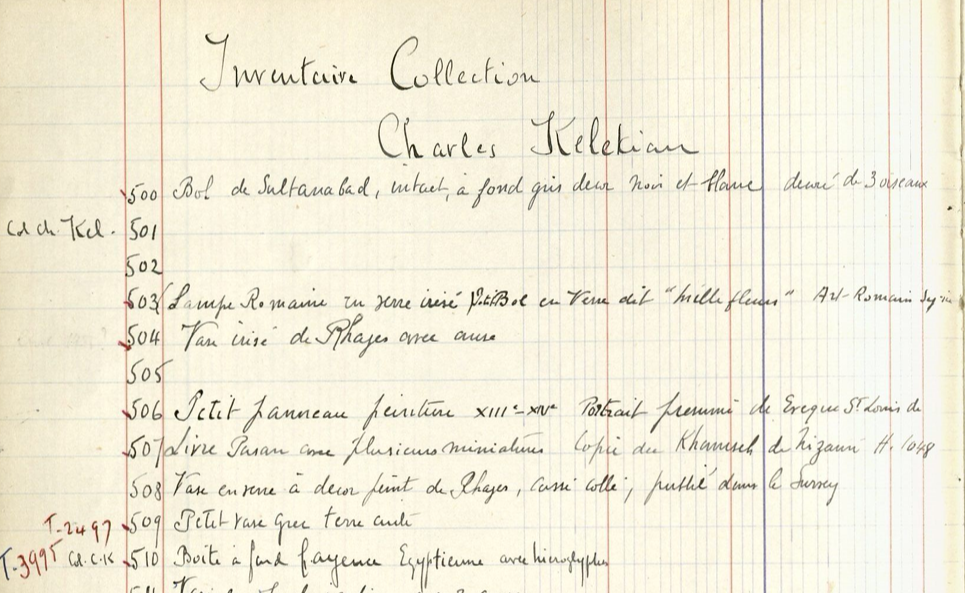
After Dikran’s death in 1951, the bottle passed to his son, Charles Dikran Kelekian. Charles’s inventory records the vessel as no. 508 and explicitly identifies its publication in the Survey. This number also corresponds to an old collection label retained on the bottle. The two generations’ inventory entries, together with the 1931 exhibition catalogue and the 1939 plate, form a particularly persuasive sequence of independent documentary references.
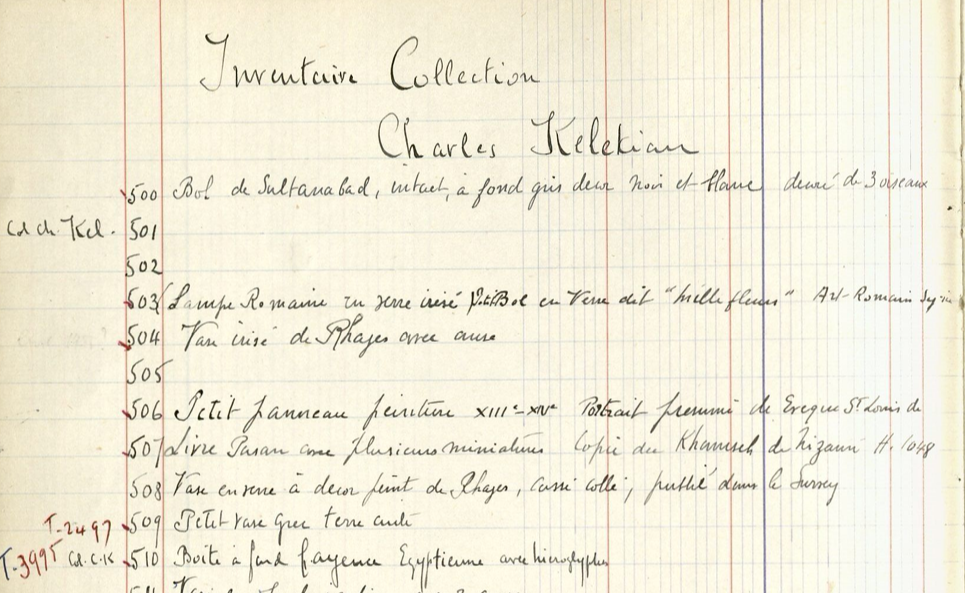
Charles Dikran Kelekian’s inventory, entry no. 508, identifying the bottle and referring to its reproduction in Pope’s Survey of Persian Art.
From the Kelekians to a New York Collection
 |
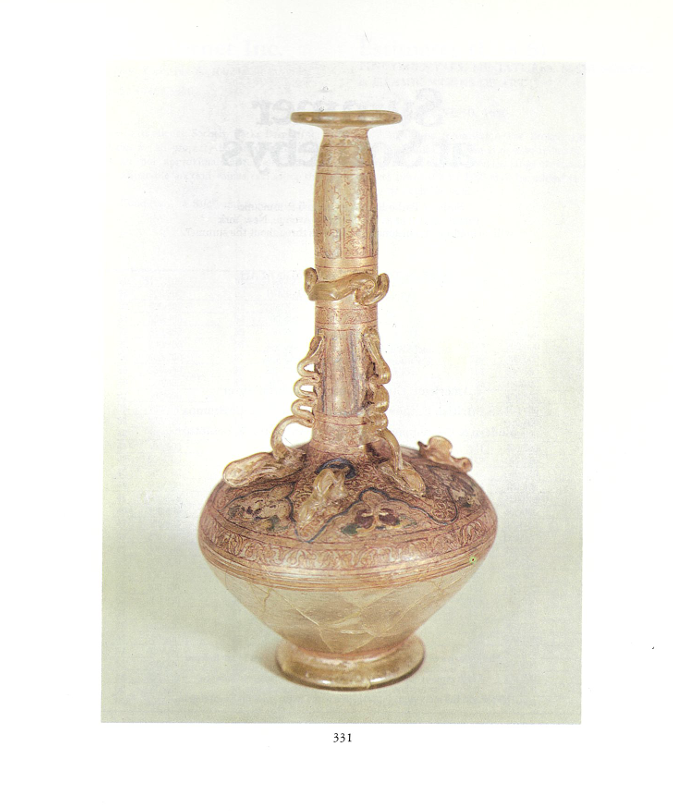 |
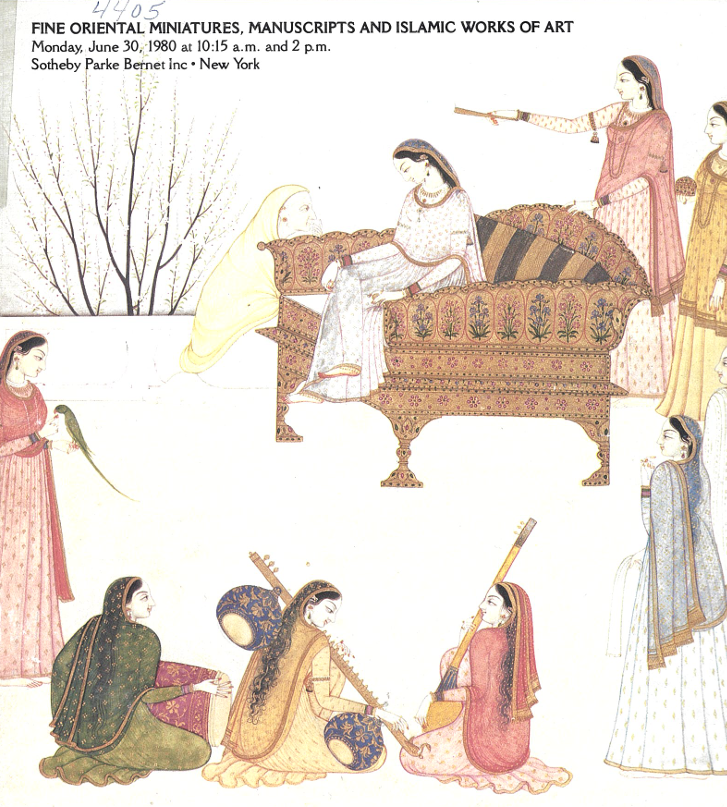
Fine Oriental Miniatures, Manuscripts and Islamic Works of Art, Sotheby Parke Bernet, 30 June 1980, Lot 331.
The glass bottle resurfaced at Sotheby Parke Bernet on 30 June 1980 as lot 331, where it was described as an important enamelled and gilt carafe and its Kelekian provenance and 1939 publication were recorded. It appeared again at Sotheby’s New York on 24–25 November 1987 as lot 4A. This later catalogue cited both its display at Burlington House in 1931 and its reproduction in Pope’s Survey.
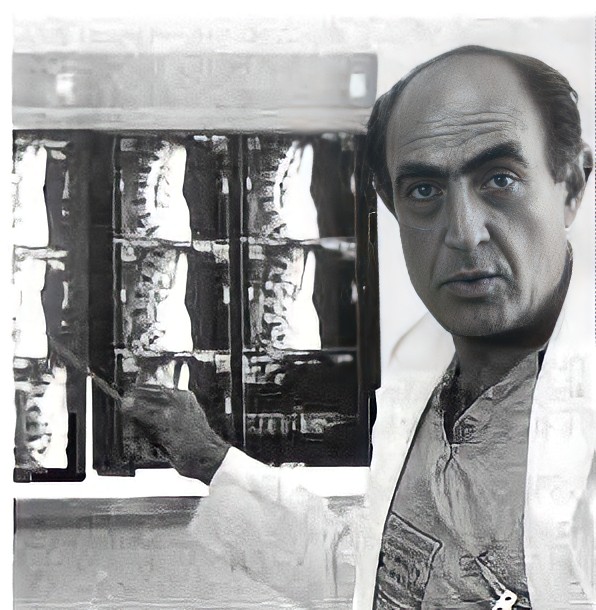
Dr Vallo Benjamin, a distinguished New York neurosurgeon and collector
The bottle subsequently entered the collection of Dr Vallo Benjamin (1934–2021), the distinguished New York neurosurgeon and collector. He likely purchased it in an auction at Sotheby’s New York on 24-25 November, as this was the period in which he was collecting and living in New York.
 |
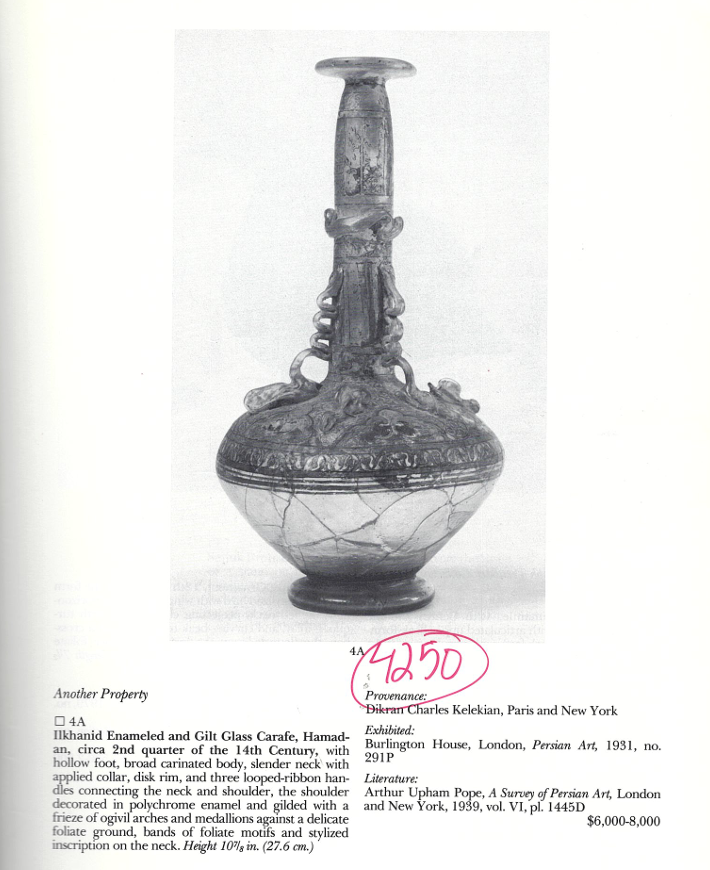 |
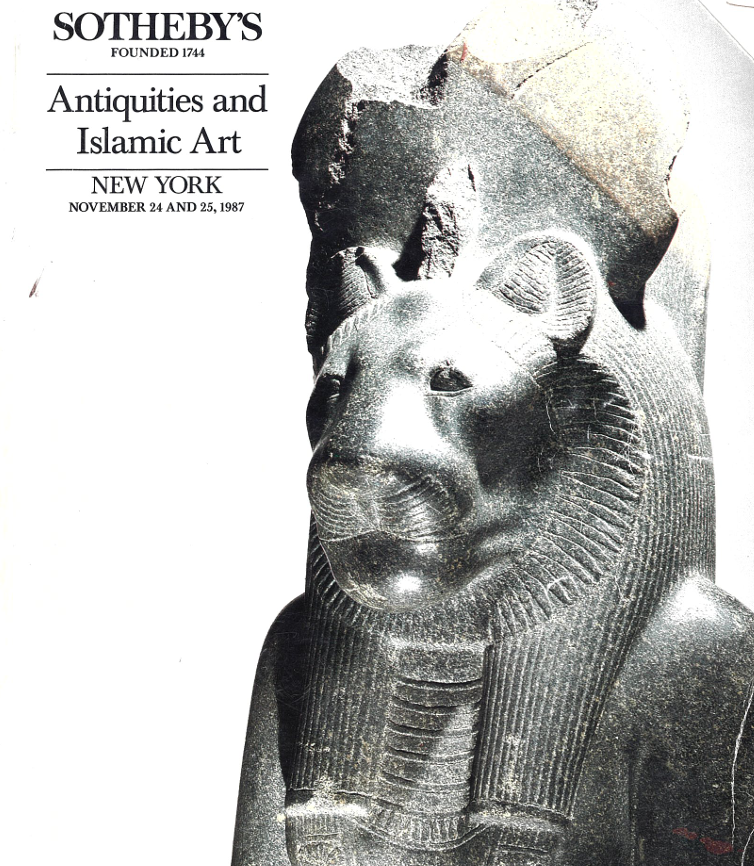
Antiquities and Islamic Art, Sotheby’s, New York, 24-25 November 1987, Lot 4A.
Benjamin commissioned architect Paul Rudolph to design an apartment on East 57th Street in the late 1970s, conceived in part to display his art and antiquities.
The bottle was later consigned from Benjamin’s estate to Nadeau’s New Year’s Day sale in Connecticut on 1 January 2023 as lot 518.
The physical bottle preserves the technical accomplishment of medieval Mamluk glassmakers. Its accompanying archive preserves something equally compelling for collectors: the history of how it was seen, studied and valued across almost a century of art history.
The stele will be presented by David Aaron at Frieze Masters Abu Dhabi, a curated section of the inaugural edition of the fair in November 2026.
Exhibition and Selected Literature
Exhibited: International Exhibition of Persian Art, Royal Academy of Arts, London, 1931, Gallery VII, no. 291 P.
Arthur Upham Pope, “More about Persian Glass”, Apollo, vol. 13, 1931, p. 12, fig. V.
Carl Johan Lamm, “Glass and Hard Stone Vessels”, in Arthur Upham Pope (ed.), A Survey of Persian Art from Prehistoric Times to the Present, 1939, vol. III, pp. 2599–2600 and vol. VI, pl. 1445D.
Sotheby Parke Bernet, Fine Oriental Miniatures, Manuscripts and Islamic Works of Art, 30 June 1980, lot 331; Sotheby’s New York, Antiquities and Islamic Art, 24–25 November 1987, lot 4A; Nadeau’s, Annual New Year’s Day Auction, 1 January 2023, lot 518.


 Where to find us?
 Newsletter
 Instagram
 Linked in
 Email