Journal
Published 5/8/2025
Published 5/6/2025
Published 5/7/2025
Published 5/8/2025
Published 5/16/2025
Published 5/27/2025
Published 6/25/2025
Published 7/18/2025
Published 10/21/2025
Published 12/19/2025
Published 2/2/2026
Published 2/5/2026
Published 2/11/2026
Published 2/16/2026
Published 5/30/2025
Published 2/25/2026
Published 3/2/2026
Published 10/3/2022
Published 3/23/2026
Published 3/25/2026
Published 4/9/2026
Published 4/13/2026
Published 5/4/2020
Published 4/23/2026
Published 4/29/2026
Published 5/13/2026
Published 5/19/2026
Published 5/26/2026
Published 11/1/2024
Published 10/12/2022
Published 6/12/2026
Published 10/1/2024
Published 6/24/2026
Published 7/3/2026
Published 11/1/2023
Published 7/17/2026
Published 7/20/2026
Published 8/5/2025
Published 11/17/2022
Published 8/6/2026
Published 11/6/2025
Published 11/7/2024
Published 11/5/2024
Published 11/3/2024
Published 8/6/2020
Published 8/6/2020
Published 8/6/2026
Published 8/6/2026
Published 8/6/2026
Published 8/6/2026
Published 1/4/2026
Published 9/5/2024
Published 9/7/2021
Published 1/1/2025
Published 2/2/2025
Published 8/17/2026
Published 8/24/2026
Published 9/1/2026
Published 8/20/2026
Published 9/9/2026
TEFAF New York highlight: A Bronze Age masterpiece on show
Published 07/05/2026

Dating to approximately 1400–1100 B.C., this bracelet was meticulously worked from a single rectangular sheet of hammered gold. It features a wide penannular (open-ended) design with a convex outer surface and a concave interior.
In the Bronze Age, gold was a highly coveted material, valued for its rarity, malleability, and eternal lustre. Ownership of such a substantial piece would have served as a clear indicator of the high social status and prestige of its wearer. While metalworking was well-established in Britain by this period, surviving examples in gold are relatively scarce; only around 500 gold objects from Bronze Age Britain are currently known in collections, making this find a rare addition to the archaeological record.
Discovery and the Portable Antiquities Scheme
The bracelet’s modern history began on 28 April 2019, when it was discovered by metal detectorist Ian Tucker in Melcombe Horsey, Dorset. Buried just four inches underground, the bracelet was found in a distorted, spiral-like state - a common occurrence for buried precious metals - before being professionally reshaped to its original form.

Detectorist Ian Tucker with the bracelet, 28 April 2019
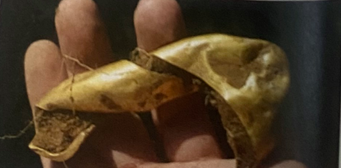
The bracelet twisted into a spiral
Since its inception, 1.4 million objects have been registered with the Scheme, all of which are available to view via their public online database.
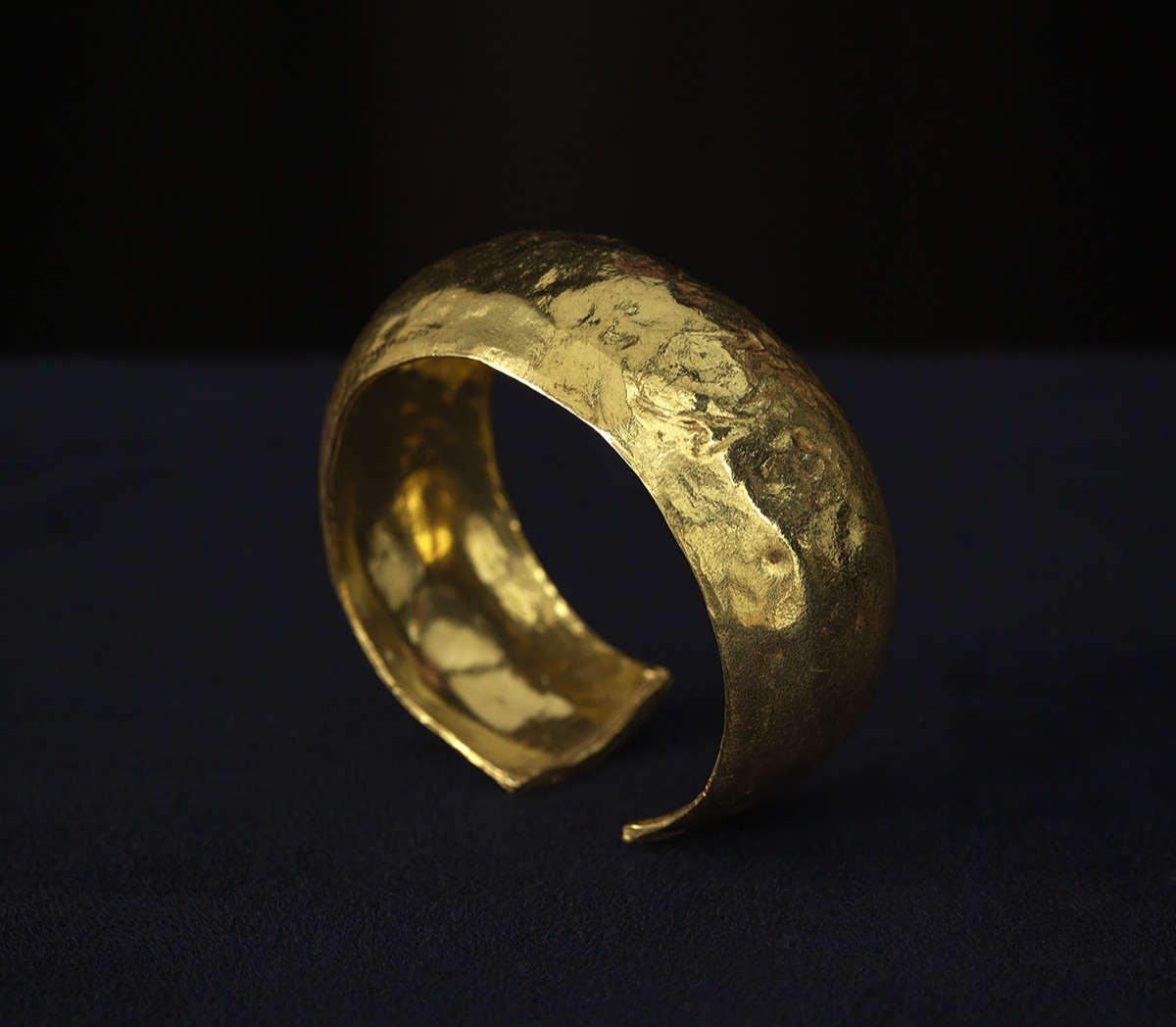 Gold Bracelet, c. 1400-1100 B.C., Middle to Late Bronze Age, Britain. Image: David Brunetti
Further British discoveries at David Aaron
David Aaron has an established record of handling British finds registered with the Portable Antiquities Scheme. One of the most notable examples is the Ryedale Bronze Hoard, which David Aaron sold to the Yorkshire Museum in 2020.
Discovered in North Yorkshire by metal detectorists, this remarkable Romano-British assemblage includes: a finely modelled bronze bust of the Emperor Marcus Aurelius; a horse and rider statuette, probably a provincial representation of the war god Mars; a horse-head handle from a key or ritual knife; and a plumb bob, an ancient surveying tool used to establish vertical reference lines.
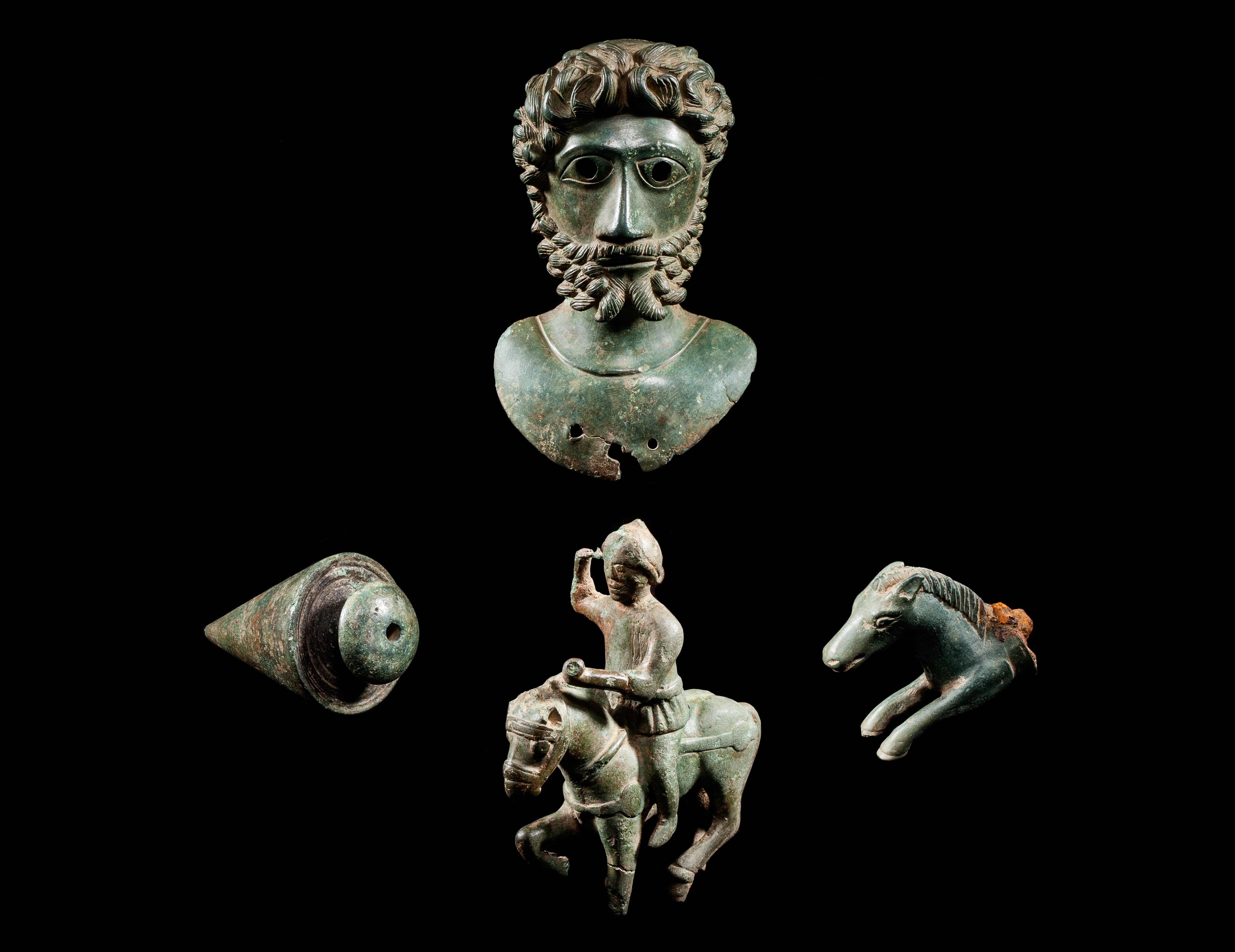 The Ryedale Roman Bronzes, c. 43-410 AD, Romano-British. Image: David Brunetti
The Ryedale Bronzes are considered of "national significance", representing the northernmost Roman finds of their kind in Britain. The collaboration between David Aaron and the Yorkshire Museum ensured that these treasures remained in the region where they were discovered, where they are now on public display to tell the story of rural Roman Yorkshire.
Further discoveries that have passed through David Aaron’s hands via the Scheme include a Bronze Age British Gold Bracelet (DORB3C8E0), a Roman figure of Neptune (OXON-C146AD), and a Bronze Age shield (SF-E0D9C8).
The Bronze Age gold bracelet, a piece that embodies both the ancient artistry of Britain and the modern commitment to preserving its archaeological legacy, will be displayed at David Aaron’s stand at TEFAF New York from 15-19 May.



 Where to find us?
 Newsletter
 Instagram
 Linked in
 Email
Email