Journal
Published 5/8/2025
Published 5/6/2025
Published 5/7/2025
Published 5/8/2025
Published 5/16/2025
Published 5/27/2025
Published 6/25/2025
Published 7/18/2025
Published 10/21/2025
Published 12/19/2025
Published 2/2/2026
Published 2/5/2026
Published 2/11/2026
Published 2/16/2026
Published 5/30/2025
Published 2/25/2026
Published 3/2/2026
Published 10/3/2022
Published 3/23/2026
Published 3/25/2026
Published 4/9/2026
Published 4/13/2026
Published 5/4/2020
Published 4/23/2026
Published 4/29/2026
Published 5/7/2026
Published 5/13/2026
Published 5/19/2026
Published 5/26/2026
Published 11/1/2024
Published 10/12/2022
Published 6/12/2026
Published 10/1/2024
Published 6/24/2026
Published 7/3/2026
Published 11/1/2023
Published 7/17/2026
Published 7/20/2026
Published 8/5/2025
Published 11/17/2022
Published 8/6/2026
Published 11/6/2025
Published 11/7/2024
Published 11/5/2024
Published 11/3/2024
Published 8/6/2020
Published 8/6/2020
Published 8/6/2026
Published 8/6/2026
Published 8/6/2026
Published 8/6/2026
Published 1/4/2026
Published 9/5/2024
Published 9/7/2021
Published 1/1/2025
Published 2/2/2025
Published 8/17/2026
Published 8/24/2026
Published 9/1/2026
Published 8/20/2026
Frieze feature: 30-million-year-old Sabre cat skull
Published 09/09/2026

David Aaron has a track record of exhibiting important pieces of natural history at Frieze Masters, including being one of the first exhibitors to present a complete dinosaur fossil at the fair, breaking down barriers for the type of artefacts presented at the major art event. In 2022, the gallery presented a near complete Camptosaurus fossil, from the Late Jurassic period, 155–145 million years ago, which was acquired by a major museum in the Middle East.
One of the highlight pieces from the David Aaron exhibit in 2026 will be the skull of a member of the genus Dinictus, of the Nimravidae species - commonly known as the Sabre Cat - from the Oligocene period, circa 33.7 to 23.8 million years ago.
This particular specimen was discovered and exhumed in the White River Badlands, South Dakota, U.S.A.. Located primarily in South Dakota but also extending into Nebraska and Wyoming, the White River Badlands are considered to be the birthplace of vertebrate paleontology in the American West.
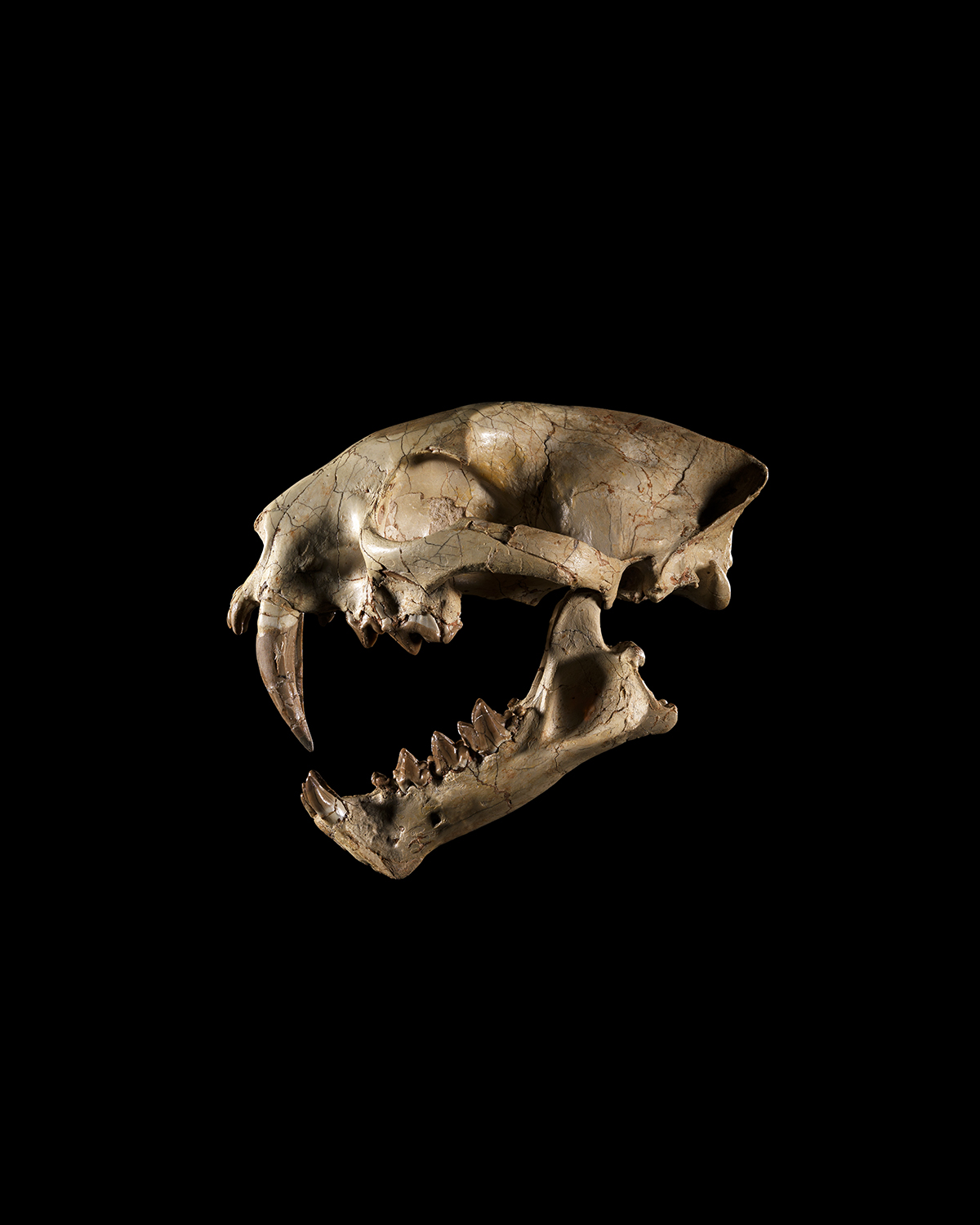
Image: Sabre Cat ‘Nimravidae’ Skull, Oligocene, circa 33.7 to 23.8 million years ago. Image: David Brunetti
Sabre Cats
Sabre Cats occupied a crucial niche in the carnivorous mammalian ecosystem during the Eocene (55.8 million to 33.9 million years ago), Oligocene (33.9 million to 23 million years ago) and Miocene (23 million to 5.3 million years ago) epochs. Fossils of the species can be found in areas of North America and Eurasia, and it is believed their main habitats were vast ranging forests and woodlands.
Visually the skeleton structure suggests that they would have looked like a large cat, although there are important differences between the Nimravidae family and the Felidae (Feline) family to which modern cats belong. Members of the Dinictis family (like Hoplophoneus, Nimravid, and Pogonodon) all belonged to the order Carnivora.
Nimravidae were hypercarnivorous, with meat comprising their entire diet. The skull of Nimravidae, predominantly characterised by its elongated, sabre-like maxillary canines, exhibits unique cranial and dental adaptations. Using their characteristic long, sharp teeth, Nimravidae would hunt for their food, and some (like Hoplophoneus) were likely solitary ambush predators.
Like Felids, the nimravids exhibit diverse size and bone structures, meaning that some were the size of a large house cat, while other variations were similar to modern day lions and tigers. Their large size enabled them to hunt large prey – sheep-sized oreodonts, small horses, and small rhinocerotids were most likely all targets of the Sabre Cat.
The robust nature of the limb bones suggests powerful musculature, indicative of a formidable predatory lifestyle. Cranial analysis shows a pronounced sagittal crest (the ridge of bone running lengthwise along the midline of the top of the skull), possibly serving as an attachment site for strong jaw muscles, emphasising its specialised biting capabilities.
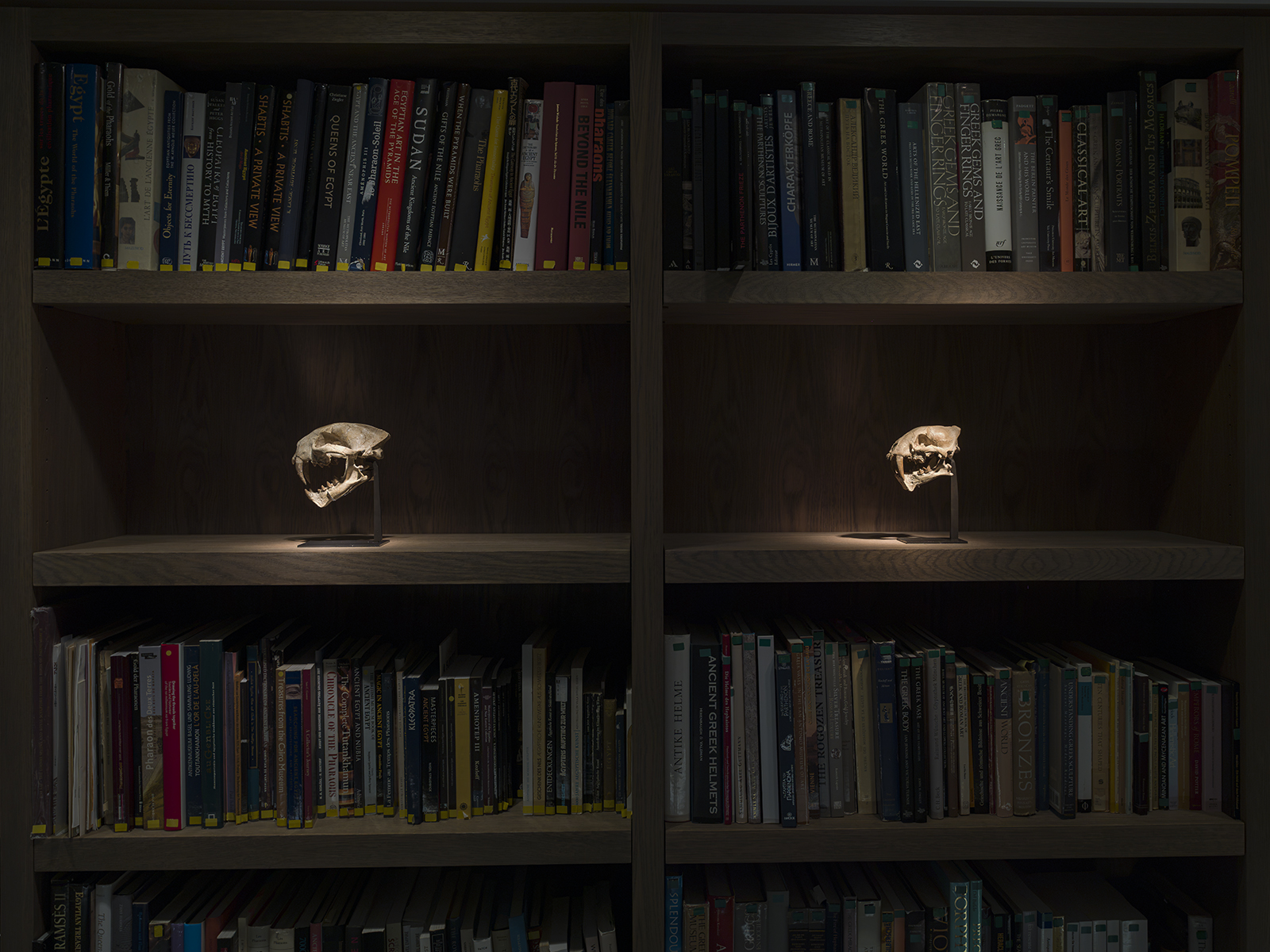
Image: Sabre Cat ‘Nimravidae’ Skulls, Image: David Brunetti
These pieces will be displayed at David Aaron's stand, number C02, from 14 – 18 October at Frieze Masters.



 Where to find us?
 Newsletter
 Instagram
 Linked in
 Email
Email