Journal
Published 5/8/2025
Published 5/6/2025
Published 5/7/2025
Published 5/8/2025
Published 5/16/2025
Published 5/27/2025
Published 6/25/2025
Published 7/18/2025
Published 10/21/2025
Published 12/19/2025
Published 2/2/2026
Published 2/5/2026
Published 2/11/2026
Published 2/16/2026
Published 5/30/2025
Published 2/25/2026
Published 10/3/2022
Published 3/23/2026
Published 3/25/2026
Published 4/9/2026
Published 4/13/2026
Published 5/4/2020
Published 4/23/2026
Published 4/29/2026
Published 5/7/2026
Published 5/13/2026
Published 5/19/2026
Published 5/26/2026
Published 11/1/2024
Published 10/12/2022
Published 6/12/2026
Published 10/1/2024
Published 6/24/2026
Published 7/3/2026
Published 11/1/2023
Published 7/17/2026
Published 7/20/2026
Published 8/5/2025
Published 11/17/2022
Published 8/6/2026
Published 11/6/2025
Published 11/7/2024
Published 11/5/2024
Published 11/3/2024
Published 8/6/2020
Published 8/6/2020
Published 8/6/2026
Published 8/6/2026
Published 8/6/2026
Published 8/6/2026
Published 1/4/2026
Published 9/5/2024
Published 9/7/2021
Published 1/1/2025
Published 2/2/2025
Published 8/17/2026
Published 8/24/2026
Published 9/1/2026
Published 8/20/2026
Published 9/9/2026
TEFAF Maastricht highlight: Roman Torso of a Youth discovered in Italian archive illuminates revered dealer’s pioneering collection documentation
Published 02/03/2026

The marble statue is presented in contrapposto position, with softly suggested muscles and slender arms and legs (partial), indicating youth. Statues such as this draw inspiration from works attributed to the fourth-century B.C. Athenian sculptor Praxiteles who was known for his languid, youthful, and sensuous sculptures of male figures. Praxiteles famously deployed contrapposto posture, with one taut leg bearing the body’s weight and the other relaxed and bent at the knee, producing a statuesque curve through the figure’s torso and a tilt to the hips and shoulders.
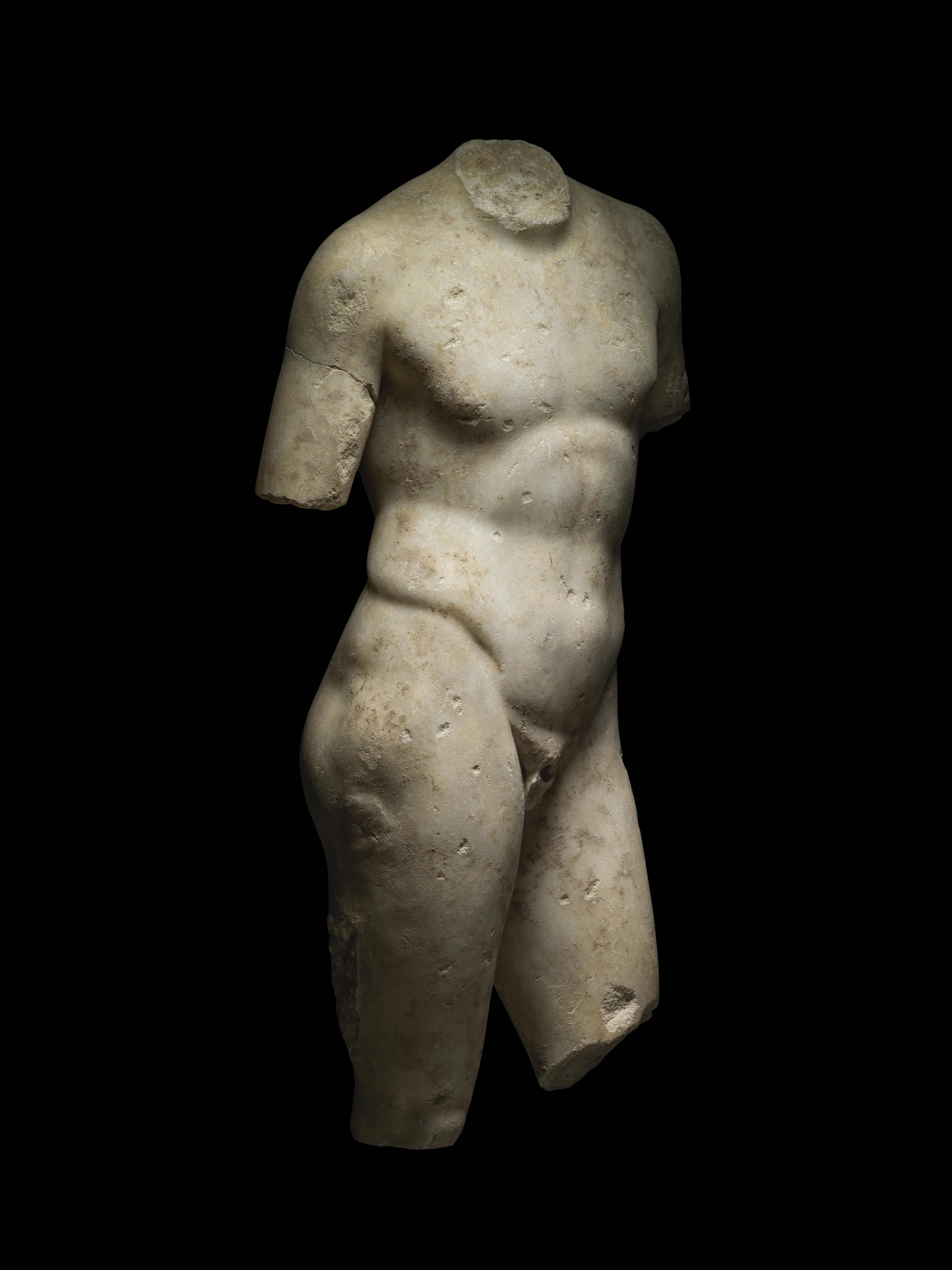
Roman Torso of a Youth, 1st-2nd century A.D. Image courtesy David Aaron
Stefano Bardini: Dealer and restorer
While researching the history of the sculpture, David Aaron uncovered the Roman Torso of a Youth in historic images dating back to 1898 in gallerist Stefano Bardini’s archive.
Bardini (1836-1922) was born in Pieve Santo, near Arezzo, on 13 May 1836 to a petit bourgeois family. In 1854, he moved to Florence to study painting under Giuseppe Bezzuoli at the Accademia di Belle Arti Firenze. Despite success at the academy’s art competitions in 1855 and 1856, Bardini struggled to sustain a career as an artist. Instead, he left Florence in 1866 to join the last battle of the Garibaldini, fighting for Italy’s independence. During this period, he visited Rome and met famous collectors of antiquities and jewels, the Castellani brothers. Some researchers have speculated that the Castellani’s became Bardini’s mentors as he transitioned into his career as an art dealer and restorer.
By the early 1870s, Bardini was well known as a restorer, and began to collect works of art, initially to use as models for his painting. Bardini continued to build his business through acquiring discarded or undervalued monuments, objects and architectural fragments in the decades following the Risorgimento. He would then restore the pieces to increase their market value, generally taking photographs recording the pieces both before and after his intervention.
Bardini acquired works from the Giampietro Campana collection and oversaw the dispersal of a major part of the Borghese collection in Rome. He sold to preeminent collectors of the period, including the Barons Rothschild, and the Jacquemart-André collection. Through Wilhelm von Bode, Bardini also supplied pieces to the Kaiser Friedrich Museum established in Berlin at the turn of the twentieth century, including items from the Strozzi Palace.
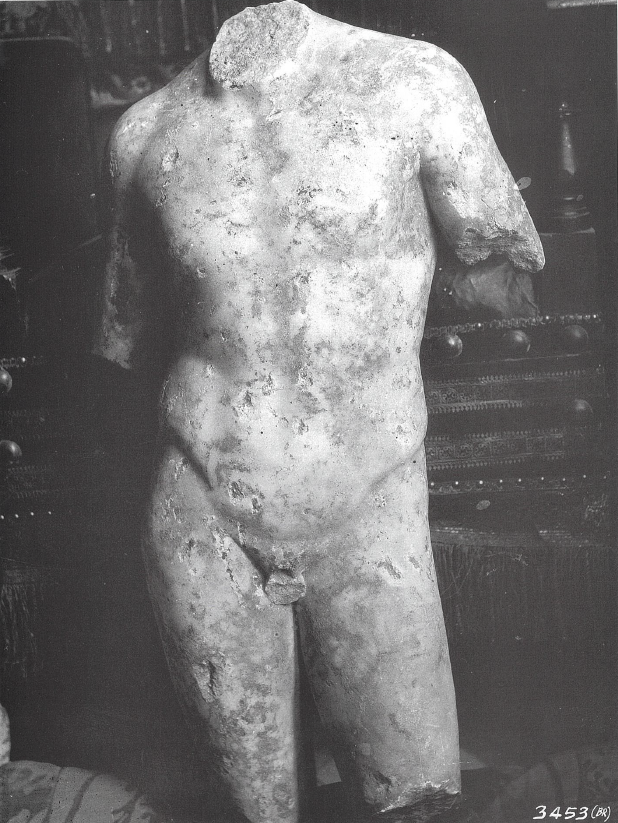
An archival image of the Roman Torso of a Youth
Stefano Bardini: An early adopter of photographic technology
Bardini used the images of his collection as a tool to advertise his business to clients, both in correspondence and in illustrated catalogues for sales. He dispersed his works through large sales, notably at Christie’s in 1899 and 1902, and at the American Art Galleries in 1918.
Museo Stefano Bardini at Piazza Mozzi
Bardini’s success led to the dealer purchasing the Piazza Mozzi in 1881 to display his collection of over 30,000 artworks. The walls of the palace were painted in a bright blue hue, which came to be known as ‘Bardini Blue’ and inspired many imitations.
Upon his death in 1922, Bardini left everything in the piazza to the Municipality of Florence, and his legacy lives on today through the municipal museum established in his home in 1925, named the Museo Stefano Bardini.
The Roman Torso of a Youth will be on display in David Aaron’s TEFAF Maastricht stand, number 804, from 14 – 19 March 2026. Discover more TEFAF Maastricht highlight pieces here: www.davidaaron.com/event-details/50365
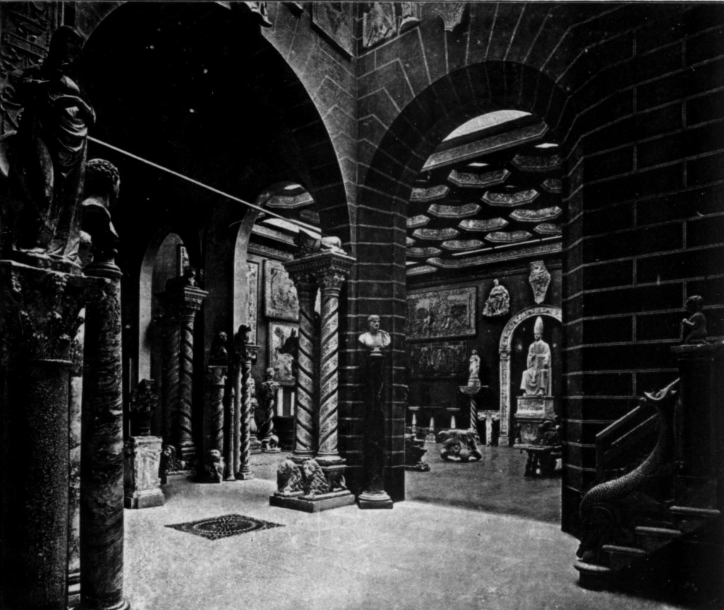
Entrance Hall of Piazza Mozzi, The Art Journal (1893), p. 10.
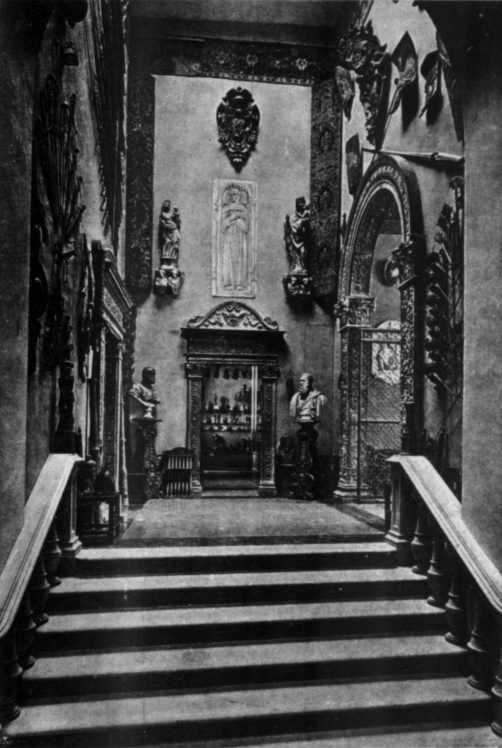
Staircase of Piazza Mozzi, The Art Journal (1893), p. 11.



 Where to find us?
 Newsletter
 Instagram
 Linked in
 Email
Email