Journal
Published 5/8/2025
Published 5/6/2025
Published 5/7/2025
Published 5/8/2025
Published 5/16/2025
Published 5/27/2025
Published 6/25/2025
Published 7/18/2025
Published 10/21/2025
Published 12/19/2025
Published 2/2/2026
Published 2/5/2026
Published 2/11/2026
Published 2/16/2026
Published 5/30/2025
Published 2/25/2026
Published 3/2/2026
Published 10/3/2022
Published 3/23/2026
Published 3/25/2026
Published 4/9/2026
Published 4/13/2026
Published 5/4/2020
Published 4/23/2026
Published 4/29/2026
Published 5/7/2026
Published 5/13/2026
Published 5/19/2026
Published 5/26/2026
Published 11/1/2024
Published 10/12/2022
Published 6/12/2026
Published 10/1/2024
Published 6/24/2026
Published 11/1/2023
Published 7/17/2026
Published 7/20/2026
Published 8/5/2025
Published 11/17/2022
Published 8/6/2026
Published 11/6/2025
Published 11/7/2024
Published 11/5/2024
Published 11/3/2024
Published 8/6/2020
Published 8/6/2020
Published 8/6/2026
Published 8/6/2026
Published 8/6/2026
Published 8/6/2026
Published 1/4/2026
Published 9/5/2024
Published 9/7/2021
Published 1/1/2025
Published 2/2/2025
Published 8/17/2026
Published 8/24/2026
Published 9/1/2026
Published 8/20/2026
Published 9/9/2026
A two-thousand-year-old Egyptian cat’s journey through respected French collections to David Aaron
Published 03/07/2026

Divine artistry in bronze
This statuette depicts the cat in a classic, regal posture: seated upright with its front paws aligned with its rear legs, and its tail elegantly curled around the right-hand side of its body.
What elevates this piece is its remarkable naturalism and musculature. Anatomical details are articulated through the meticulously carved lines of the shoulder blades along the back. Angular cheekbones frame the jaw and nose, accented by clear, incised lines. The deeply recessed eyes were likely once inlaid with semiprecious stones or glass, and the large, attentive ears are pierced with tiny holes, likely previously holding actual earrings.
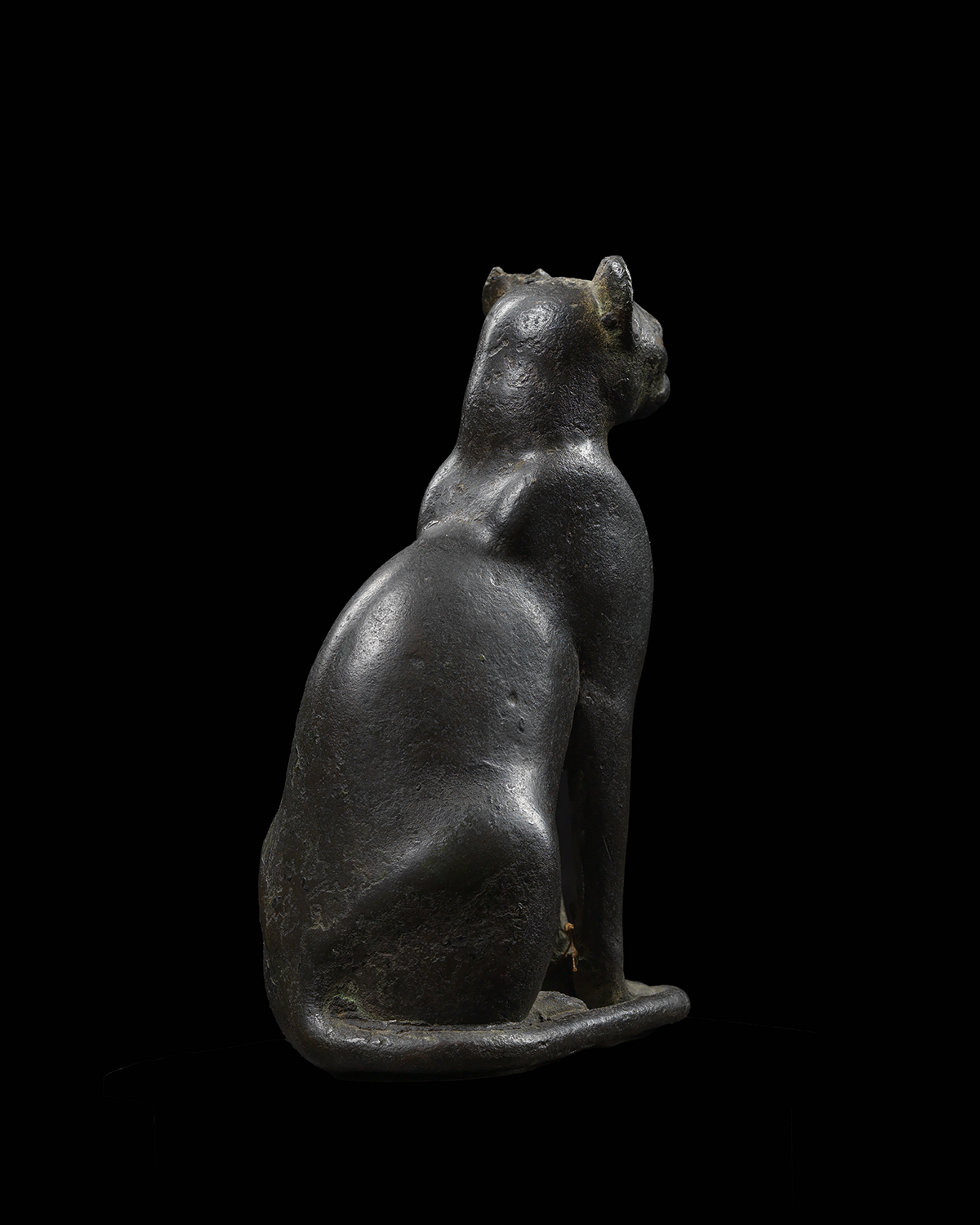
Statuette of the Cat Bastet, 664-332 BC, Late Period, probably Saite Period (664-526 BC), Egypt. Image: David Brunetti
Cats were the sacred animal of the goddess Bastet, a protector of Lower Egypt and defender of the pharaoh and the sun-god Ra; she is often represented battling Ra’s enemy, the snake Apep. Bastet was a goddess of protection against contagious diseases and evil spirits, and a goddess of pregnancy and childbirth.
Many bronze cat statuettes were dedicated to Bastet in temples throughout Egypt, centring in the city of Bubastis in the Nile delta. Bubastis was home to a large population of cats who were cared for by Bastet’s devotees and buried in the temple precincts when they died. Hollow statuettes, such as this one, may have held mummified cats that were placed in Bastet’s temples as votive offerings.
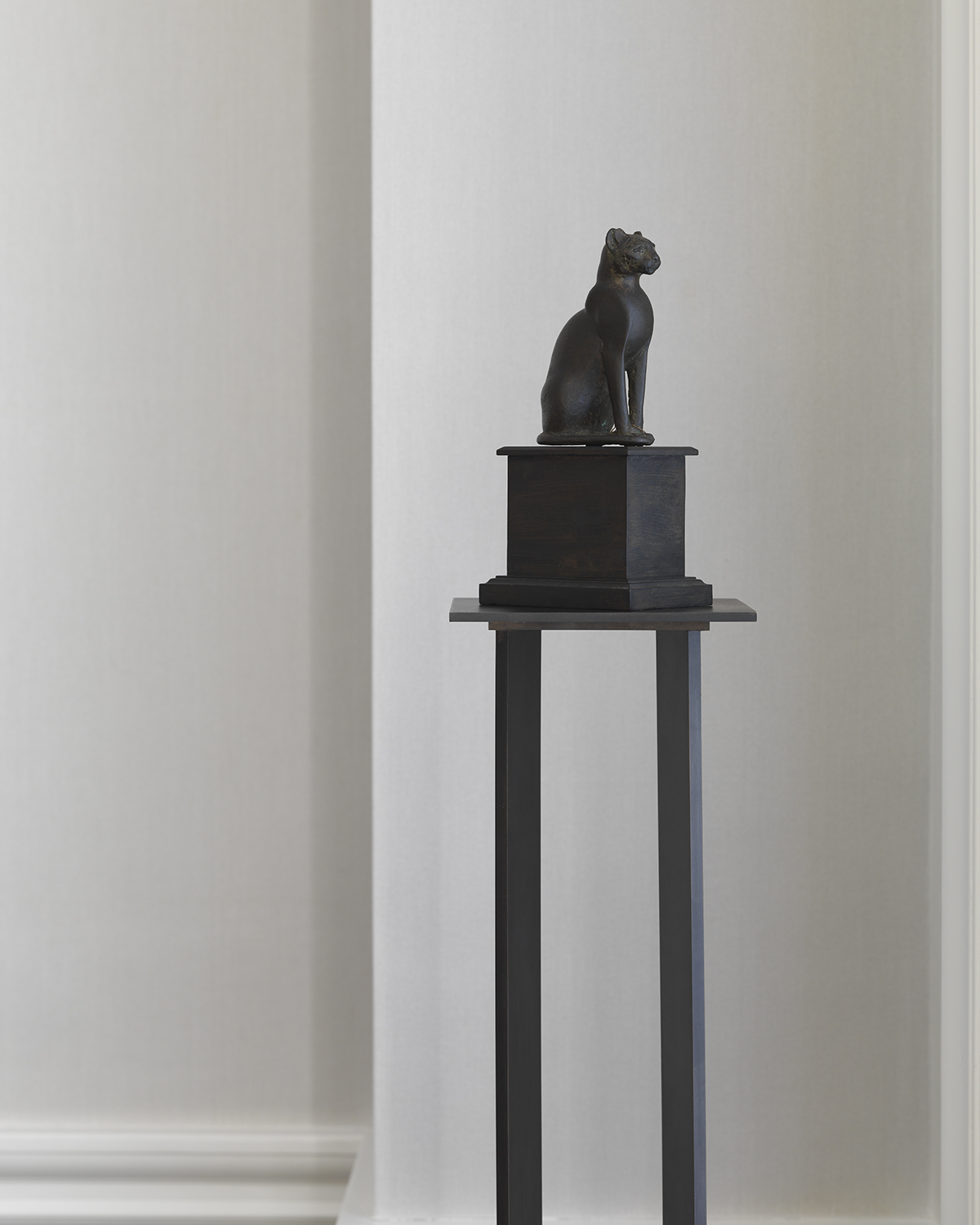
Statuette of the Cat Bastet, 664-332 B.C., Late Period, probably Saite Period (664-526 B.C.), Egypt. Image: David Brunetti
A storied chain of provenance
While the quality of the bronze speaks for itself, its journey through modern history is equally spectacular. The statuette boasts a well-documented provenance featuring prominent French collectors from the last two centuries.
The Adolphe Raifé Collection
The cat’s modern history begins in the heart of Paris with Adolphe Raifé (1802–1860), an artist, linguist, and intrepid amateur archaeologist. Raifé travelled extensively through the Near East, Rome, and Egypt in the 1820s, building a sweeping art collection which he housed in his townhouse on 9 rue de Lille. To this day, the statuette still bears its original handwritten paper collection label reading ‘Raifé’. Following his death, the collection was dispersed in a landmark 1867 antiquities auction at the Hôtel Drouot, where institutions including the Louvre and the British Museum acquired pieces.
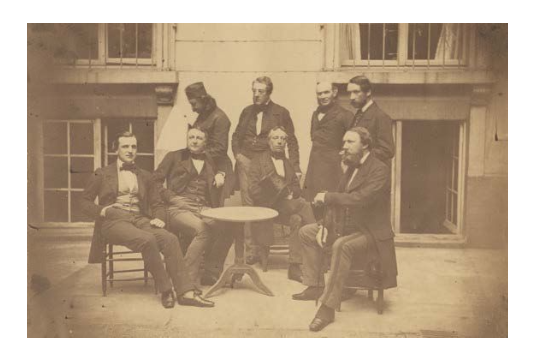
Adolphe Raifé (1802-1860), standing on the left, with some friends at his home at 9 rue de Lille, Paris. May 1859.
The Julien Bessonneau Collection
The cat was subsequently acquired by Julien Bessonneau (1842–1916) of Angers, France. Bessonneau was a titan of French industry, a local politician and a passionate connoisseur. He displayed his massive collection of antiquities and paintings in a dedicated "museum" wing of his grand estate, Château des Mûrs. Following Bessonneau’s death on 4 August 1916, his heirs steadily dispersed the collection at various sales.
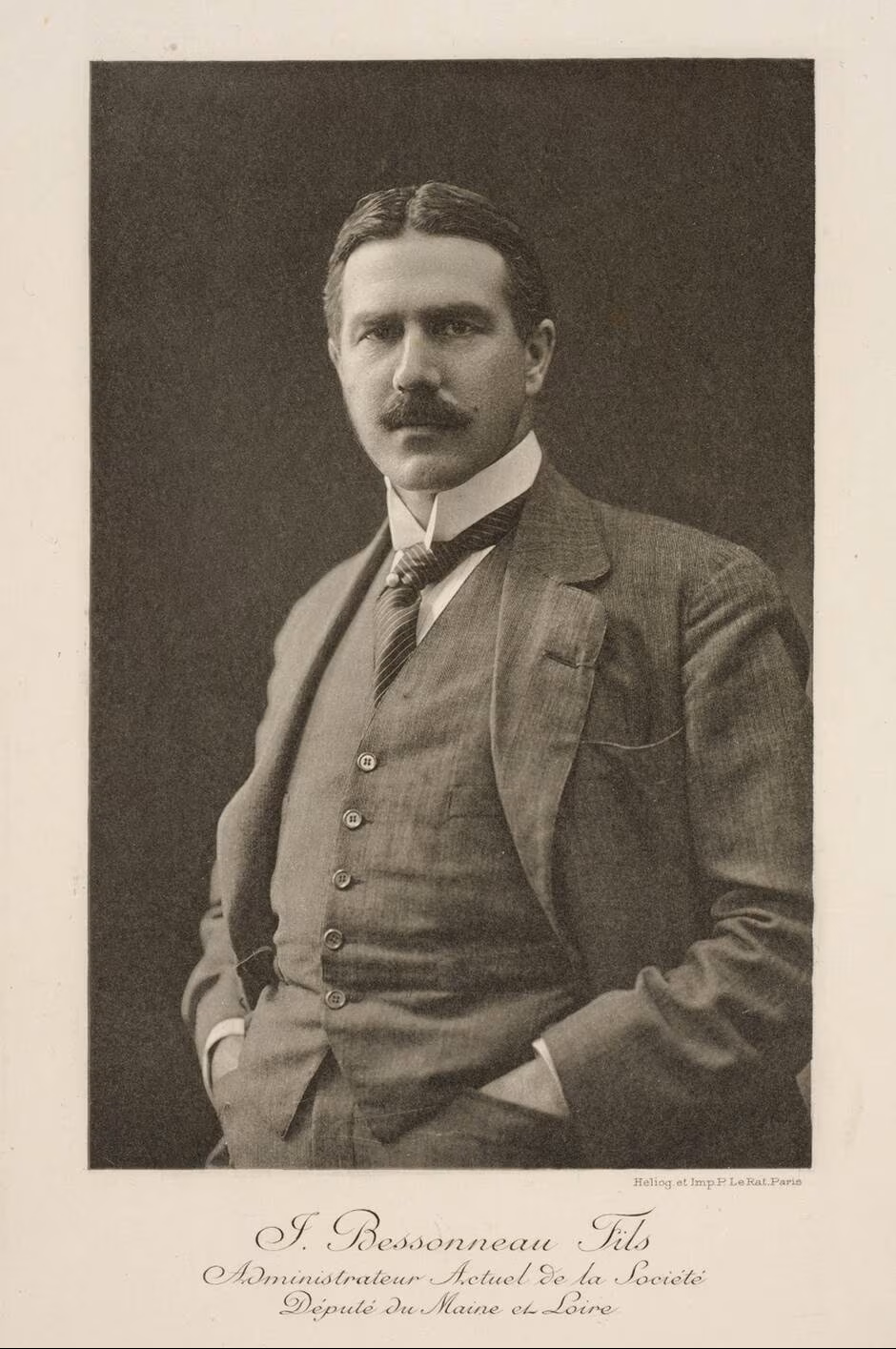
Julien Bessonneau (1842-1916)
The Léveilley Collection
In the 1970s and 1980s, the renowned Angers antiquarians Jean-Pierre and Liliane Léveilley spent years acquiring pieces from the Bessonneau collection with the intention to donate a substantial amount of it to the city of Angers, which they realised in 2023. It was during the 1970s and 80s that this bronze cat entered their collection and held pride of place inside Jean-Pierre Léveilley’s private cabinet for decades.
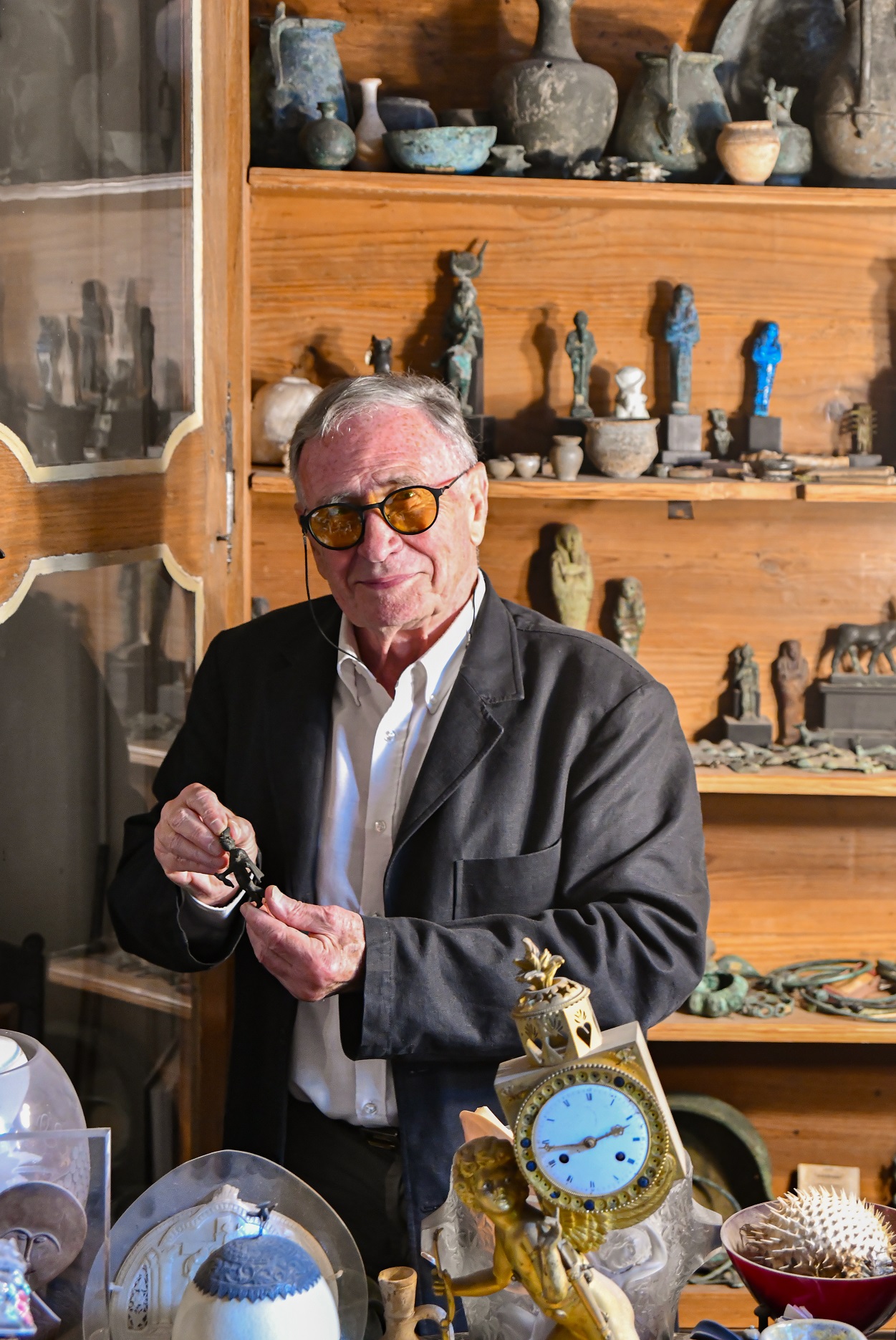
Jean-Pierre Léveilley (b. 1936)
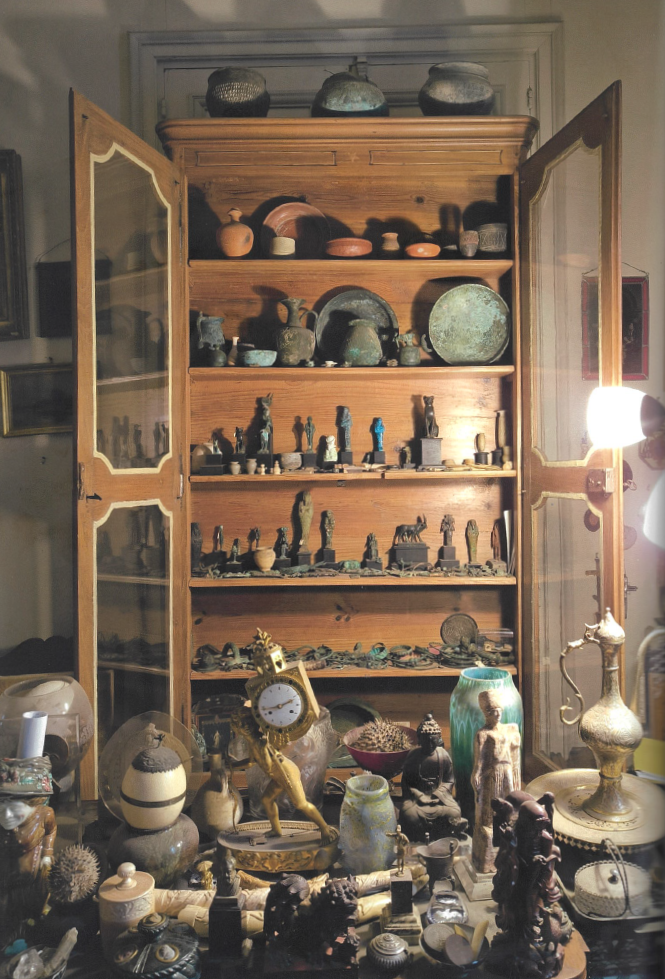
Photograph of the bronze cat in Jean-Pierre Léveilley’s collection cabinet.
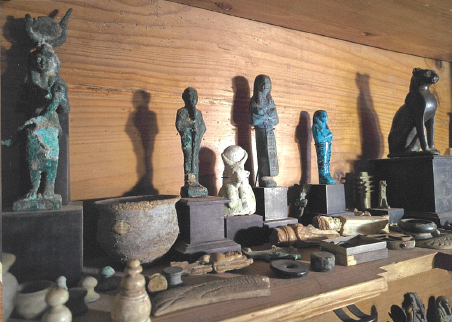
Photograph of the bronze cat in Jean-Pierre Léveilley’s collection cabinet.
Absolute peace of mind
For discerning collectors, legal clarity is just as important as aesthetic beauty. Each object exhibited at David Aaron is registered with the Art Loss Register and checked against the Interpol database. This due diligence, paired with extensive provenance research, ensures transparency and assurance for our clients.
The new owner of the bronze cat welcomes the ancient object with an extensive dossier of material detailing the legal history of the piece and the confidence to know that they have added an item of both beauty and credibility to their collection.



 Where to find us?
 Newsletter
 Instagram
 Linked in
 Email
Email