Journal
Published 5/8/2025
Published 5/6/2025
Published 5/7/2025
Published 5/8/2025
Published 5/16/2025
Published 5/27/2025
Published 6/25/2025
Published 7/18/2025
Published 10/21/2025
Published 12/19/2025
Published 2/2/2026
Published 2/5/2026
Published 2/11/2026
Published 2/16/2026
Published 5/30/2025
Published 2/25/2026
Published 3/2/2026
Published 10/3/2022
Published 3/23/2026
Published 3/25/2026
Published 4/9/2026
Published 4/13/2026
Published 5/4/2020
Published 4/23/2026
Published 4/29/2026
Published 5/7/2026
Published 5/13/2026
Published 5/19/2026
Published 5/26/2026
Published 11/1/2024
Published 10/12/2022
Published 6/12/2026
Published 10/1/2024
Published 6/24/2026
Published 7/3/2026
Published 11/1/2023
Published 7/17/2026
Published 7/20/2026
Published 8/5/2025
Published 11/17/2022
Published 8/6/2026
Published 11/6/2025
Published 11/7/2024
Published 11/5/2024
Published 11/3/2024
Published 8/6/2020
Published 8/6/2020
Published 8/6/2026
Published 8/6/2026
Published 8/6/2026
Published 8/6/2026
Published 1/4/2026
Published 9/5/2024
Published 9/7/2021
Published 1/1/2025
Published 2/2/2025
Published 8/17/2026
Published 9/1/2026
Published 8/20/2026
Published 9/9/2026
Frieze feature: Exceptional Roman marble Crouching Venus
Published 24/08/2026

Venus, the goddess of love, beauty, pleasure and procreation, the Roman variant of the Greek goddess Aphrodite, is depicted in the much-imitated 'Crouching Aphrodite' or ‘Venus of Vienna’ pose, derived from a celebrated Hellenistic sculpture attributed to Doedalsas of Bithynia.
The piece presented by David Aaron is a partial marble statue of Venus crouching at her bath, kneeling on her proper right knee. Traces of her arms can be seen on the top of the left leg, where they would have rested to cover her nudity. The marble is carved delicately to create a supple softness across the goddess’s figure: the gentle folds of her stomach and rounded breasts with pert nipples establish the physical sensuality appropriate for the goddess of love.
A single curled lock of hair remains where it falls over the left shoulder, although the head and both arms have been lost to time.
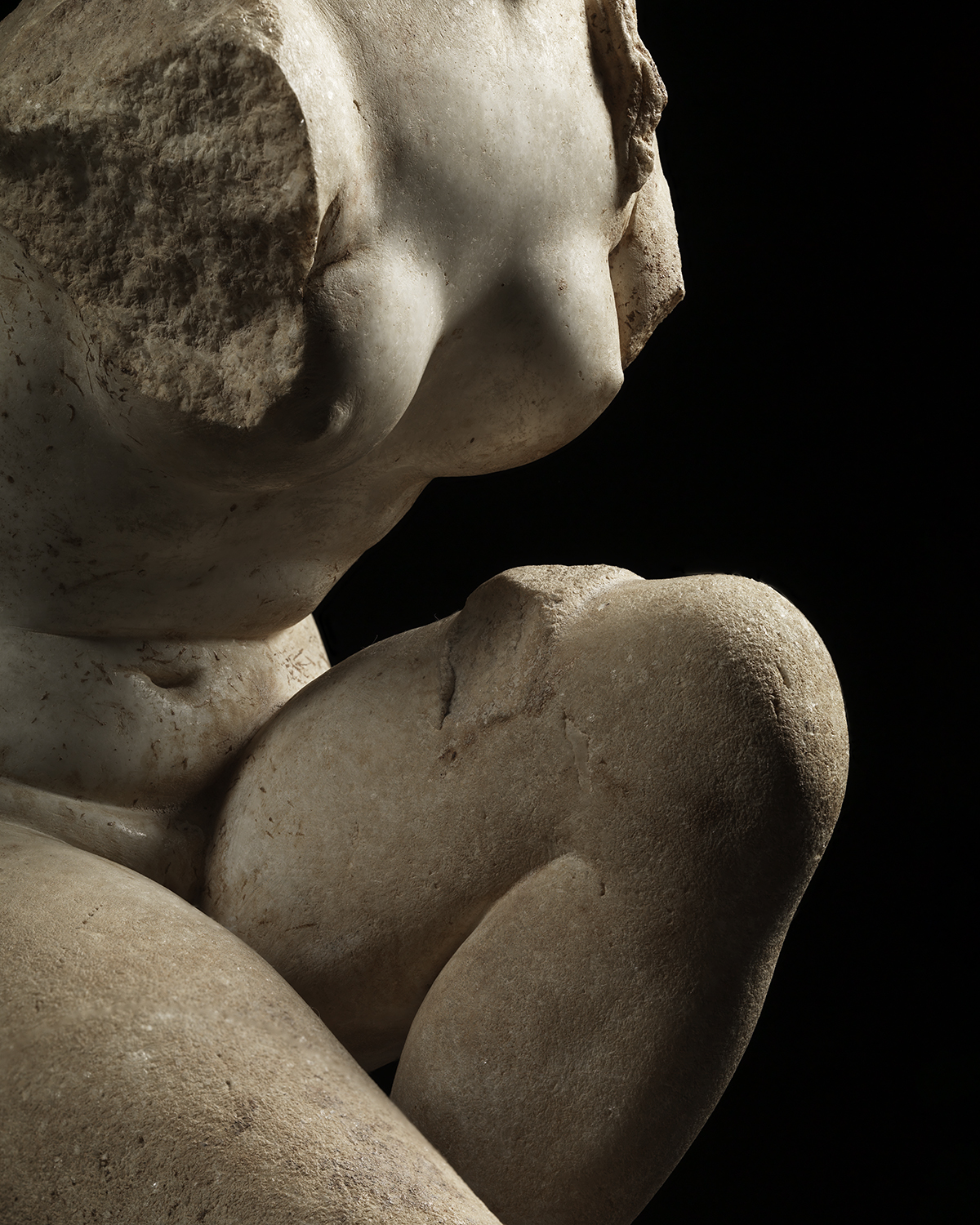
Image: Crouching Venus, Late 1st Century-Early 2nd Century A.D., Roman. Image: David Brunetti
Venus the goddess
According to Hesiod’s Theogony, Venus was created, or ‘born’, fully grown from the sea foam after the blood of Uranus fell into the water, a scene imagined in countless artworks depicting newborn Venus rising from the sea in a clam.
Venus was one of the ‘Dei Consentes’, the council of twelve major gods in ancient Rome. Her Greek counterpart was one of the twelve original Olympian deities and one of the most represented gods in art and literature. Her figure was often presented as an ideal nude, with statues spread throughout Ancient Greece.
During the first decades of the 1st century AD, Roman interest in Hellenistic culture led to the creation of many sculptures of Venus modelled after Greek originals. This trend quickly spread throughout the empire and today provides a fascinating insight into both Roman art history and the vast corpus of now-lost Greek statues of the goddess that must have once existed.
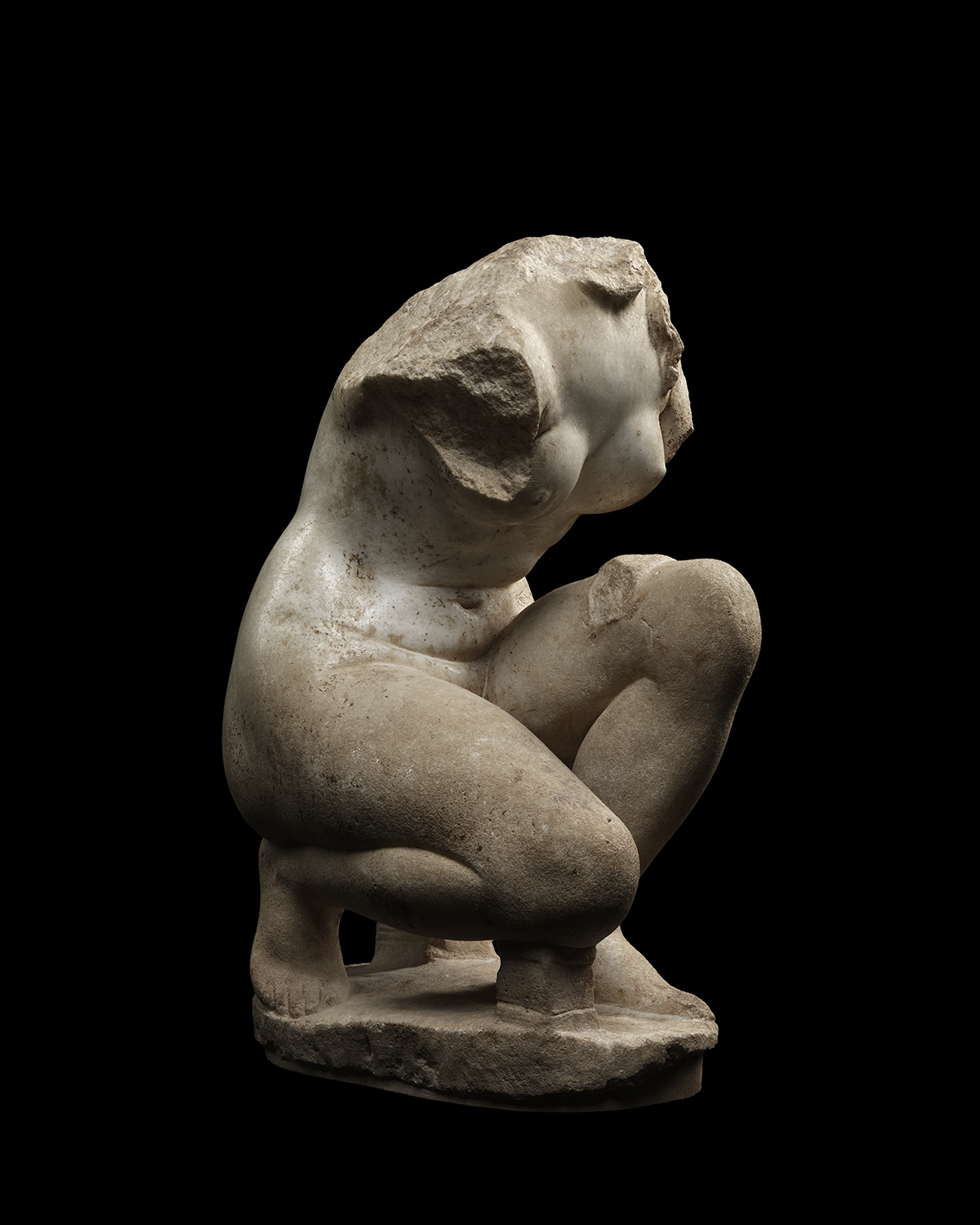
Image: Crouching Venus, Late 1st Century-Early 2nd Century A.D., Roman. Image: David Brunetti
An eternal icon
As the enduring symbol of physical and divine beauty, depictions of Venus and Aphrodite appear throughout art history and across diverse mediums. From classical sculpture to Renaissance painting, to pop art and contemporary works produced today, the influence of the image of Venus is hard to deny.
The popularisation of Venus in art is often credited to Renaissance artists moving away from strictly religious subjects and reviving imagery of classical Greek and Roman mythology.
Notably, the Venus de Milo in the Louvre Museum remains one of the most recognisable representations of Venus ever made and, as stated on the Louvre's website, 'together with the Mona Lisa and The Winged Victory of Samothrace, the Venus de Milo is one of the three most famous female figures in the Louvre'. The name for Paris’s marble icon comes from the Greek island of Milos, where the sculpture was discovered in 1820.
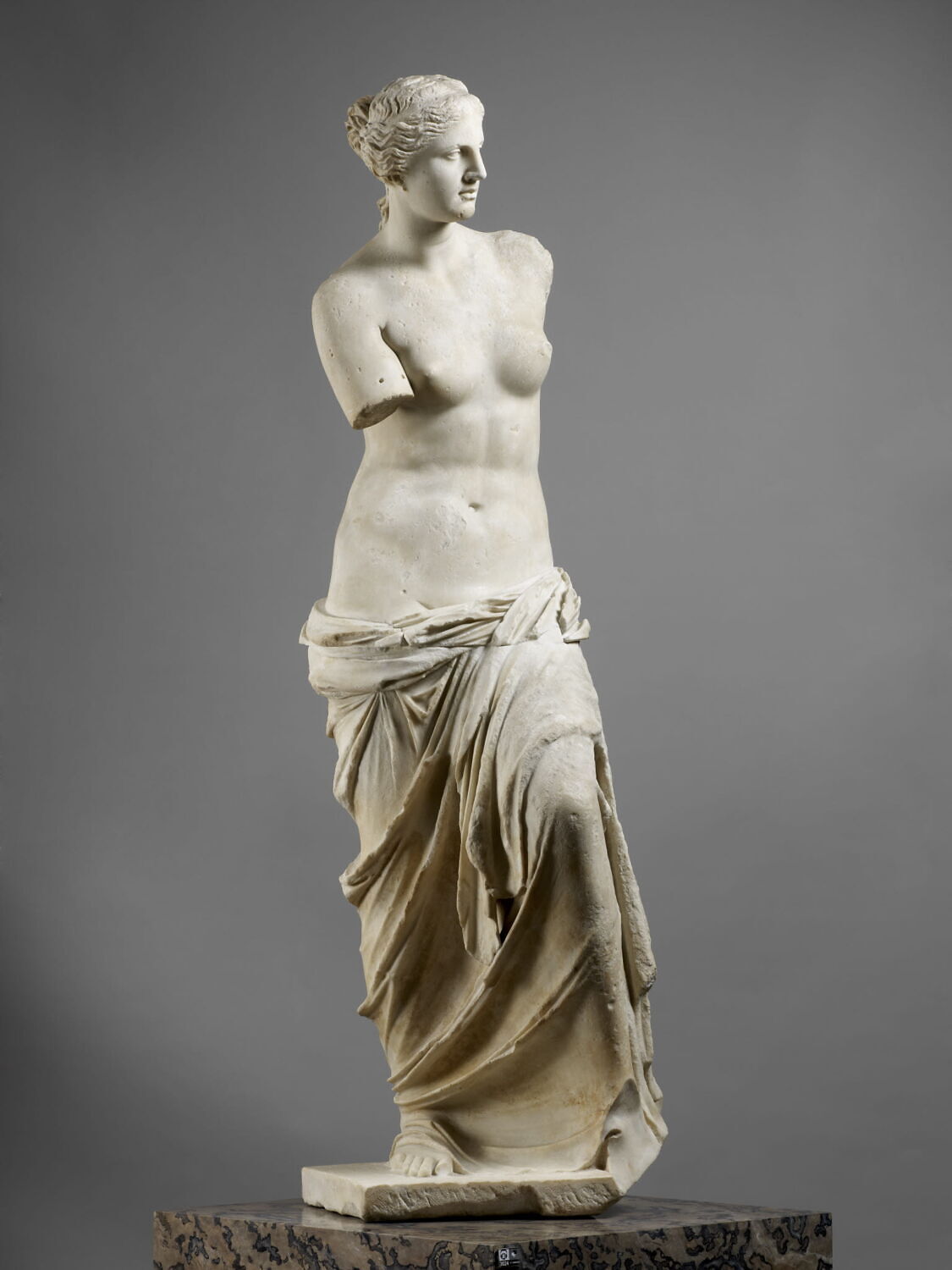
Image: Venus de Milo, 2nd century BC, Louvre Museum
Botticelli took inspiration from classical statues for Venus’ modest pose, with arms posed to cover her body. Botticelli adds a subtly teasing element to the classical pose – the goddess holds her long flowing blonde hair over her pubic region, seemingly to add greater coverage, but drawing the eye from her slender, elongated neck, down the contours of her body, and towards the covered area. The gentle curls of hair reflect her feminine curves and form a soft, sensual veil over the hidden regions. Small gaps between her locks entice the viewer to try and look beyond.
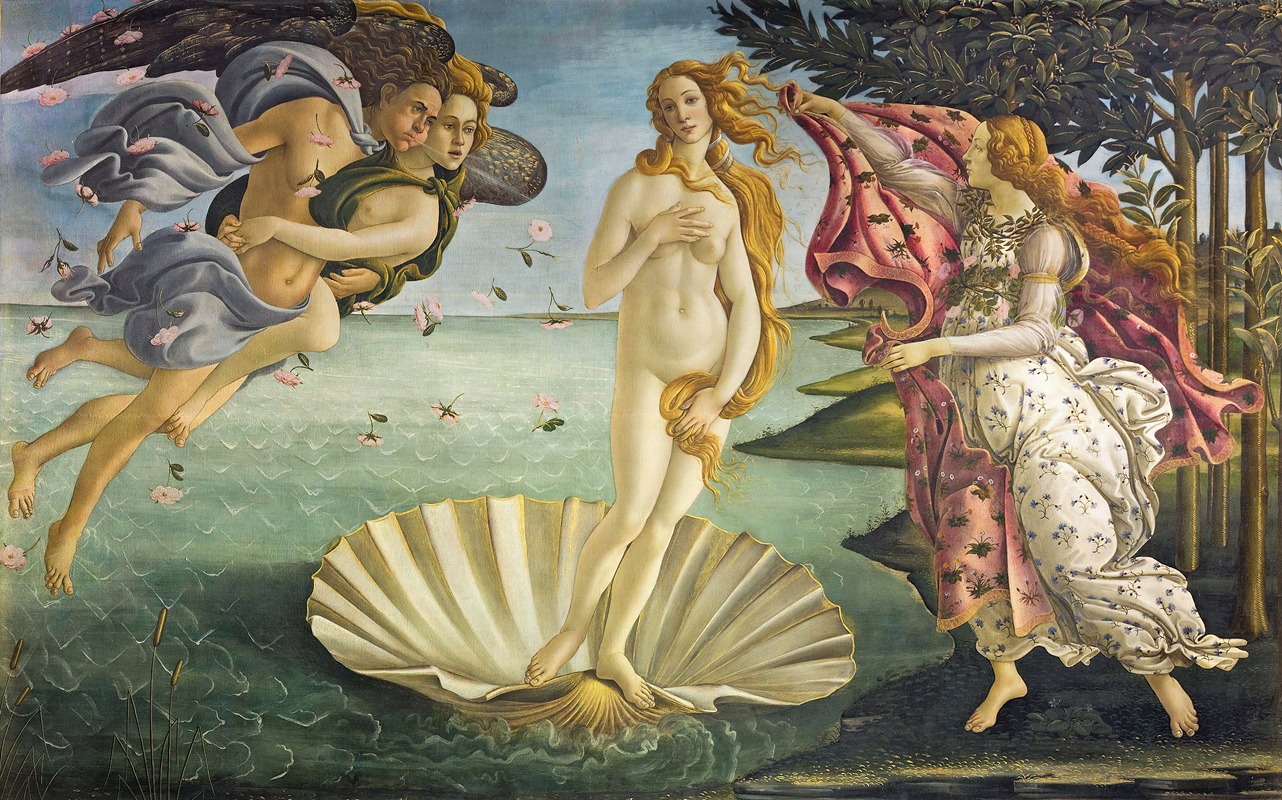 Image: Sandro Botticelli's The Birth of Venus, circa 1484-1486, Uffizi Gallery.
In modern and contemporary art Venus continues to influence beauty ideals and inspire artists working in traditional and new media, with some of the most well-known artists in recent history, such as Andy Warhol and Jeff Koons, paying homage to the goddess.
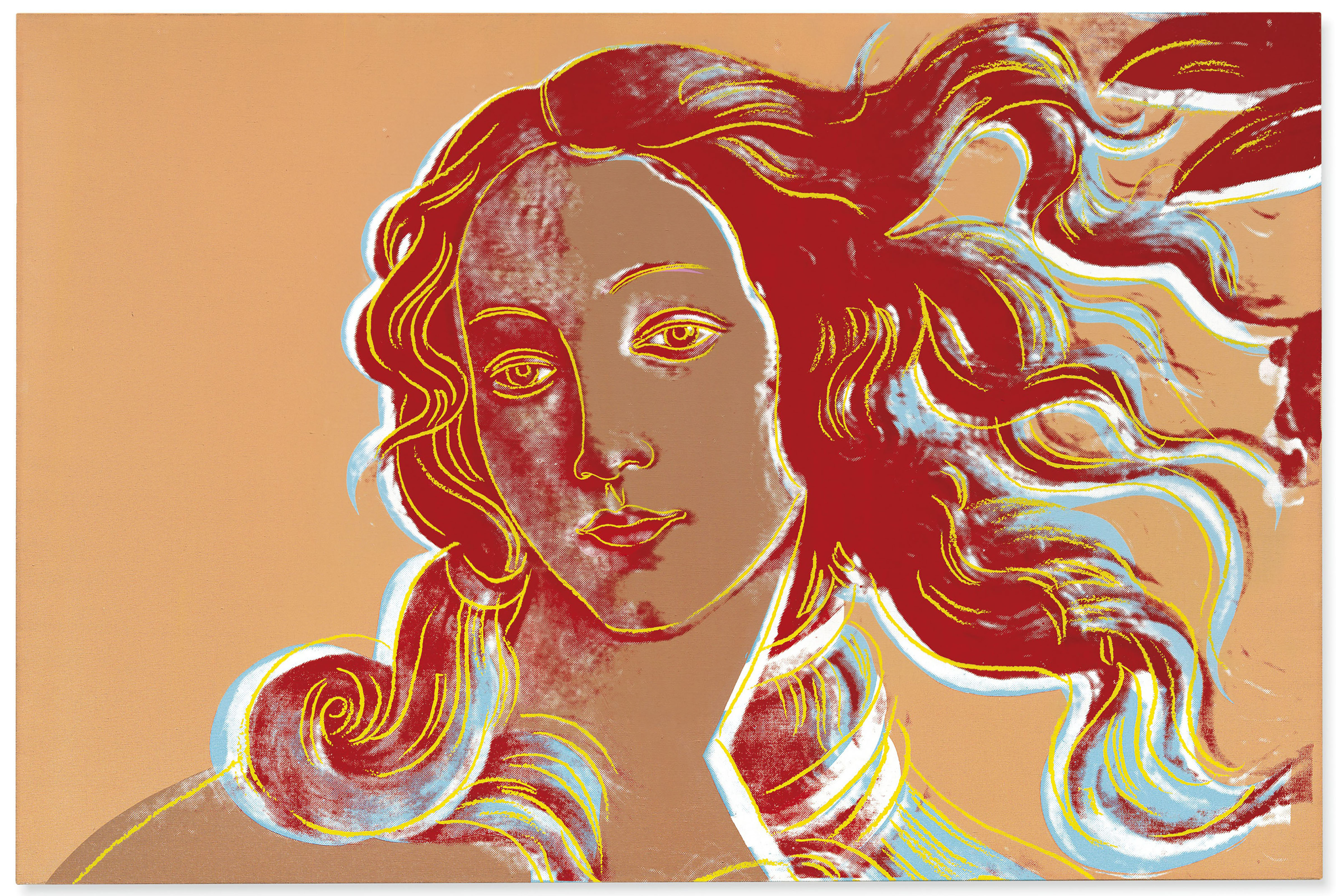 Image: Andy Warhol, Birth of Venus (After Botticelli), 1984, Christie's
 Provenance
The Crouching Venus sculpture was previously with Galerie Mouseion in Paris, operated by renowned dealer and scholar François Antonovich, by at least 12 November 1975. A dated image and statements from the gallery record this chapter in the sculpture’s life (pictured below).
Antonovich spent much of his childhood in Cairo before establishing Galerie Mouseion in Paris. From as early as 1964, he assembled a collection of South Arabian artefacts that would become a reference point for scholars in the field for decades.
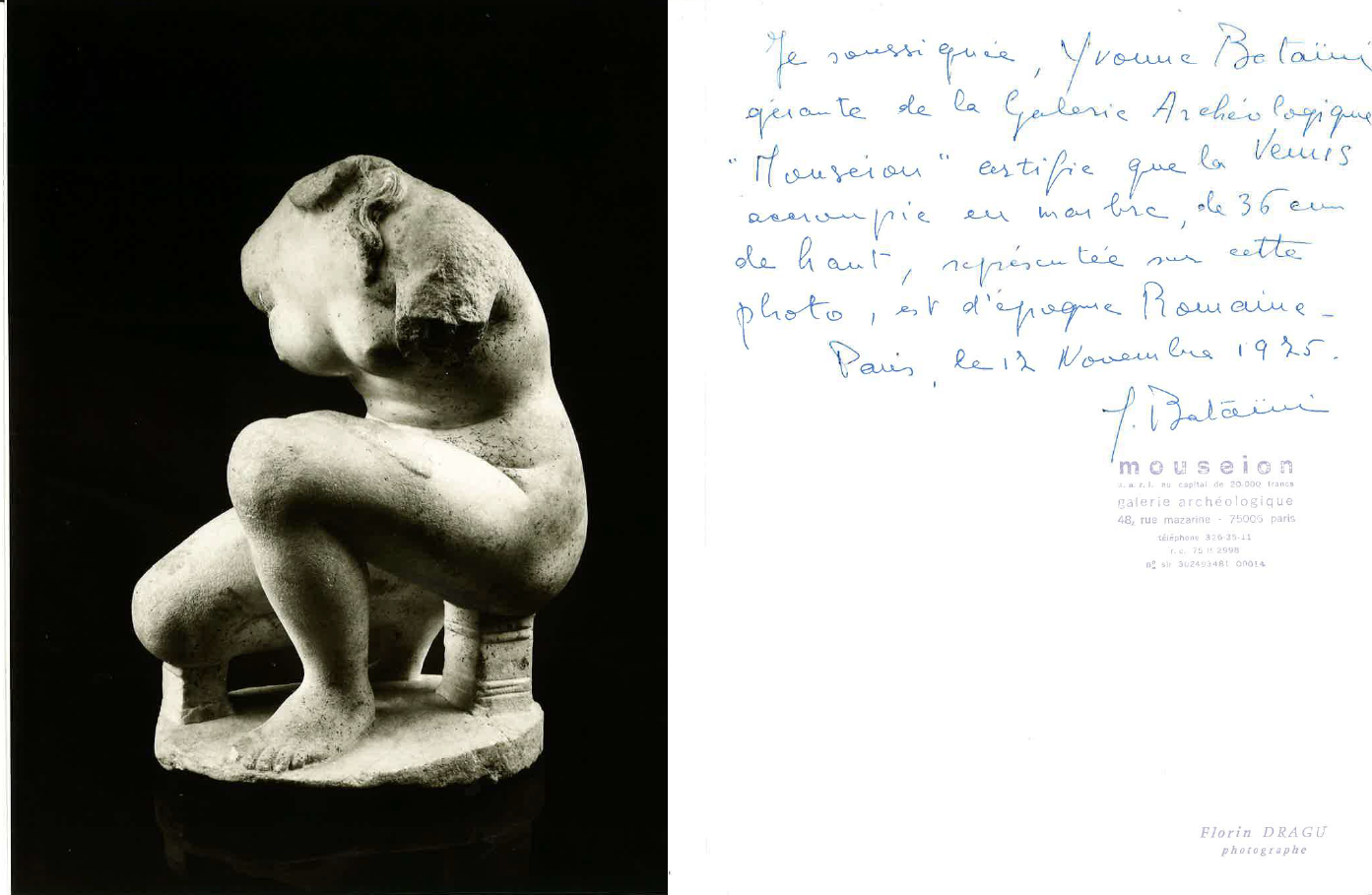 Image: Photograph and signed statement dated 12 November 1975
 Visit David Aaron at Frieze Masters, stand C02, from 14 – 18 October to view this piece, among many more.



 Where to find us?
 Newsletter
 Instagram
 Linked in
 Email
Email