Journal
Published 5/8/2025
Published 5/6/2025
Published 5/7/2025
Published 5/8/2025
Published 5/16/2025
Published 5/27/2025
Published 6/25/2025
Published 7/18/2025
Published 10/21/2025
Published 12/19/2025
Published 2/2/2026
Published 2/5/2026
Published 2/11/2026
Published 2/16/2026
Published 5/30/2025
Published 2/25/2026
Published 3/2/2026
Published 10/3/2022
Published 3/23/2026
Published 3/25/2026
Published 4/9/2026
Published 4/13/2026
Published 5/4/2020
Published 4/23/2026
Published 4/29/2026
Published 5/7/2026
Published 5/13/2026
Published 5/19/2026
Published 5/26/2026
Published 11/1/2024
Published 10/12/2022
Published 6/12/2026
Published 10/1/2024
Published 6/24/2026
Published 7/3/2026
Published 7/17/2026
Published 7/20/2026
Published 8/5/2025
Published 11/17/2022
Published 8/6/2026
Published 11/6/2025
Published 11/7/2024
Published 11/5/2024
Published 11/3/2024
Published 8/6/2020
Published 8/6/2020
Published 8/6/2026
Published 8/6/2026
Published 8/6/2026
Published 8/6/2026
Published 1/4/2026
Published 9/5/2024
Published 9/7/2021
Published 1/1/2025
Published 2/2/2025
Published 8/17/2026
Published 8/24/2026
Published 9/1/2026
Published 8/20/2026
Published 9/9/2026
Notable sale: ‘Chomper’ the juvenile Tyrannosaurus rex
Published 01/11/2023


In 2023, David Aaron marked an exceptional moment in the gallery's history, presenting the most well-preserved juvenile Tyrannosaurus rex skeleton ever offered for sale at the Freize Masters art fair.
Nicknamed ‘Chomper’, the 68-66-million-year-old specimen graced the Regent’s Park fair with its presence over four days in October, delighting and surprising visitors who encountered the fearsome predator. ‘Chomper’ sold to a private collector in one of the most significant sales of David Aaron Ltd’s more than 100-year history.
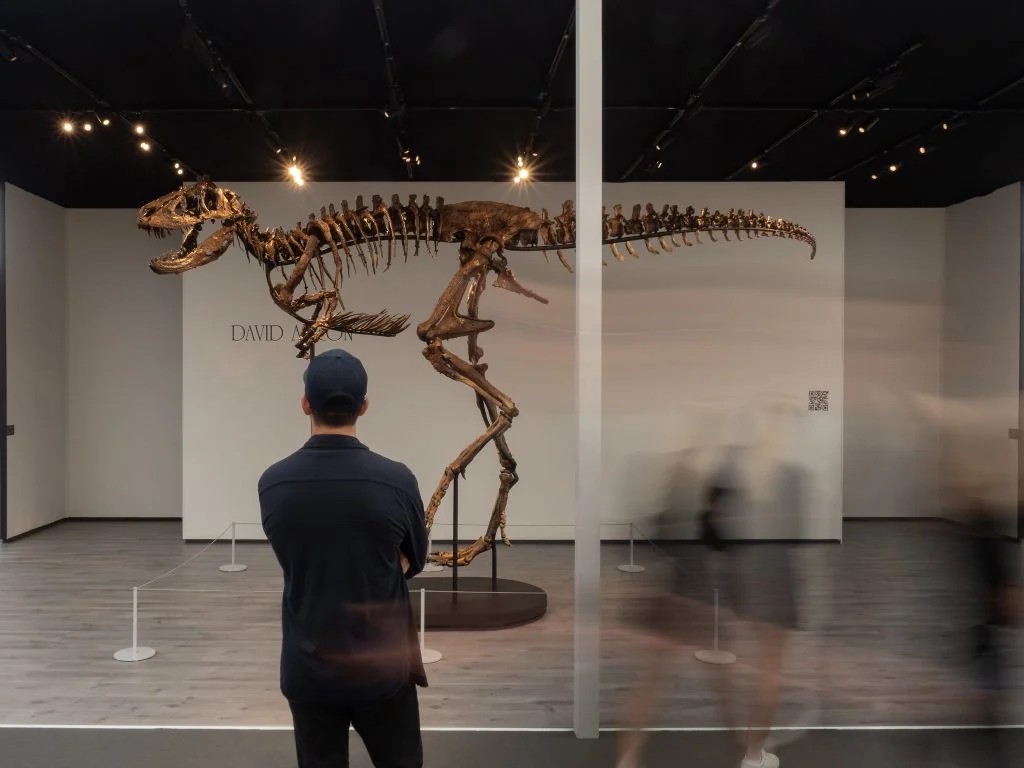 Image: Courtesy of Frieze
 A Remarkable Discovery
Discovered in Garfield County, Montana, USA in 2019, 'Chomper' is awe-inspiring example of the prehistoric world that existed during the Maastrichtian age of the Late Cretaceous period.
The presentation of the skeleton garnered attention due to the possibility of juvenile fossils to advance scientific understanding of the Tyrannosaurus rex species.
The discovery of ‘Chomper’ was chronicled on the Discovery Channel series Dino Hunters, with one of the episodes about this specimen generating over half a million views on YouTube. Watch here: https://www.youtube.com/watch?v=zccP2j3WGK8
Who was ‘Chomper’?
‘Chomper’ is one of the most complete juvenile Tyrannosaurus rexes ever discovered, the skull, in particular, is remarkably well preserved. This extraordinary level of completeness is rare for such a large dinosaur skeleton and offers insight into the unique development of the Tyrannosaurus rex species.Hatchling and juvenile Tyrannosaurus rex, like ‘Chomper’, are now believed to have been clad in feathers, which they mostly lost as they reached maturity, retaining only a few on their head, spine, and tail.
It is also now thought that juveniles would make use of their smaller size to hunt as opposed to adult Tyrannosaurus rex who would stalk their prey before crushing them in their large, bone-crunching jaws. With big feet, proportionally larger legs and arms, estimates suggesting they may have run as fast as 20-30 miles per hour, using their speed and agility to overpower prey.
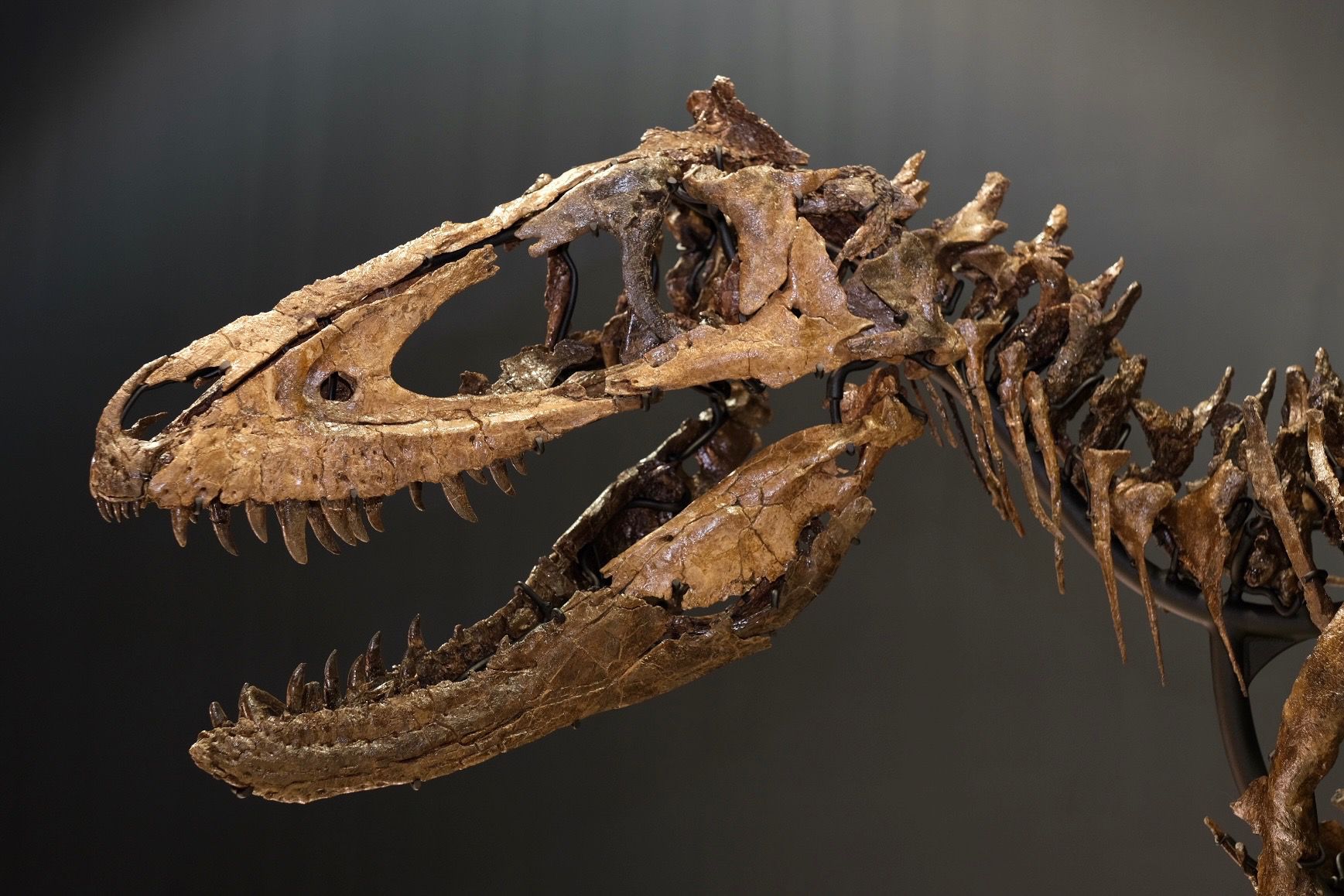 Image: 'Chomper' following completion of preparation
It is now theorised that juvenile tyranosaurids may have outcompeted other medium-sized predators and driven them to extinction. Juveniles may, therefore, have dominated their ecological niche with the same ruthless efficacy as the fully-grown dinosaurs.
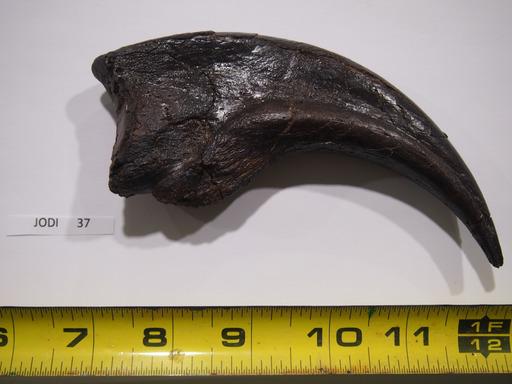
Image: 'Chomper's' tooth during preparation
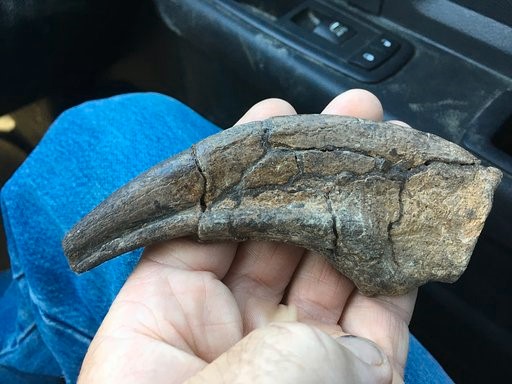
Image: 'Chomper's' tooth during preparation
The juvenile Tyrannosaurus rex vs 'Nanotyrannus’ debate
In 1942, the Cleveland Museum of Natural History discovered a small tyrannosaurid skull in Montana, igniting an ongoing debate over the existence of a distinct species dubbed 'Nanotyrannus’. Discoveries in the 2000s of specimens known as 'Jane' and 'Petey' have contributed to the consensus that these skeletons represent juvenile Tyrannosaurus rex individuals – a distinct ontogenetic (growth) stage. Morphological skull features of the two newer skulls had much in common with undisputed juvenile individuals of other tyrannosaurids.
A groundbreaking study, published in 2020 and headed by Holly N. Woodward, analysed the growth rings within femur and tibia bones sampled from the skeletons, to confirm that the specimen was still growing at their time of death. Rather than a separate species, these skeletons most likely represent a distinct ontogenetic stage of a juvenile, or sub-adult, Tyrannosaurus rex.
At present, the scientific community is largely in agreement that the skeletons of ‘Jane’, ‘Petey’, and ‘Chomper’ represent juvenile Tyrannosaurus rex.
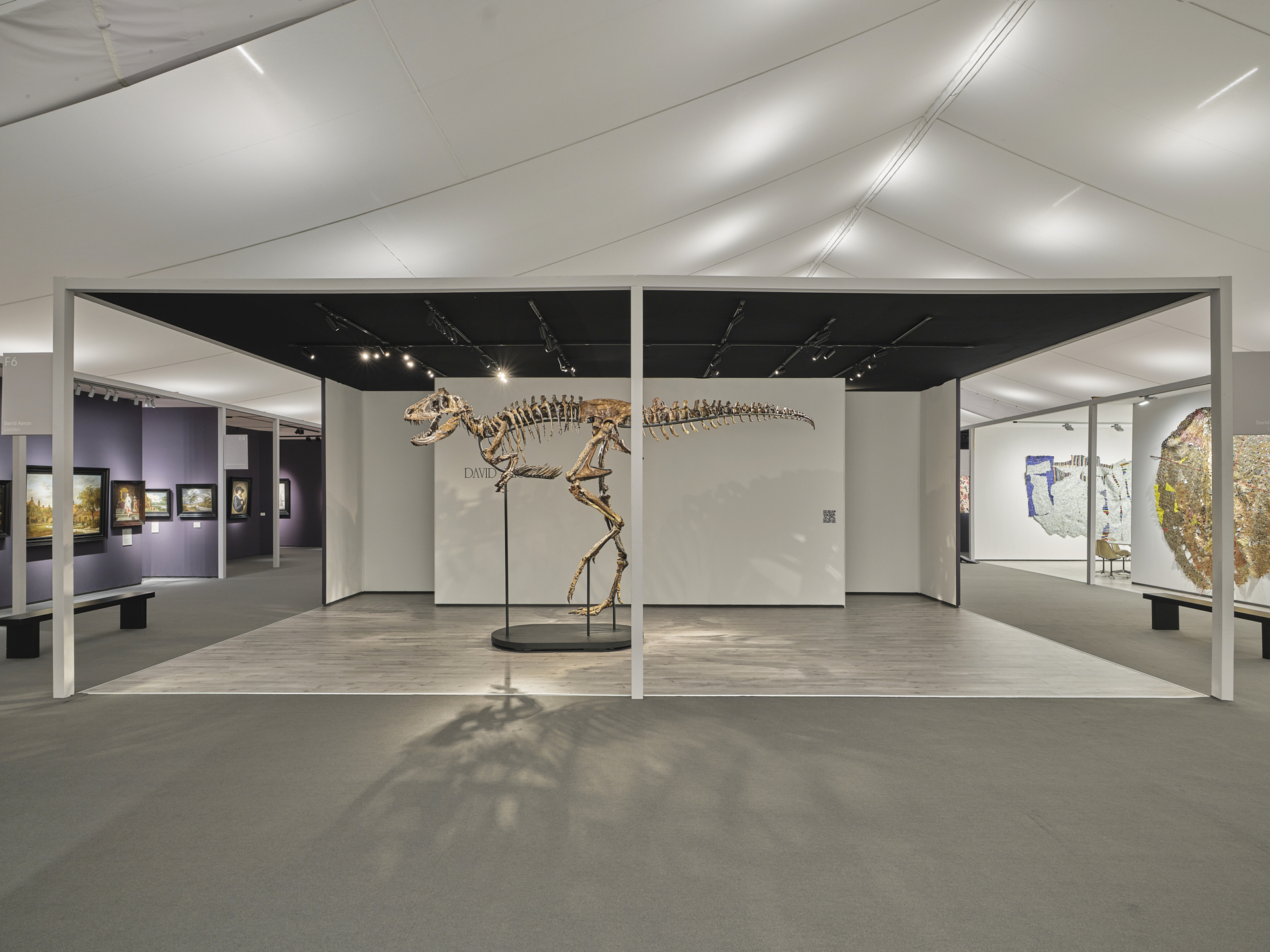 Image: ‘Chomper’ Juvenile Tyrannosaurus Rex Skeleton, Maastrichtian age, Late Cretaceous Period (68-66 million years ago)
‘Chomper’ on the global stage
The unveiling of 'Chomper' at Frieze Masters in 2023 marked a rare opportunity to witness the most complete juvenile Tyrannosaurus rex skeleton ever offered to the market.
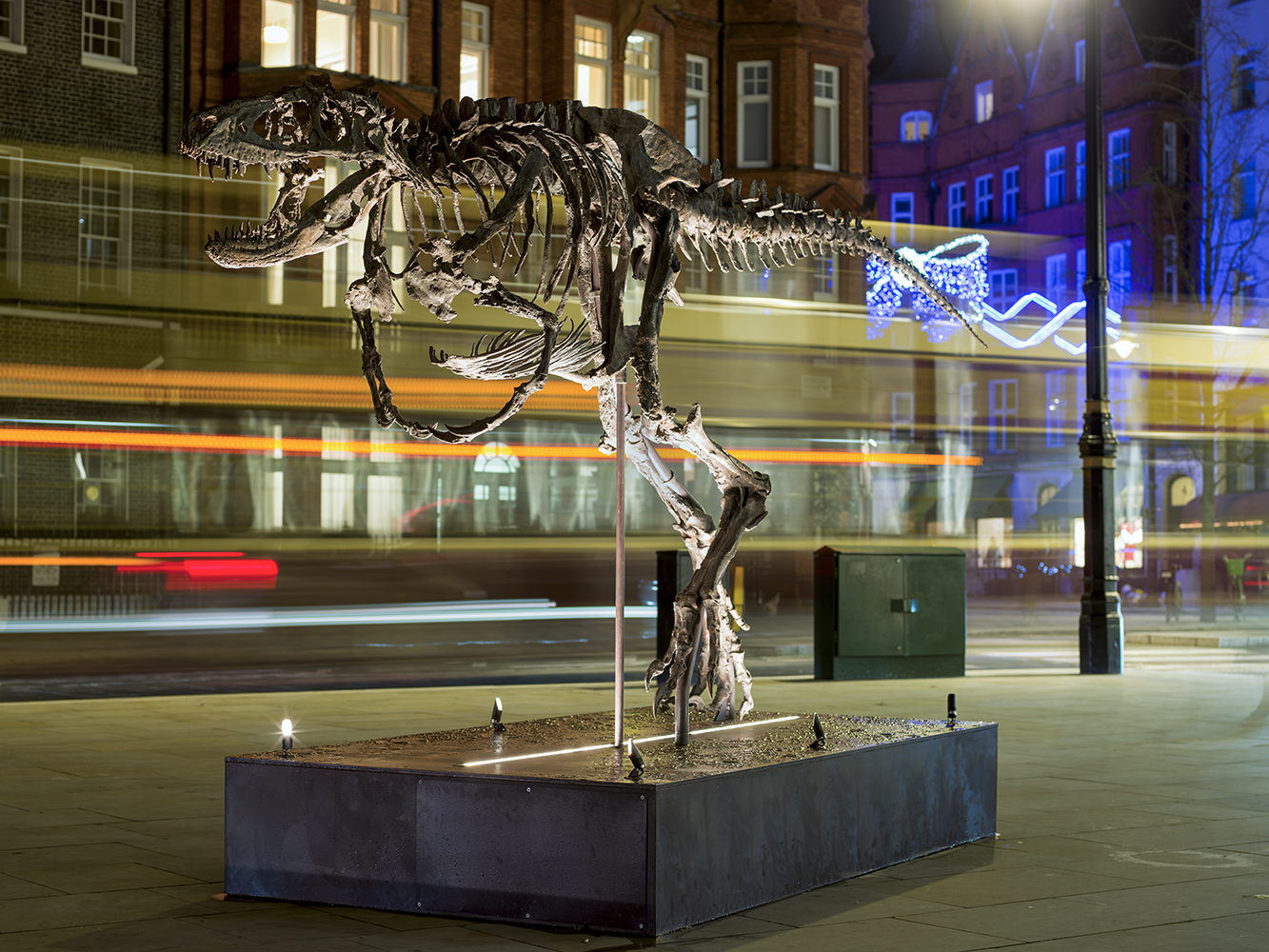
The legacy of ‘Chomper’ lived on, not only in the fossil, but also in a bronze dinosaur sculpture, inspired by the specimen, presented by David Aaron Ltd in Mayfair’s Berkley Square. The public artwork brought prehistoric beauty to the City of Westminster for locals and visitors to enjoy over a two-year period.



 Where to find us?
 Newsletter
 Instagram
 Linked in
 Email
Email