Journal
Published 5/8/2025
Published 5/6/2025
Published 5/7/2025
Published 5/8/2025
Published 5/16/2025
Published 5/27/2025
Published 6/25/2025
Published 7/18/2025
Published 10/21/2025
Published 12/19/2025
Published 2/2/2026
Published 2/5/2026
Published 2/11/2026
Published 2/16/2026
Published 5/30/2025
Published 2/25/2026
Published 3/2/2026
Published 10/3/2022
Published 3/23/2026
Published 3/25/2026
Published 4/9/2026
Published 4/13/2026
Published 5/4/2020
Published 4/23/2026
Published 4/29/2026
Published 5/7/2026
Published 5/13/2026
Published 5/26/2026
Published 11/1/2024
Published 10/12/2022
Published 6/12/2026
Published 10/1/2024
Published 6/24/2026
Published 7/3/2026
Published 11/1/2023
Published 7/17/2026
Published 7/20/2026
Published 8/5/2025
Published 11/17/2022
Published 8/6/2026
Published 11/6/2025
Published 11/7/2024
Published 11/5/2024
Published 11/3/2024
Published 8/6/2020
Published 8/6/2020
Published 8/6/2026
Published 8/6/2026
Published 8/6/2026
Published 8/6/2026
Published 1/4/2026
Published 9/5/2024
Published 9/7/2021
Published 1/1/2025
Published 2/2/2025
Published 8/17/2026
Published 8/24/2026
Published 9/1/2026
Published 8/20/2026
Published 9/9/2026
Notable sale: The extraordinary journey of a Timurid cenotaph acquired by a major US museum
Published 19/05/2026

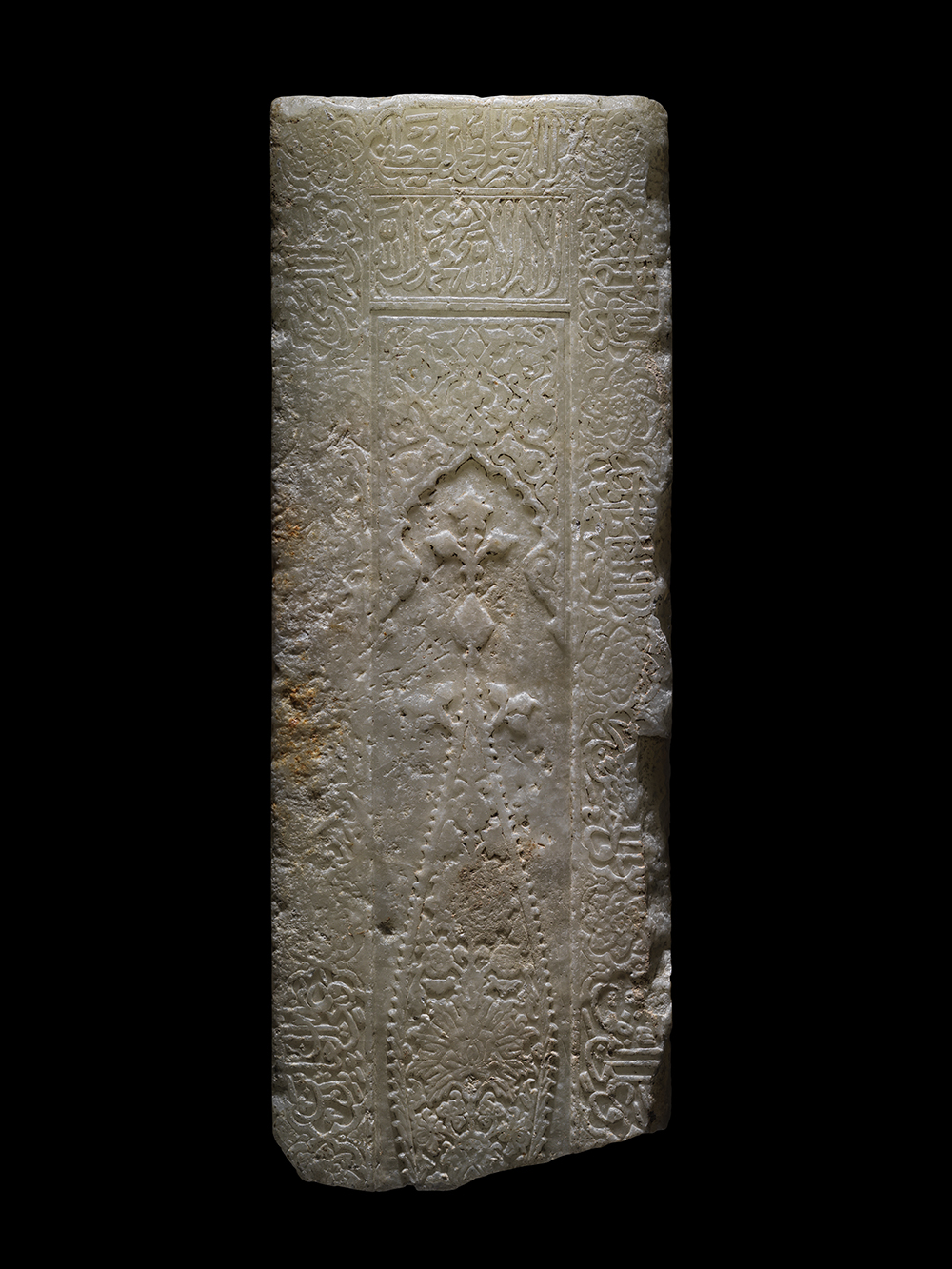
Dated precisely to 20 Safar 893 AH (4 February 1488 AD), the cenotaph originates from the Timurid cultural sphere, most likely central Iran or Central Asia. The object is carved from a single block of translucent alabaster, a particularly rare material for this period.
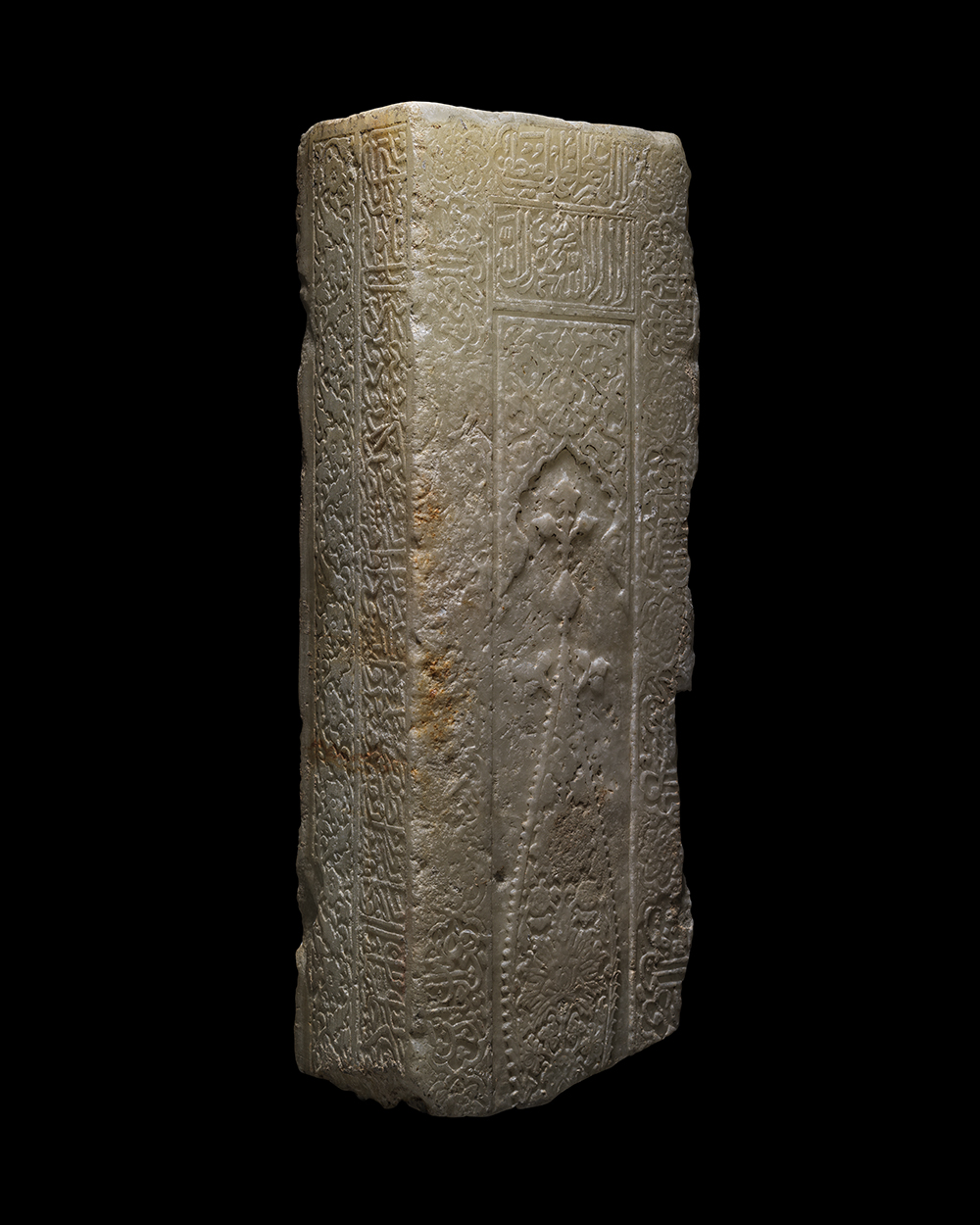
Timurid Tomb Element for a Military Commander, dated 1488 AD, Image: David Brunetti
Timurid artistic refinement
The object’s ornate relief decoration reflects the height of Timurid aesthetic refinement, particularly akin to examples associated with Afghanistan in the second half of the 15th century. The upper surface is adorned with polylobed medallions containing Arabic thuluth inscriptions, featuring the Shahada and invocations to the Prophet Muhammad, Ali and the Shiite imams.
Encircling the edges is an Arabic text identifying the piece as being dedicated to a high-ranking military commander. They are twice referred to as sawar ("one who rides") and lauded as the "lord of the battlefield", suggesting an elite military status.
The upper part of cenotaph tombs is often carved with a mosque lamp, palmettes or a mandorla, as seen in this example.
Some of the most exquisite examples of cenotaphs of this kind can be found in the tomb complex of Sultan Husayn Bayqara (d. 1506), built in Herat around 1492-93. Several known examples are carved in black stone, including one held at the Isabella Gardner Museum, Boston (SI2w2), another at the Victoria and Albert Museum, London (973-1901), and two examples sold at Christie's in London on 23 April 1996 (lot 198), and 7 October 2008 (lot 150).
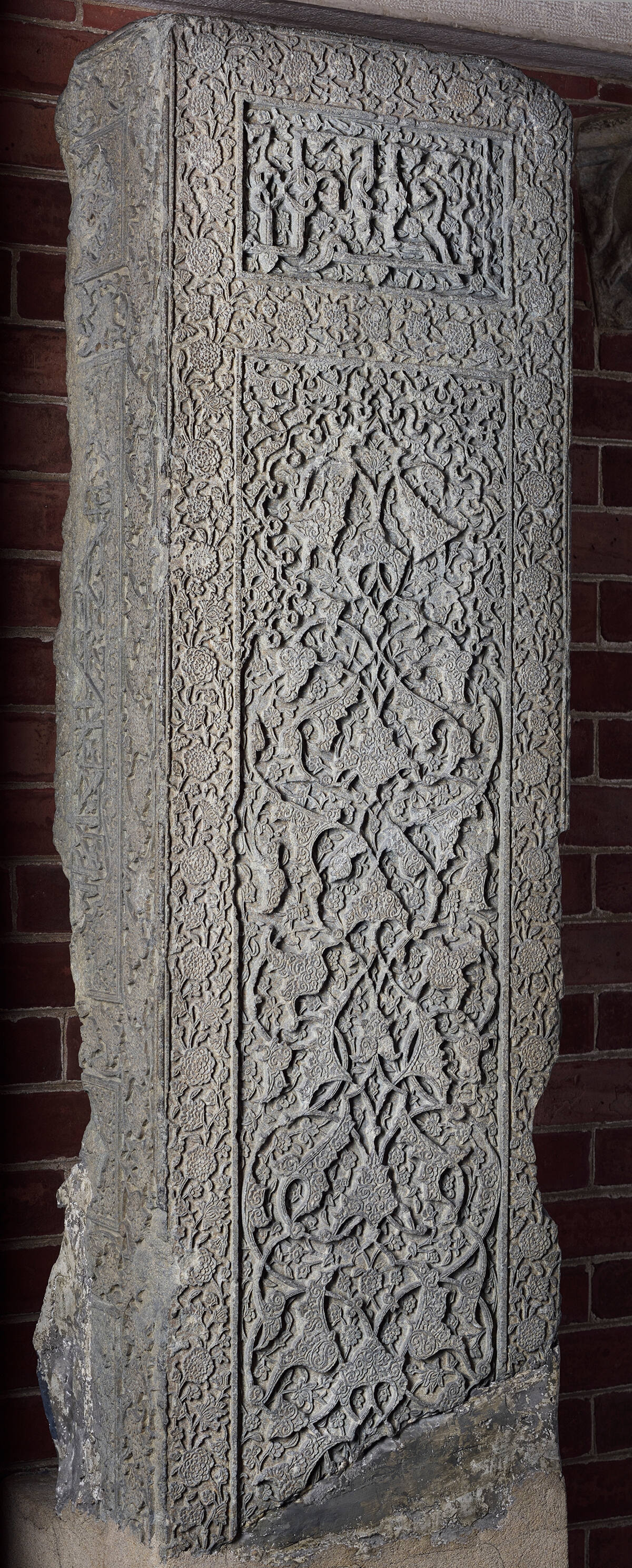
Persian, Herat - Fragment of a Cenotaph, about 1475, Isabella Stewart Gardner Museum
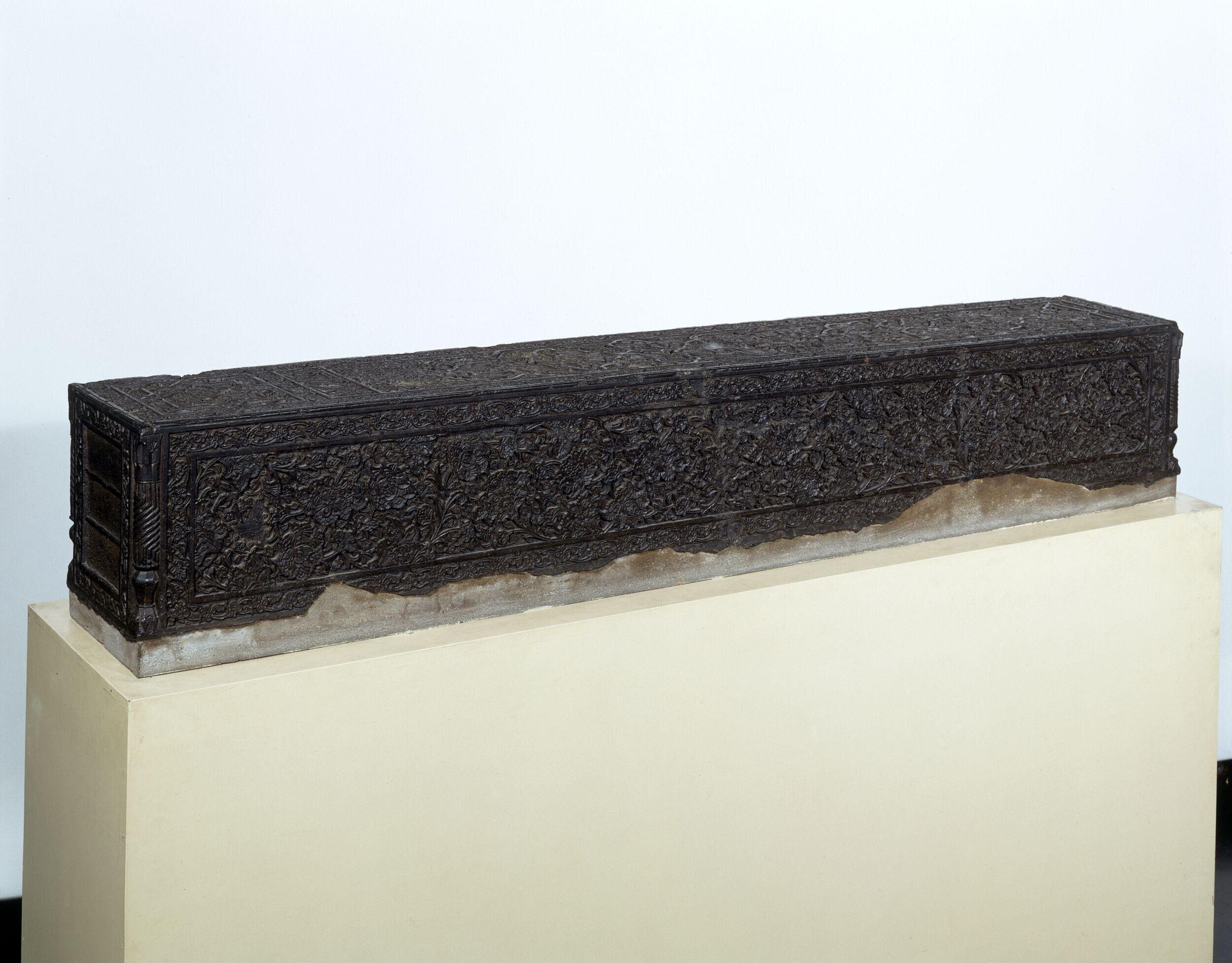 Sarcophagus cover, January 1536 (made), © Victoria and Albert Museum, London
A Remarkable Provenance
Beyond its artistic merit, the cenotaph possesses a history of reuse. It was discovered before 1912 in Santarém, Portugal, where it had been integrated into an architectural niche within the patio of a private residence.
The presence of the piece in Portugal attests to the extensive journeys such artistic objects could undertake during early trade exploration. Details of the piece’s arrival in Portugal are undocumented, however scholars suggest the piece was likely transported from the East by a Portuguese merchant during the late 15th or 16th century.
Scholarly Legacy
The object has long been a point of interest for scholars. Its inscriptions were first recorded in 1941 by 20th-century French orientalist Henri Massé, a member of the Académie des Inscriptions et Belles-Lettres, and a professor of Arabic and Persian literature. The work was also published in several key epigraphic studies, including Joaquim Figanier’s Petrus Nonius (1941) and A. R. Nykl’s ‘Arabic Inscriptions in Portugal’, Ars Islamica (1946).
The cenotaph was held in the private Portuguese collections of António Mendes Cabral and, subsequently, António Branco Cabral throughout the 20th century.
The placement of this monument to the "lord of the battlefield" within a major museum collection ensures that its complex narrative will continue to be studied and admired within the context of global art history.
Sarcophagus cover, January 1536 (made), © Victoria and Albert Museum, London



 Where to find us?
 Newsletter
 Instagram
 Linked in
 Email
Email