Journal
Published 5/8/2025
Published 5/6/2025
Published 5/7/2025
Published 5/8/2025
Published 5/16/2025
Published 5/27/2025
Published 6/25/2025
Published 7/18/2025
Published 10/21/2025
Published 12/19/2025
Published 2/2/2026
Published 2/5/2026
Published 2/11/2026
Published 2/16/2026
Published 5/30/2025
Published 2/25/2026
Published 3/2/2026
Published 10/3/2022
Published 3/23/2026
Published 3/25/2026
Published 4/9/2026
Published 4/13/2026
Published 5/4/2020
Published 4/23/2026
Published 4/29/2026
Published 5/7/2026
Published 5/13/2026
Published 5/19/2026
Published 5/26/2026
Published 11/1/2024
Published 10/12/2022
Published 6/12/2026
Published 10/1/2024
Published 6/24/2026
Published 7/3/2026
Published 11/1/2023
Published 7/17/2026
Published 7/20/2026
Published 8/5/2025
Published 11/17/2022
Published 8/6/2026
Published 11/6/2025
Published 11/7/2024
Published 11/5/2024
Published 11/3/2024
Published 8/6/2020
Published 8/6/2020
Published 8/6/2026
Published 8/6/2026
Published 8/6/2026
Published 8/6/2026
Published 1/4/2026
Published 9/5/2024
Published 9/7/2021
Published 1/1/2025
Published 2/2/2025
Published 8/17/2026
Published 8/24/2026
Published 9/1/2026
Published 8/20/2026
Published 9/9/2026
Frieze Abu Dhabi Feature: The Dedicatory Stele of Fayšat
Published 30/10/2026
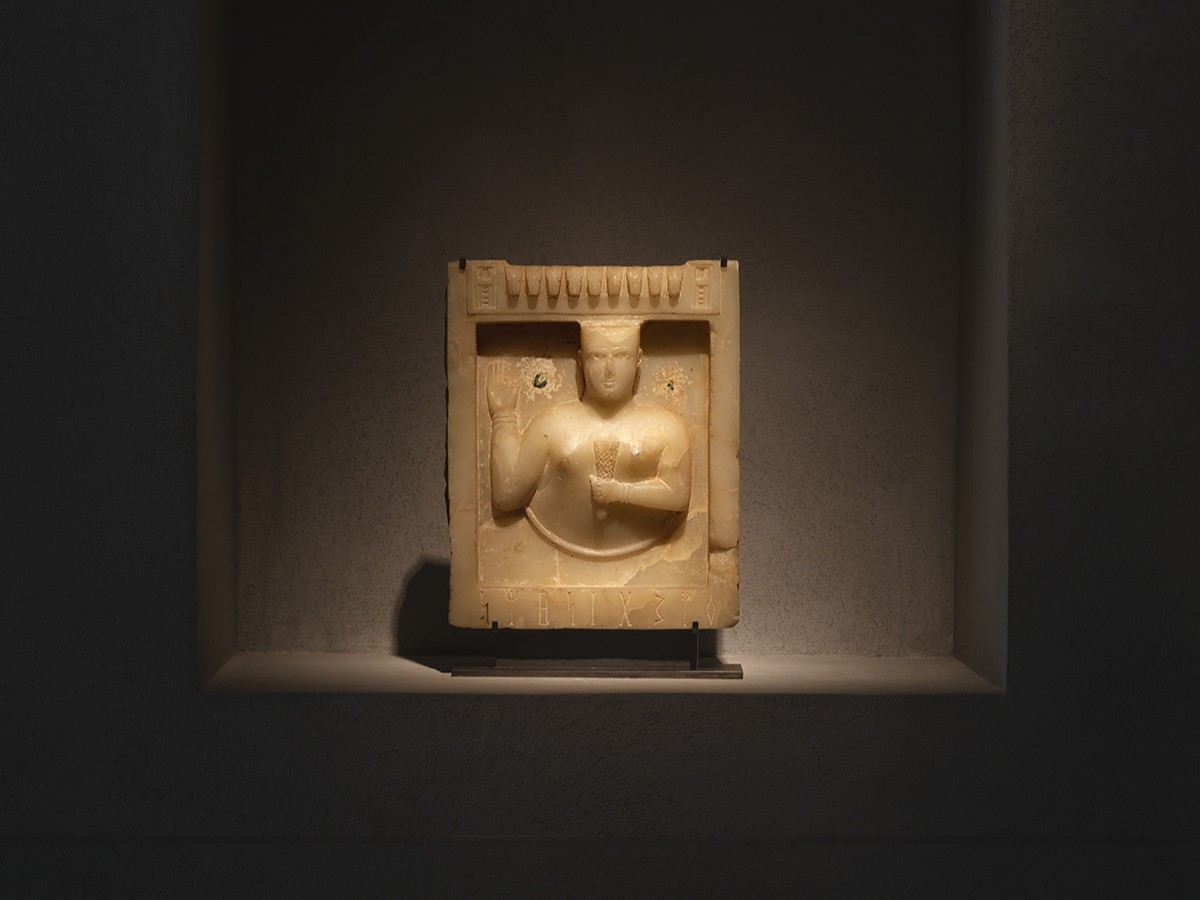
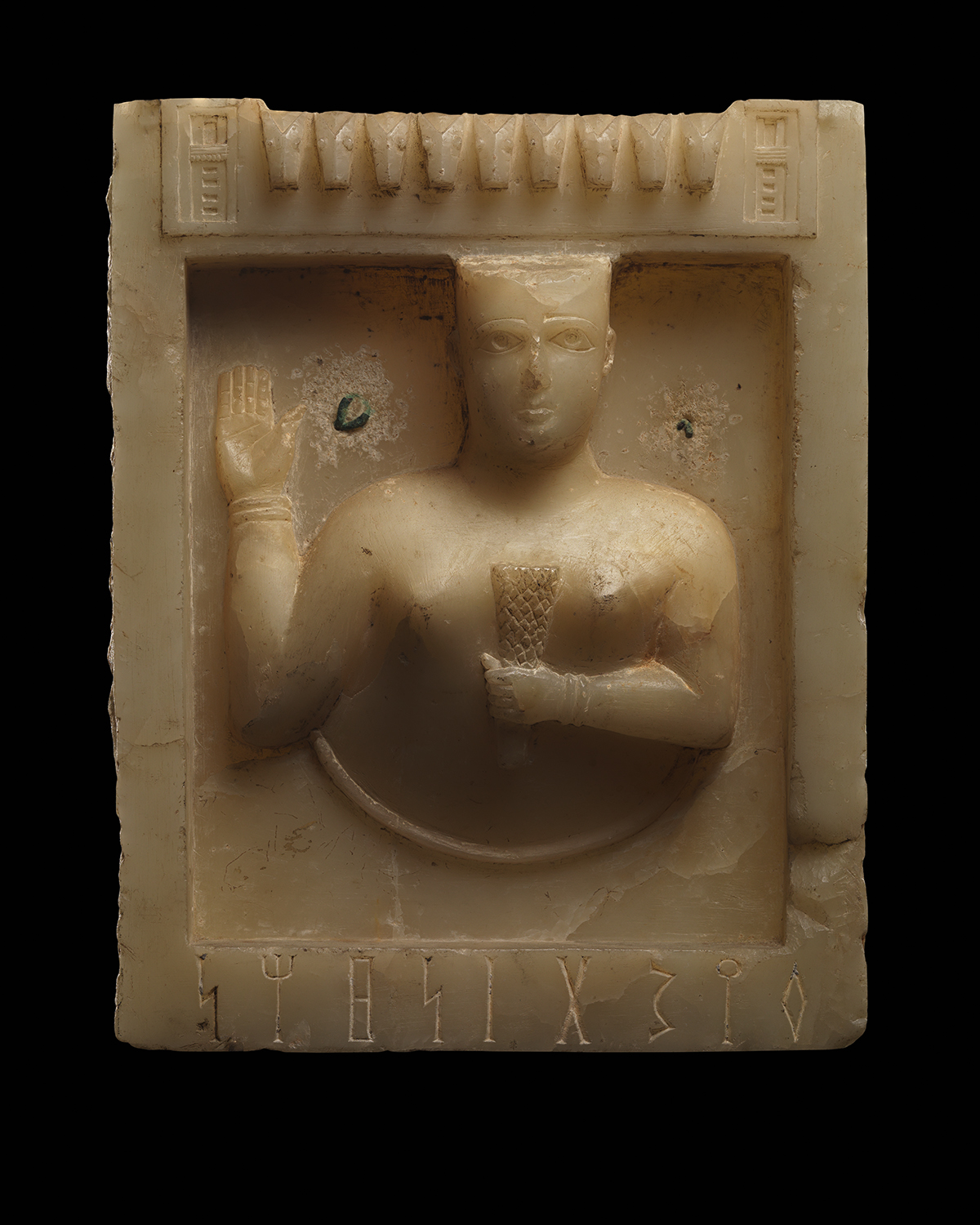
More than two thousand years after her death, Fayšat is known to us by just nine letters. Carved beneath the image of a woman on an alabaster stele, a Qatabanian inscription identifies her as “Fayšat [of the family of] Naḍḥān”. Almost everything else about her life has disappeared. Yet the monument created in her memory has a history that can be followed through museum exhibitions, auction catalogues, a dealer’s typed description and the collections of two remarkable twentieth-century figures.
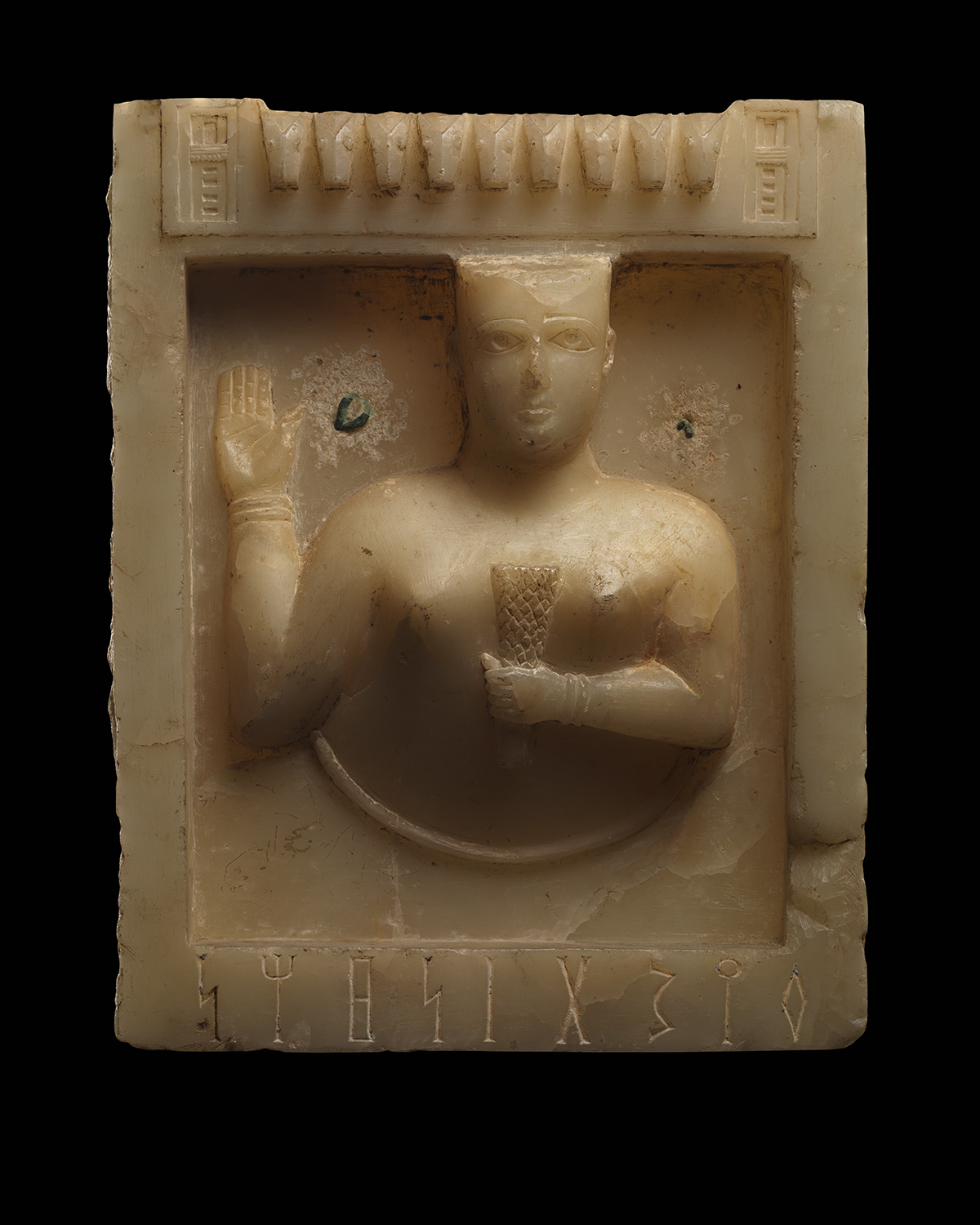
Dating to around the late first century BC, the Dedicatory Stele of Fayšat was made in the kingdom of Qataban, in present-day Yemen. Its creamy yellow calcite-alabaster surface is carved in high relief: one hand is raised, palm outward, while the other holds ears of grain against the chest. Bracelets circle the wrists; nine ibex heads run across the upper frame. The large almond-shaped eyes once held inlays, traces of a sculptural tradition in which the gaze was central to the figure’s presence.
A name preserved in stone for millennia
Fayšat’s image belongs to a distinctive group of roughly thirty related South Arabian funerary stelae, surviving complete or in fragments.
Their frontal female figures, architectural borders and inscriptions have prompted sustained study of religious imagery and commemoration in Qataban. The raised hand may convey veneration or protection; the grain may suggest fertility or abundance. The family name Naḍḥān also appears on monuments associated with Ḥayd ibn ‘Aqīl, the cemetery near Timna, capital of Qataban.
Excavations in 1950 and 1951 by Wendell Phillips and his team unearthed several sites in the city, including the South Gate, private residences, a structure identified as a temple complex and the necropolis. The alabaster heads and stelae were found in the vicinity of the cemetery. A further head was discovered in 1962 by a British officer stationed in Aden. The finds are all roughly carved on the reverse and often squared off at the top and back, suggesting that they were designed to be placed within niches in a shrine; several of the sculptures were found together within the antechamber of a crypt.
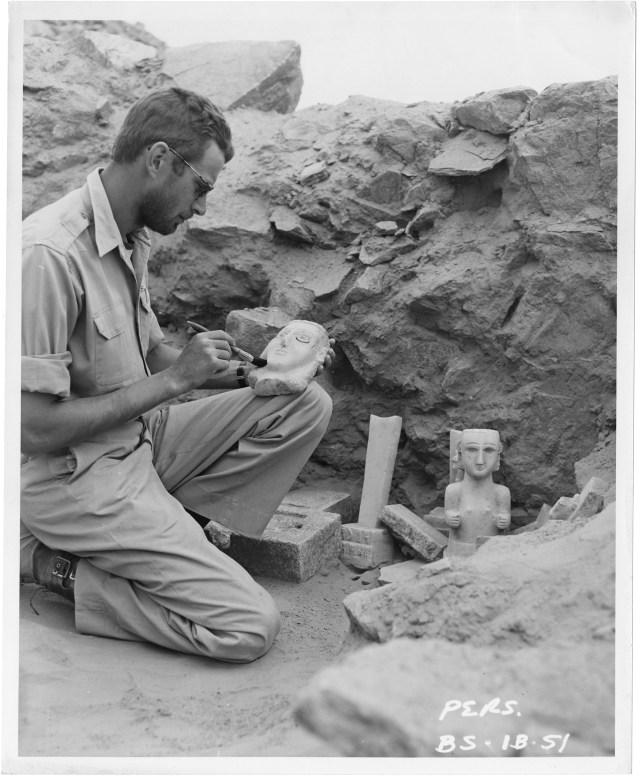
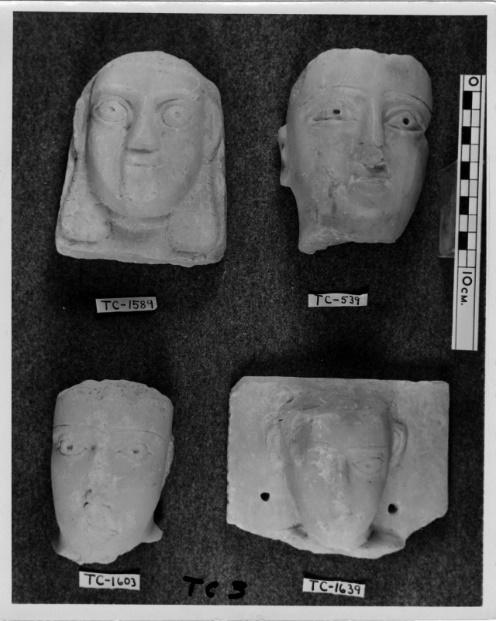
Photographs from Wendell Phillips’ 1950–51 excavation of Timna, where alabaster heads of a similar style were found (National Museum of Asian Art, Washington, DC).
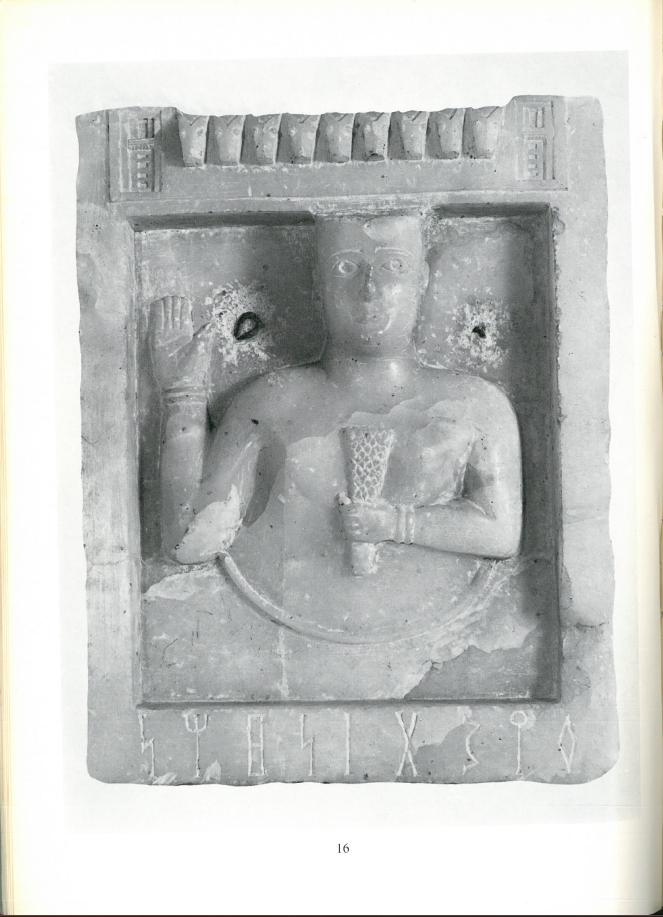
Egyptian, Western Asiatic, Irish Bronze Age, Greek, Etruscan, Roman, Celtic, Anglo-Saxon and Byzantine Antiquities, Islamic Pottery and Metalwork, Sotheby’s, London, 13 July 1970, lot 16, pp. 12–13.
A British officer in the former kingdom of Qataban
The earliest named modern owner of the stele was Captain John Aylward (1929–1986), a Royal Artillery officer posted to the Western Aden Protectorate in September 1958. Seconded to the Second Battalion of the Aden Protectorate Levies, he served in the Bayhan region, a landscape that had once formed part of the Qatabanian kingdom. The stele is recorded as having been acquired by him in South Arabia in 1958.
Aylward assembled a collection of ancient South Arabian inscriptions and sculptures, many associated with Timna and its cemetery. His interest went beyond collecting. According to the British Museum’s biographical archive, he sought advice from the archaeologist Sir Mortimer Wheeler, corresponded with the museum’s R. D. Barnett and submitted an unpublished account of his observations in “Qataban” in 1960. These records provide valuable context for his collecting activities, even though they do not document the circumstances of excavation of Fayšat’s stele.
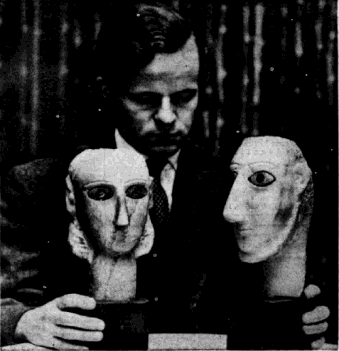
Two Qatabanian heads from Aylward’s collection at Birmingham City Museum. ‘Day by Day: Beachcombing on the Incense Route’, The Birmingham Mail, 17 February 1961.
When Aylward returned to Britain in November 1959, the collection soon entered public view. He lent 27 objects to the Bowes Museum at Barnard Castle from May 1960, before material from the collection was shown at Birmingham City Art Gallery and Museum from October that year. The Stele of Fayšat is documented in both exhibitions.
The 1970 sale and a surviving Brussels document
On 13 July 1970 the stele appeared at Sotheby & Co. in London as lot 16 in a sale of antiquities and Islamic works of art. Its inclusion in the printed catalogue, with an illustration, is a particularly useful point in the provenance: the object can be identified by its composition, its ibex frieze and the inscription along the lower border. The buyer was Paul Delplace, an antiquities dealer operating from 30 rue de Namur in Brussels. A typed description on his letterhead also survives.
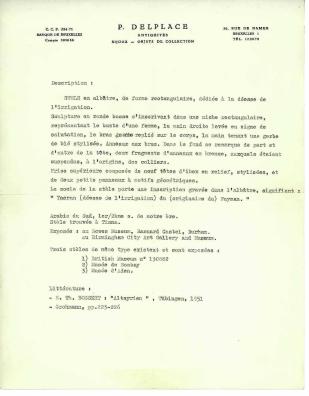
The surviving description on the letterhead of Paul Delplace, Brussels, naming the earlier museum exhibitions and describing the relief in detail.
Written in French, Delplace’s description records the female bust, the lifted hand, the grain, the ibex heads and the small geometric panels above the figure. It also notes the earlier Bowes and Birmingham exhibitions. Some of the iconography was then understood differently: the document describes the monument in relation to an irrigation goddess, whereas the modern epigraphic reading identifies Fayšat by name and family.
From Delplace the stele passed into the collection of Carlo Bombieri in Milan. It was subsequently inherited by his son Enrico Bombieri, beginning a lengthy chapter of family ownership that would bring the monument back into a museum setting and into scholarly literature.
The Bombieri family and Princeton
Enrico Bombieri, born in Milan in 1940, is one of the leading mathematicians of his generation. Awarded the Fields Medal in 1974, he spent much of his career at the Institute for Advanced Study in Princeton. The stele’s presence in the Bombieri family collection led to one of its most significant exhibitions in the United States.
In 1997 the work was lent by Enrico Bombieri to “In Celebration: Works of Art from the Collections of Princeton Alumni and Friends of the Art Museum”, held at Princeton University from 22 February to 8 June. The exhibition catalogue reproduced the stele in colour as no. 5. That published image shows how the monument was presented to a new audience and provides a further dated record of its identity within a named private collection.

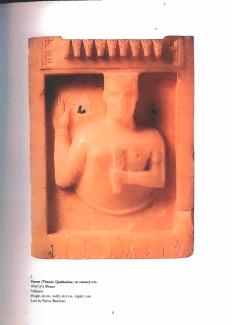
The stele reproduced as no. 5 in the 1997 Princeton exhibition catalogue, which identifies Enrico Bombieri as the lender.
Its scholarly record continued to grow. The inscription was entered as CSAI I 270 in Alessandra Avanzini’s corpus of South Arabian inscriptions, published in 2004, and the work was illustrated in further research on ancient Yemen in 2009. It is also recorded in the Digital Archive for the Study of pre-Islamic Arabian Inscriptions.
From the 2017 auction to the present
After descending through the Bombieri family, the stele returned to Sotheby’s in London on 29 November 2017, offered as lot 73 in the “Ancient Sculpture and Works of Art” sale. The catalogue brought together its earlier 1970 sale history, the museum exhibitions and the Princeton loan. Daniel Katz Ltd., London, acquired it at that sale. On 1 February 2018 it was acquired from Katz for a UK private collection, where it remained until 2026.
The surviving records thus trace the object through named custodians from Aylward in 1958 to Delplace, the Bombieri family and Daniel Katz, with public exhibition and publication at important points along the way.
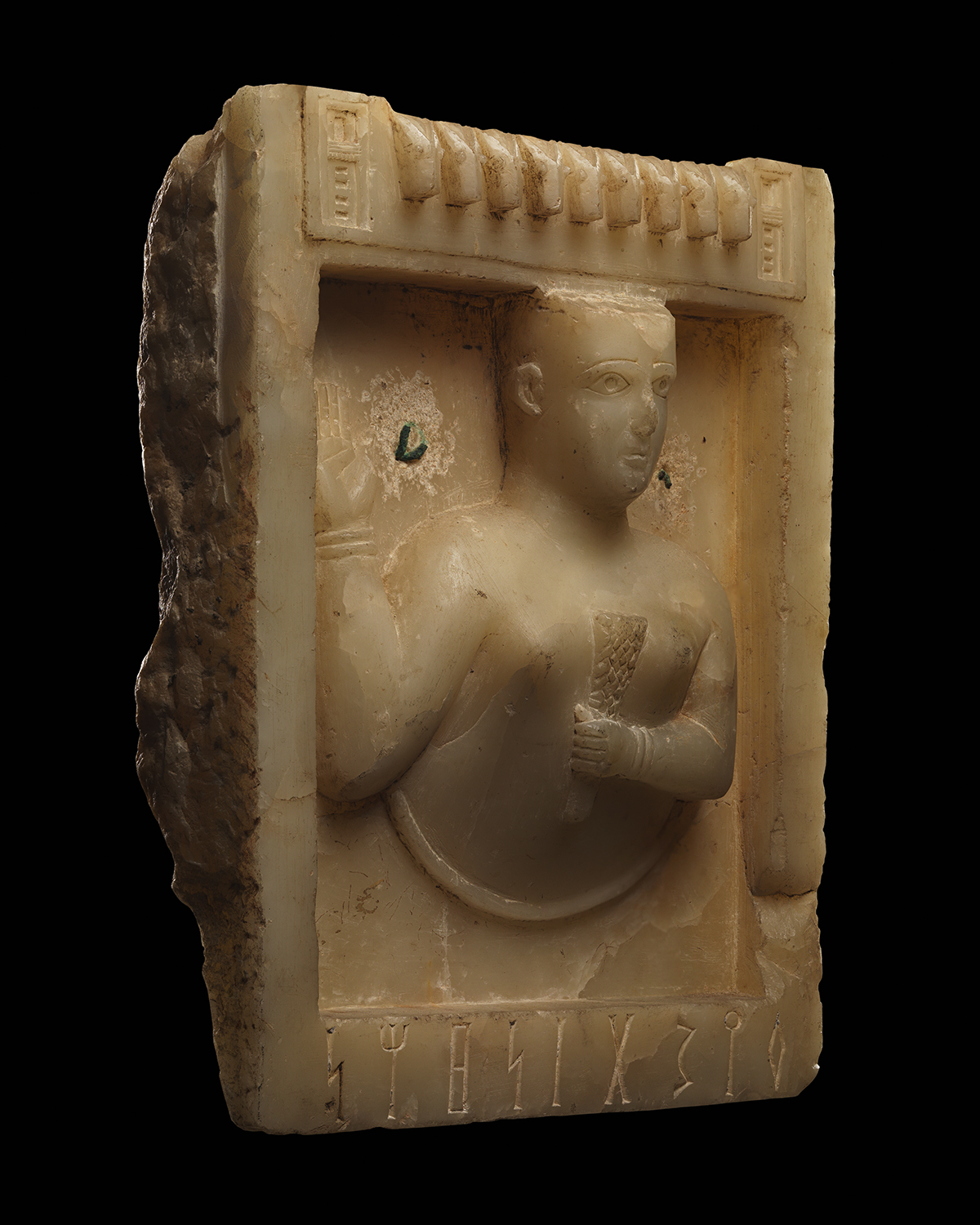
A three-quarter view showing the depth of the high relief and the substantial carved stone frame.
Market parallel
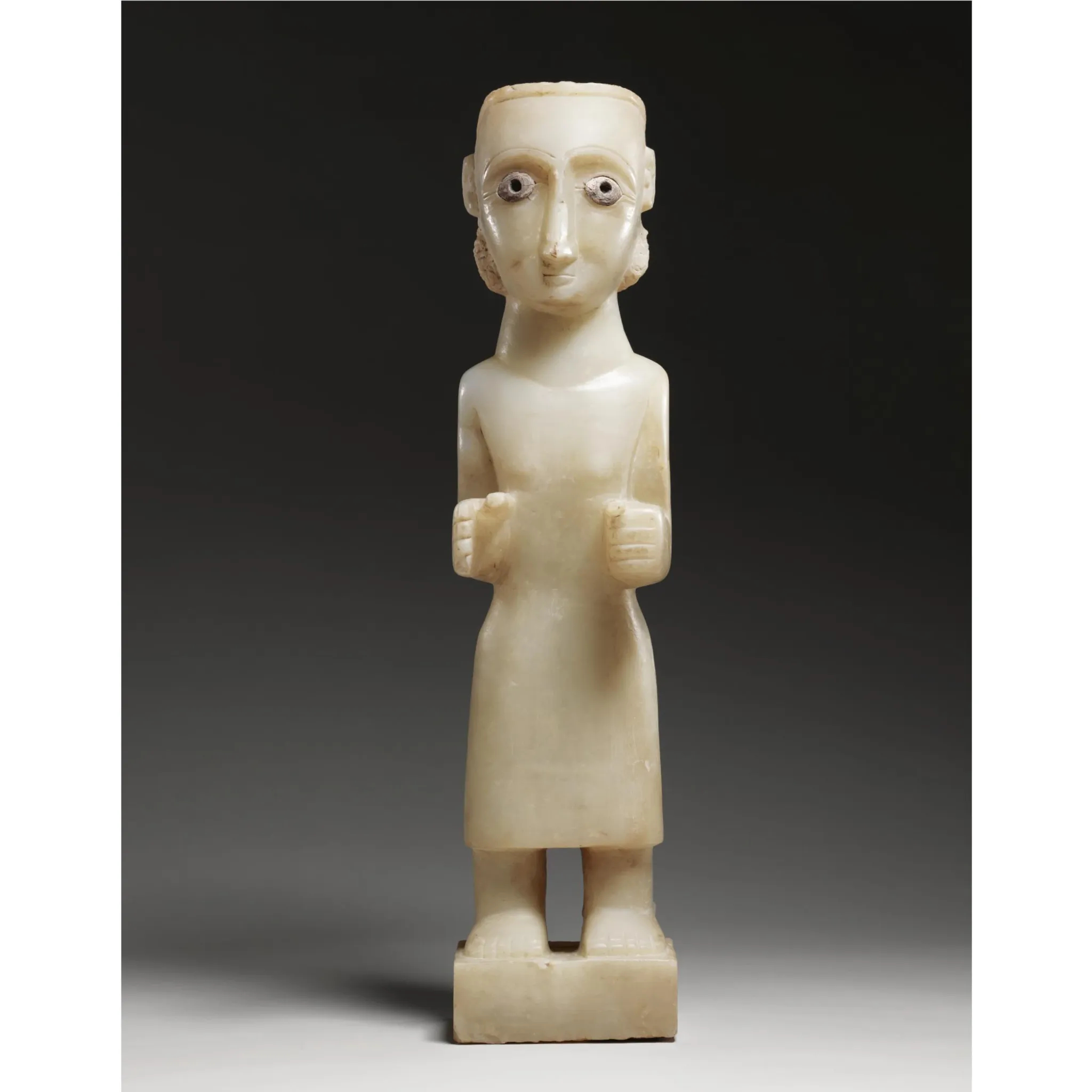
An Alabaster Figure of a Woman, Qataban, South Arabia, circa 3rd–1st century BC. Alabaster, height 59.3 cm.
Provenance: Guido Cetti Collection, Massawa; Tribolati Collection; Münzen & Medaillen AG, Basel; André Emmerich, New York.
Auction: Sotheby’s, New York, Antiquities, 5 December 2007, lot 32.
Estimate: $400,000–600,000.
Price realised: $1,217,000.
The world that made Fayšat
Qataban was one of several powerful kingdoms that flourished in the southern Arabian Peninsula during the first millennium BC. Centred on its capital Timna, in present-day Yemen, the kingdom developed in a region linked by caravan routes to the wider Arabian Peninsula and the Mediterranean world. Trade in aromatics, particularly frankincense and myrrh, helped make South Arabia famous in classical antiquity.
These costly commodities were sought for use in religious ceremonies, funerary rites and domestic life. Their movement through desert caravan networks supported prosperous urban communities, sophisticated systems of writing and an important tradition of sculpture and architectural decoration.
The Roman world knew the region as Arabia Felix, or ‘Fortunate Arabia’, a name reflecting both its perceived wealth and its place within the ancient luxury trade.
Portrait stelae and dedicatory monuments provide important clues as to the role of women in the religious and funerary culture of ancient South Arabia. Although the precise status of Fayšat cannot be established from the inscription alone, the resources devoted to commissioning her likeness suggest that her memory was considered worthy of substantial artistic attention.


 Where to find us?
 Newsletter
 Instagram
 Linked in
 Email