Journal
Published 5/8/2025
Published 5/6/2025
Published 5/7/2025
Published 5/8/2025
Published 5/16/2025
Published 5/27/2025
Published 6/25/2025
Published 7/18/2025
Published 10/21/2025
Published 12/19/2025
Published 2/2/2026
Published 2/5/2026
Published 2/11/2026
Published 2/16/2026
Published 5/30/2025
Published 2/25/2026
Published 3/2/2026
Published 10/3/2022
Published 3/23/2026
Published 3/25/2026
Published 4/9/2026
Published 4/13/2026
Published 5/4/2020
Published 4/23/2026
Published 4/29/2026
Published 5/7/2026
Published 5/13/2026
Published 5/19/2026
Published 5/26/2026
Published 11/1/2024
Published 10/12/2022
Published 6/12/2026
Published 10/1/2024
Published 6/24/2026
Published 7/3/2026
Published 11/1/2023
Published 7/17/2026
Published 7/20/2026
Published 8/5/2025
Published 11/17/2022
Published 8/6/2026
Published 11/6/2025
Published 11/7/2024
Published 11/5/2024
Published 11/3/2024
Published 8/6/2020
Published 8/6/2020
Published 8/6/2026
Published 8/6/2026
Published 8/6/2026
Published 8/6/2026
Published 1/4/2026
Published 9/5/2024
Published 9/7/2021
Published 1/1/2025
Published 2/2/2025
Published 8/17/2026
Published 8/24/2026
Published 8/20/2026
Published 9/9/2026
Uncovering the history of a Bronze Lioness in a respected private Egyptian collection
Published 01/09/2026

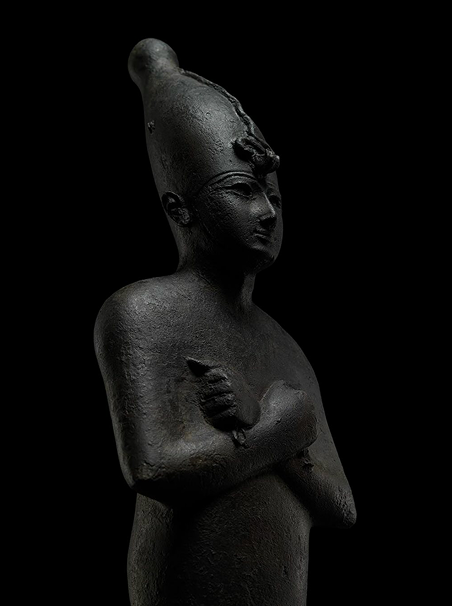
In Ancient Egypt, the gods Amun and Khnum were both represented with a ram’s head, and, in later depictions, were both shown with horns curving towards the face as in this example. The association with the lioness in this statuette suggests it's likely Khnum depicted, as his consort, the goddess Mehit, who was often shown as a lioness.
Khnum
Khnum was one of the most ancient gods of Egypt, who was worshipped from as early as the Predynastic Period and into the early centuries CE. Originally a water god, Khnum was the patron god of the First Cataract (area of rapids) of the Nile, and protector of its source. The Egyptians believed that the waters of the Nile proceeded from the god Nun from a hole in the earth at Elephantine, where one of Khnum’s most important temples was based.
The inundation waters bearing fertile mud were also thought to come from this source; Khnum often features in creation myths using a potter’s wheel and primordial mud to create man and his ‘ba’ (spirit), to create children within their mother’s womb, and to assist in birth alongside the frog goddess Heqet. In some myths, Khnum is said to have created the ‘First Egg’ from which the sun was born. He also had an important cult in Esna, south of Thebes. The unification of Khnum and his consort Mehit in this statuette, as well as the pronounced nipples of the lioness, aligns with his role as creator and fertility god.
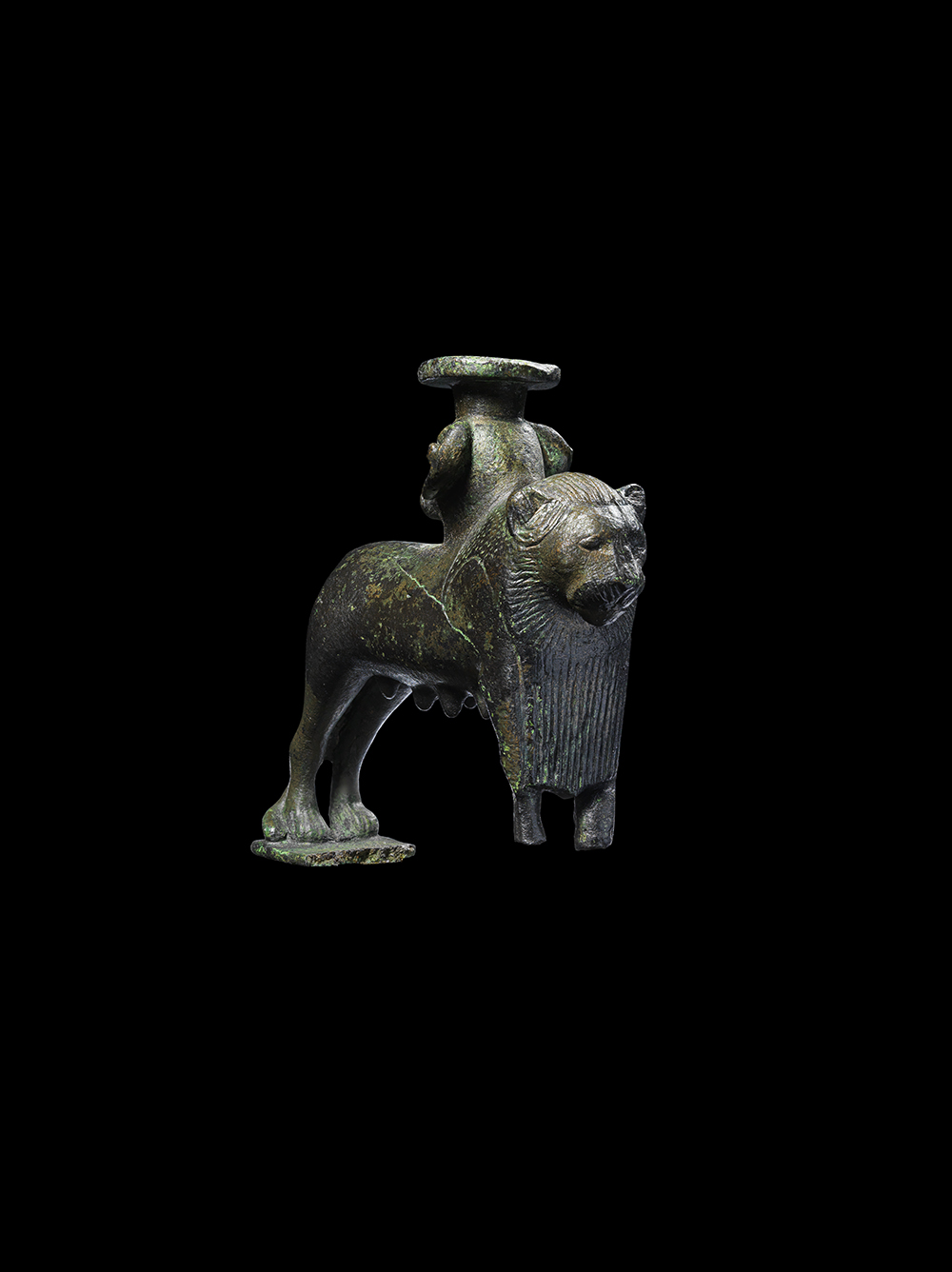
Image: Bronze Lioness with Head of Khnum or Amun, Late Period or Ptolemaic Period, c. 664-32 BC, Egypt. Image: David Brunetti
A provenance discovery
Best practice for selling antiquities requires verifiable documentation proving that an item left its country of origin prior to the 1970 UNESCO Convention on the sale of cultural property. The Lioness was previously in the private family collection of the Marquis de Chasseloup-Laubat, however, further documentation was needed to reach the 1970 threshold.
The David Aaron team undertook research via our extensive in-house library, and in external archives, searching for evidence of the Bronze. This exercise uncovered an image of the Lioness in a catalogue for the 1922 Galerie Georges Petit sale in Paris titled 'Collection du Dr Fouquet, du Caire'. The sale presented pieces from the highly respected French-born, Cairo-based collector Dr Daniel Marie Fouquet (1850-1914).
Dr Fouquet amassed an impressive collection of Egyptian, Coptic and Islamic antiquities which was known for its visual beauty, extensive research, and documentation. He gathered a wide range of Egyptian bronzes, including a group of statuettes from the 26th Dynasty and the early Ptolemaic period that were found near Tanis in the northeastern Nile Delta. His focus on Egyptian bronzes was unique in collectors prior to the twentieth century. Dr Fouquet’s collection was dispersed through sales in Paris after his death in 1922.
The catalogue from the sale featured the Bronze Lioness as lot 96; the entry highlights the piece’s exquisite craftmanship and it was selected as one of the few works to be illustrated.
This discovery confirmed solid evidence of private ownership prior to 1970, and provided the link between Egypt and France that ties Dr Fouquet’s sale to the Chasseloup-Laubat family.
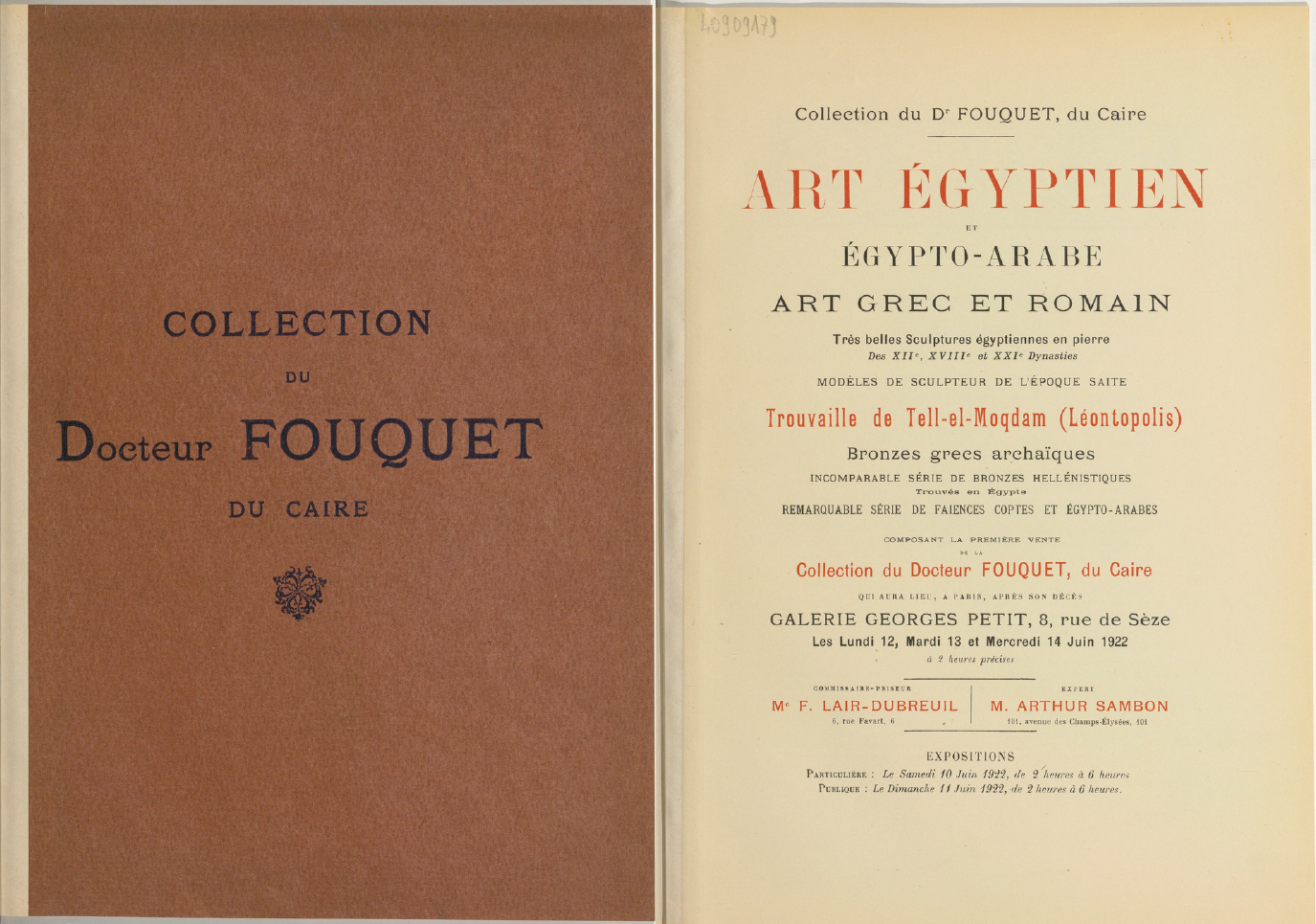 Image: Collection du Dr Fouquet, du Caire, Galerie Georges Petit, Paris, 12-14 June 1922, Lot 96.
 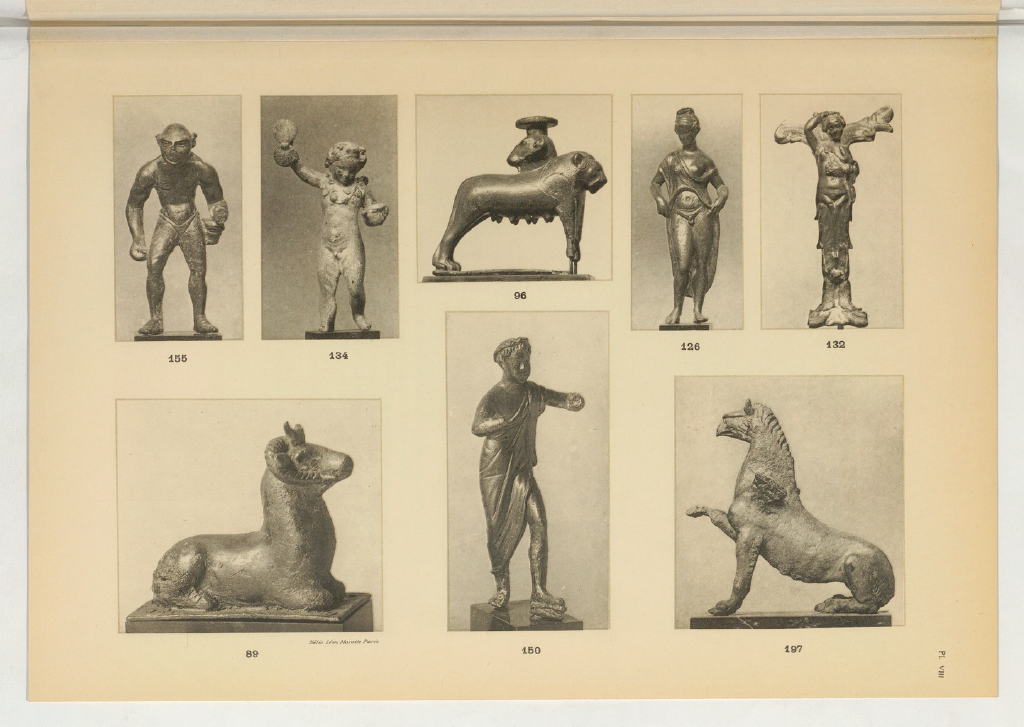 Image: Collection du Dr Fouquet, du Caire, Galerie Georges Petit, Paris, 12-14 June 1922, Lot 96.


 Where to find us?
 Newsletter
 Instagram
 Linked in
 Email
Email