Journal
Published 5/8/2025
Published 5/6/2025
Published 5/7/2025
Published 5/8/2025
Published 5/16/2025
Published 5/27/2025
Published 6/25/2025
Published 7/18/2025
Published 10/21/2025
Published 12/19/2025
Published 2/2/2026
Published 2/5/2026
Published 2/11/2026
Published 2/16/2026
Published 5/30/2025
Published 2/25/2026
Published 3/2/2026
Published 10/3/2022
Published 3/23/2026
Published 3/25/2026
Published 4/9/2026
Published 4/13/2026
Published 5/4/2020
Published 4/23/2026
Published 4/29/2026
Published 5/7/2026
Published 5/13/2026
Published 5/19/2026
Published 5/26/2026
Published 11/1/2024
Published 10/12/2022
Published 6/12/2026
Published 10/1/2024
Published 6/24/2026
Published 7/3/2026
Published 11/1/2023
Published 7/17/2026
Published 8/5/2025
Published 11/17/2022
Published 8/6/2026
Published 11/6/2025
Published 11/7/2024
Published 11/5/2024
Published 11/3/2024
Published 8/6/2020
Published 8/6/2020
Published 8/6/2026
Published 8/6/2026
Published 8/6/2026
Published 8/6/2026
Published 1/4/2026
Published 9/5/2024
Published 9/7/2021
Published 1/1/2025
Published 2/2/2025
Published 8/17/2026
Published 8/24/2026
Published 9/1/2026
Published 8/20/2026
Published 9/9/2026
Frieze feature: Exceptionally preserved Egyptian wooden statue
Published 20/07/2026

The figure would likely have been placed within a tomb to serve its owner in the afterlife, reflecting the interwoven roles of faith and status in ancient Egyptian civilisation, in both life and death.
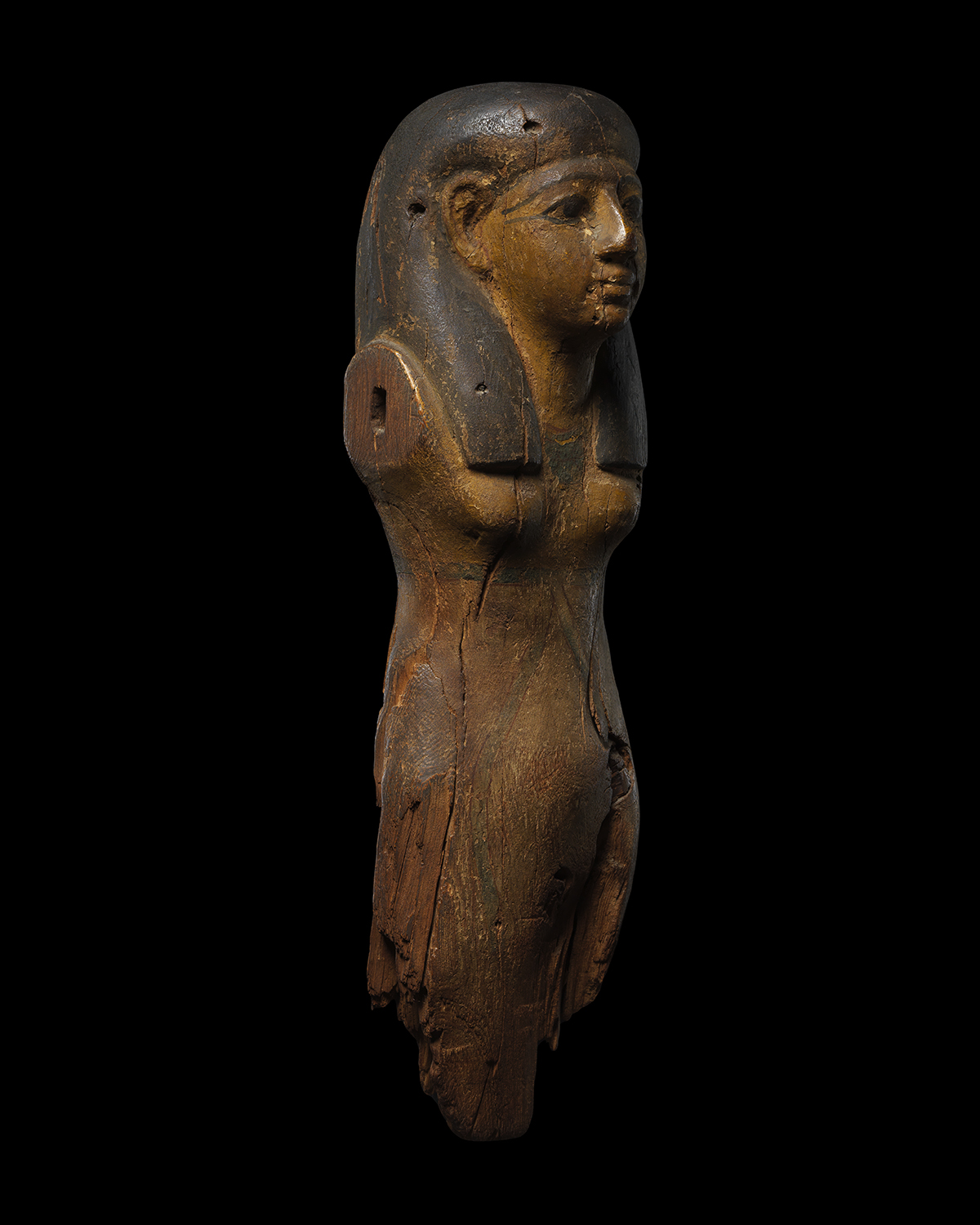
Place names would often be written beside these figures, identifying them as the personifications of estates that would supply provisions for the owner in the afterlife.
A pair of large, intricately painted female offering bearers were discovered in a hidden chamber within the tomb of the 12th Dynasty royal chief steward Meketre during the 1920 excavations led by Herbert Winlock. These pieces are now in the Metropolitan Museum of Art, New York, 20.3.7, and the Egyptian Museum, Cairo, JE 46725.
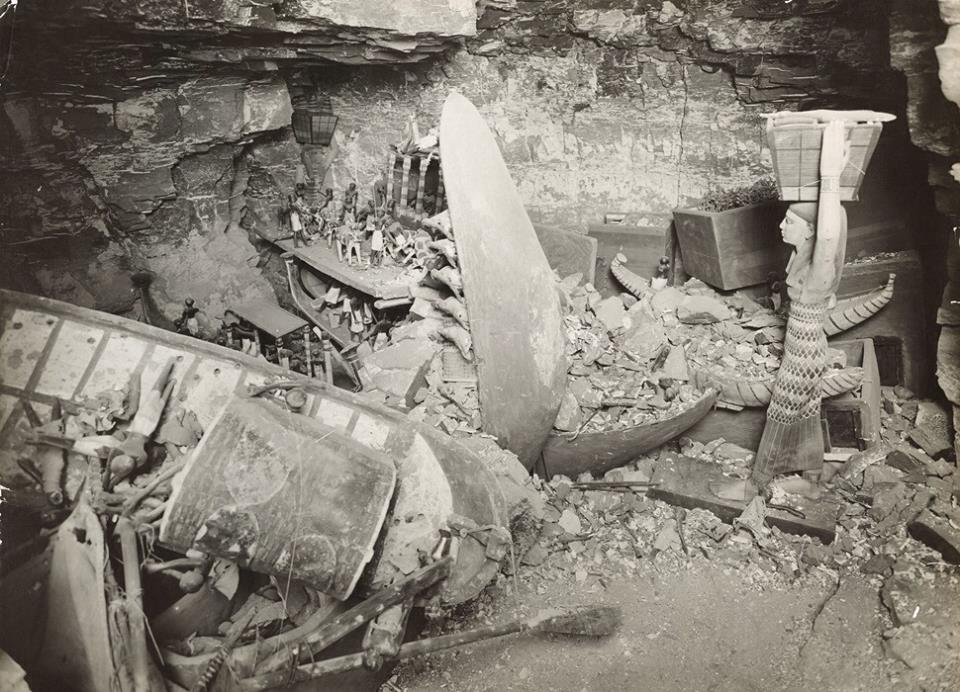 Wooden offering figure in the hidden chamber of Meketre’s tomb. Thebes, 18 March 1920.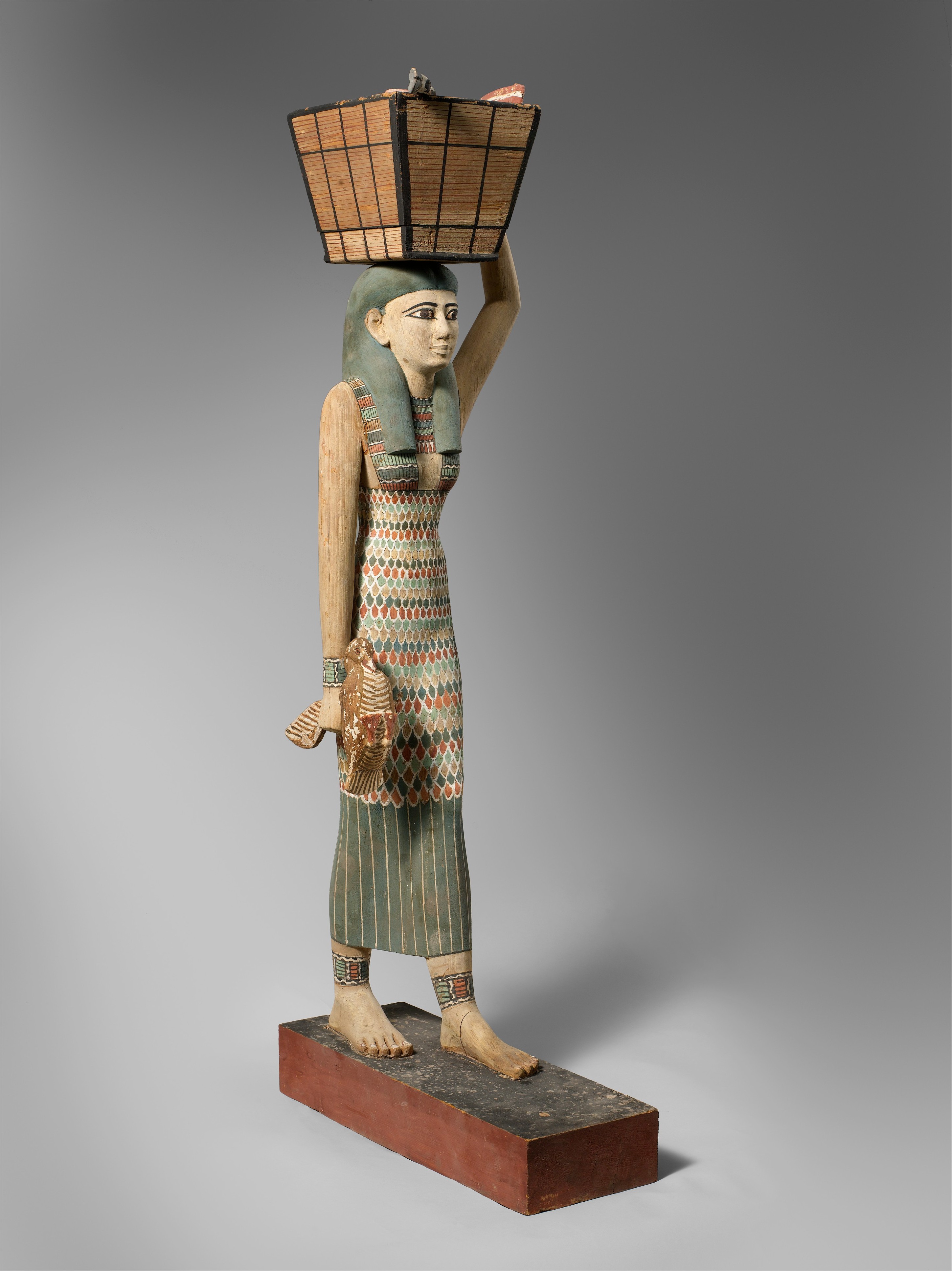
Estate Figure, Circa 1981-1975 B.C., Middle Kingdom, Egypt Wood, The Metropolitan Museum, New York, Rogers Fund and Edward S. Harkness Gift, 1920.
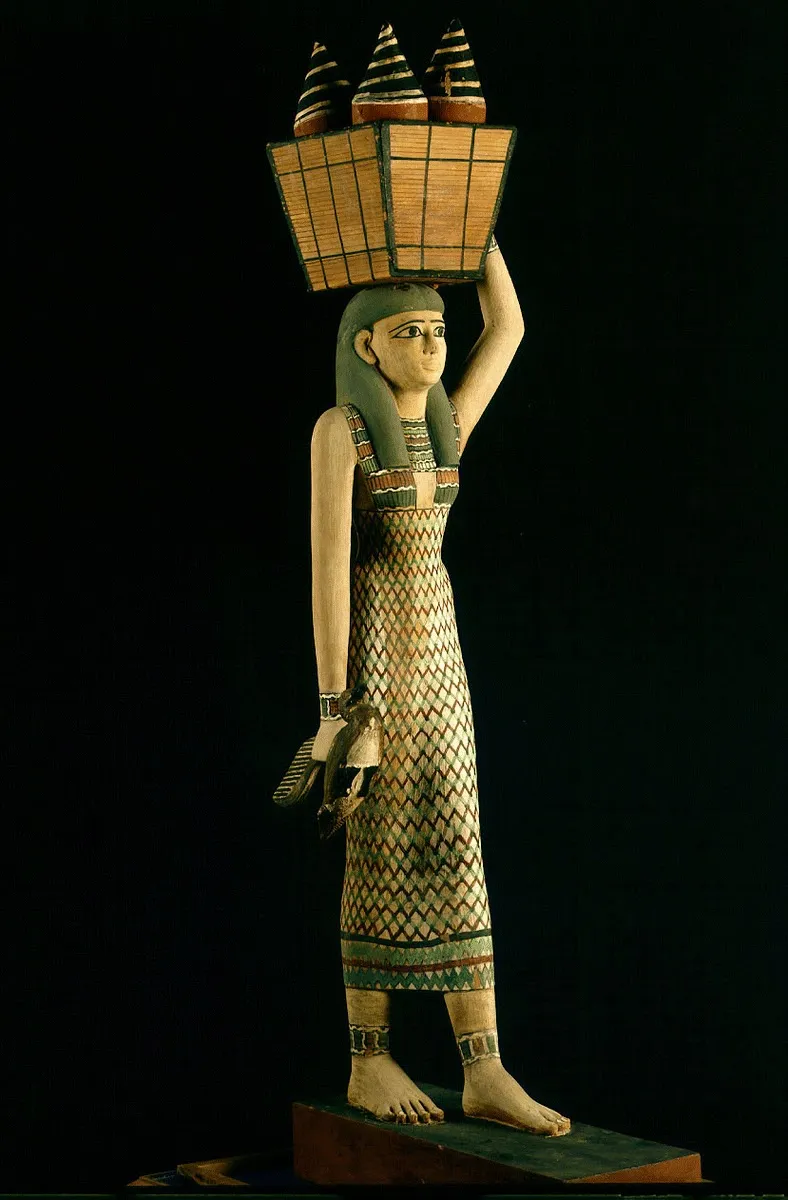
Statue of a woman carrying offerings, Circa 1981-1975 B.C., Middle Kingdom, Egypt, Egyptian Museum, Cairo.
It's all in the details
The sculpture is remarkable not only for its substantial size but also its condition: the statue retains extensive and vibrant polychrome decoration, which rarely survives so well from antiquity. Wooden figures of this kind were produced throughout ancient Egyptian history, but the majority surviving today were made during the Middle Kingdom, a time which saw carvings of increasing variety and personalisation.
The figure sports a high-waisted dress or skirt, which is tied under the breasts with deep greenish-blue ribbons, outlined finely in ochre. She wears a wide wesekh collar composed of triangular, spherical, and cylindrical beads around her neck. The long tripartite wig, painted a rich, dark black, falls to the top of her chest and down her back.
The wide nose and mouth, with thick, slightly upturned lips, are carved out of the surface of the face, while the large eyes and eyebrows are painted on in black. The eyes are wide and almond-shaped and outlined with long cosmetic lines which extend towards the large, round ears on either side of the face, which are also outlined in ochre paint.
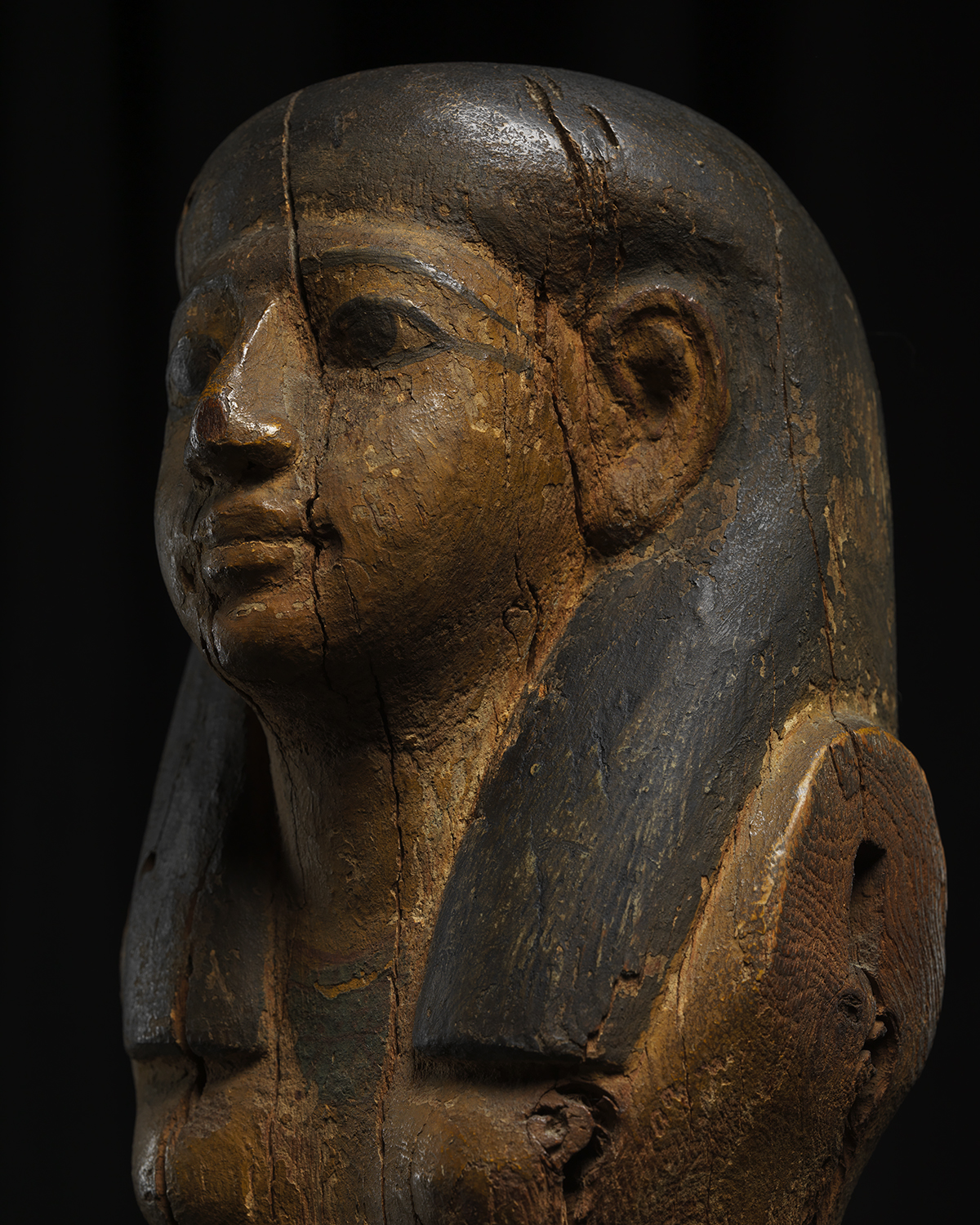
Statue of a Female Offering Bearer, Late 11th- Early 12th Dynasty, Middle Kingdom, Egypt. Image: David Brunetti
Distinguished 20th-century provenance
The sculpture is further distinguished by its prestigious provenance, which offers insight into the diverse practices of creative communities in 20th-century Paris; it was handled by a master craftsman, and owned by one of art academia’s renegades. The statue was previously in the collection of French art-historian, museologist, and critic Madeleine Rousseau (1895-1980), as early as 1962. Rousseau is respected for her significant contributions to the study of non-Western art and the musées vivantes or ‘living museum’ movement.
At the age of 36, Rousseau entered the École du Louvre to study art history. Following this, Rousseau taught 20th-century French art at the British Institute of the University of Paris, and worked as an attaché at the Musée du Luxembourg and as a lecturer at the Musées Nationaux.
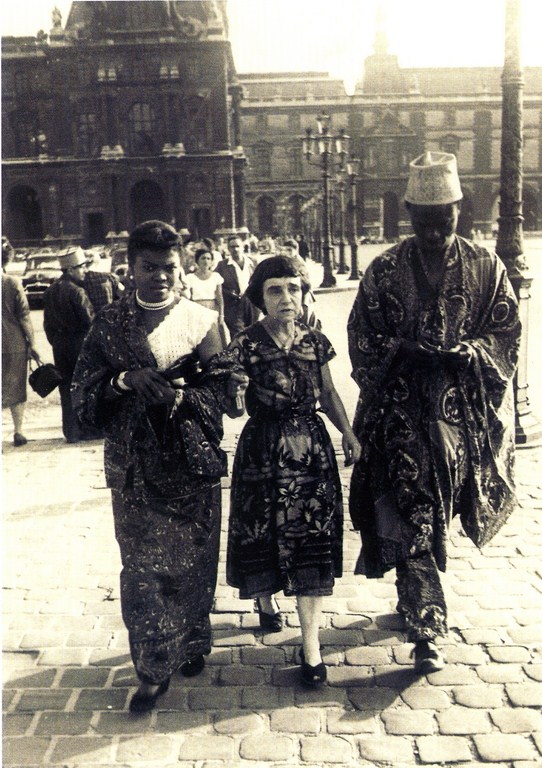
Madeleine Rousseau (1895-1980), centre, outside the Musée du Louvre, Paris.
Post-World War II, Rousseau joined APAM (l’Association popular des amis des musées), where she gave lectures and edited their journal, Le Musée Vivant. The journal addressed art from all different cultures and periods, with particular focus on advocating for an expanded approach to African arts. In 1963, Rousseau taught art in Egypt, a period she recorded in her personal diaries.
Rousseau built her expansive collection of African and non-European arts through her network of connections from APAM and the Musée de l’Homme. By the start of the 1960s, her collection was noted for both its quantity and the remarkable quality of the pieces. Her apartment in Paris was transformed into a small-scale salon, where visiting artists and intellectuals would gather.
Her collection of African art was exhibited at the Musée de Saint-Rambert in 1966, provoking both interest and outrage in the small French town. Following the exhibition, Rousseau donated part of her collection to the museum in 1967, and in 1977 she retired to Saint-Rambert, where she lived until her death in 1980.
The statue of an offering bearer was sold in an auction of Rousseau’s collection at Hôtel Drouot in Paris in 1962, and was one of few pieces illustrated in the auction catalogue.
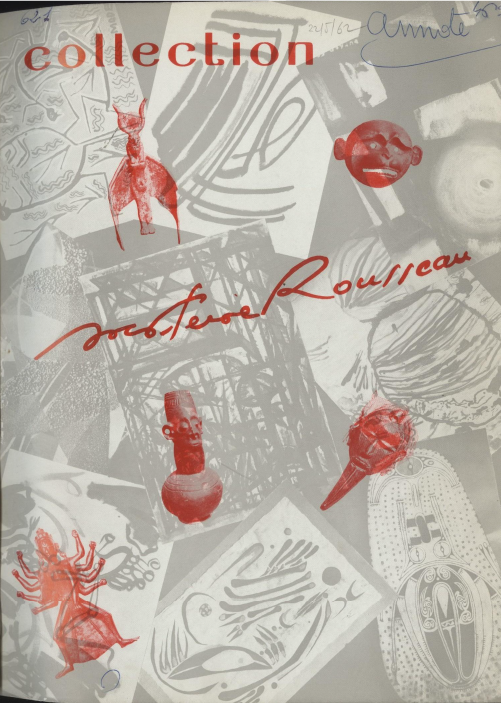
Collection Madeleine Rousseau, Hôtel Drouot, Paris, 23 May 1962, Lot 27, pl. 1.
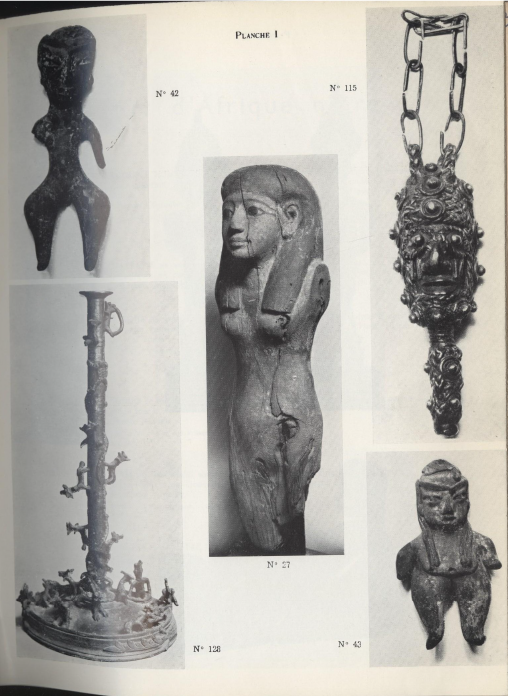
Collection Madeleine Rousseau, Hôtel Drouot, Paris, 23 May 1962, Lot 27, pl. 1.
An expert maker's mark
Still earlier provenance is recorded through the seal of renowned artisan, and cabinet- and stand-maker, Kichizô Inagaki, on the statue’s wooden base. Inagaki died in 1951, firmly placing the statue in Paris on or prior to this date.
Inagaki was a prizewinning artisan from Murakami, Japan, who moved to Paris in 1906. By 1911 or 1912, he had begun to create mounts for dealers, including Joseph Brummer. While employed by Brummer, Inagaki met Rodin, who was looking for someone to restore pieces from his own collection, and began working for the artist. Through this, Inagaki rose to prominence as a maker in Paris, working with the likes of Paul Guillaume, Louis Carré, and Béla Hei. He also continued to work for various antiquities dealers, including Dikran Kelekian, Joseph Altounian, and Charles Ratton, creating mounts for objects in private collections and on the art market.
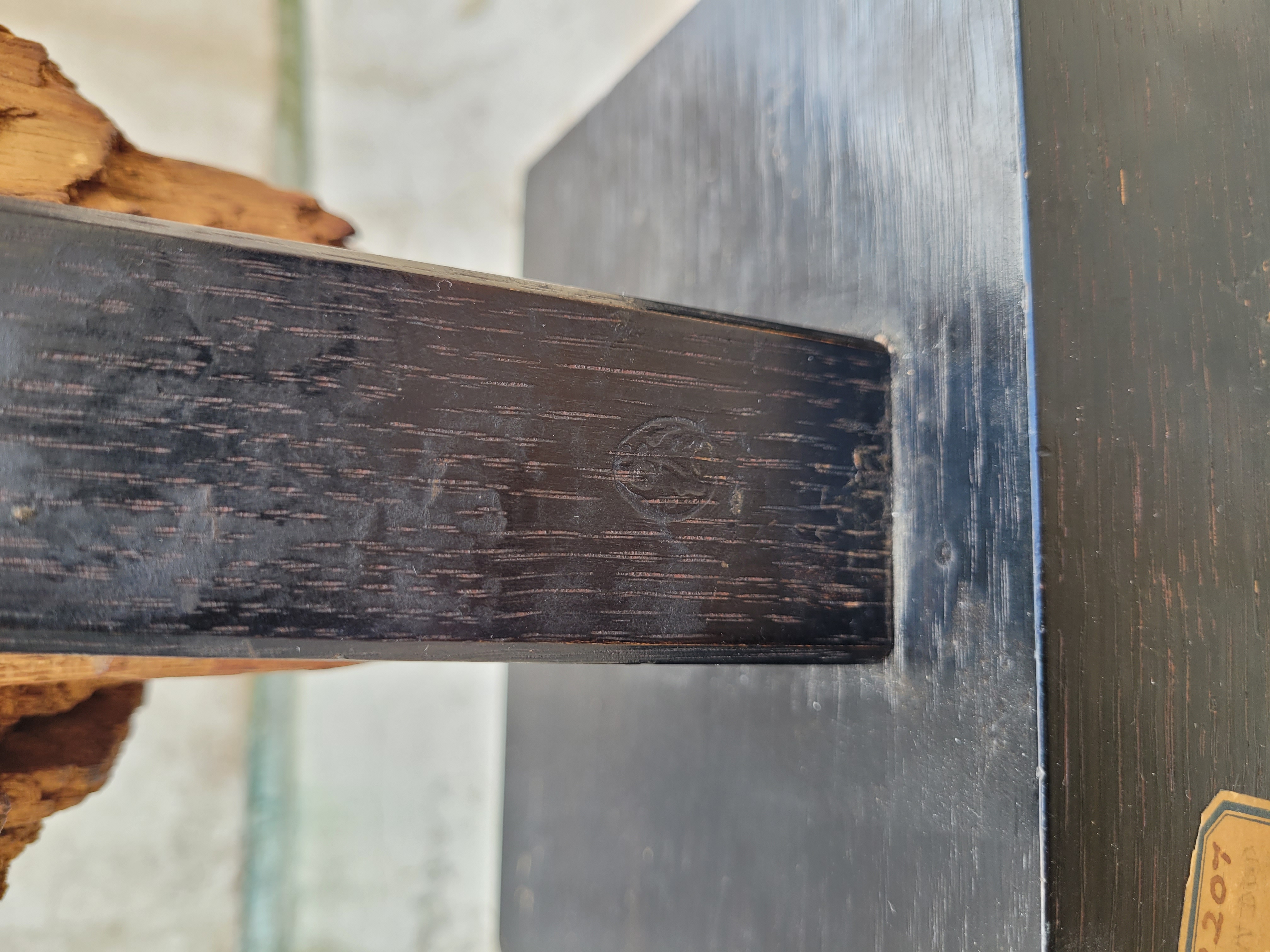
Inagaki seal on the reverse of the mount.
On show at Frieze Masters
The Statue of a Female Offering Bearer forms part of David Aaron’s exhibition at Frieze Masters 2026, on display at The Regent’s Park from 14-18 October at stand C02. To enquire about the Statue of a Female Offering Bearer, contact info@davidaaron.com.
Find out more about our Frieze Masters exhibition here: www.davidaaron.com/event-details/50431



 Where to find us?
 Newsletter
 Instagram
 Linked in
 Email
Email