Journal
Published 5/8/2025
Published 5/6/2025
Published 5/7/2025
Published 5/8/2025
Published 5/16/2025
Published 5/27/2025
Published 6/25/2025
Published 7/18/2025
Published 10/21/2025
Published 12/19/2025
Published 2/2/2026
Published 2/5/2026
Published 2/11/2026
Published 2/16/2026
Published 5/30/2025
Published 2/25/2026
Published 3/2/2026
Published 10/3/2022
Published 3/23/2026
Published 3/25/2026
Published 4/9/2026
Published 4/13/2026
Published 5/4/2020
Published 4/23/2026
Published 4/29/2026
Published 5/7/2026
Published 5/13/2026
Published 5/19/2026
Published 5/26/2026
Published 11/1/2024
Published 10/12/2022
Published 6/12/2026
Published 10/1/2024
Published 6/24/2026
Published 7/3/2026
Published 11/1/2023
Published 7/17/2026
Published 7/20/2026
Published 8/5/2025
Published 11/17/2022
Published 8/6/2026
Published 11/6/2025
Published 11/7/2024
Published 11/5/2024
Published 11/3/2024
Published 8/6/2020
Published 8/6/2020
Published 8/6/2026
Published 8/6/2026
Published 8/6/2026
Published 8/6/2026
Published 1/4/2026
Published 9/5/2024
Published 9/7/2021
Published 1/1/2025
Published 2/2/2025
Published 8/17/2026
Published 8/24/2026
Published 9/1/2026
Published 9/9/2026
Princess, Priestess, and Performer: An Ushabti with a 19th-Century Provenance
Published 20/08/2026

The ushabti is represented in standard form, with mummified arms crossed over the chest, holding a crook and flail over the shoulders. The body is inscribed with seven lines of hieroglyphs, which wrap around the front of back of the ushabti. The text quotes Chapter Six of the Book of the Dead, the most widely copied text from ancient Egyptian funerary literature.
The chapter is addressed directly to the ushabti, calling on it to perform any work necessary for its owner in the underworld – the agricultural tools held by the ushabti indicate that its role is to tend the fields to provide for the deceased.
The owner is identified as ‘Mistress of the House, Udjarenes’.
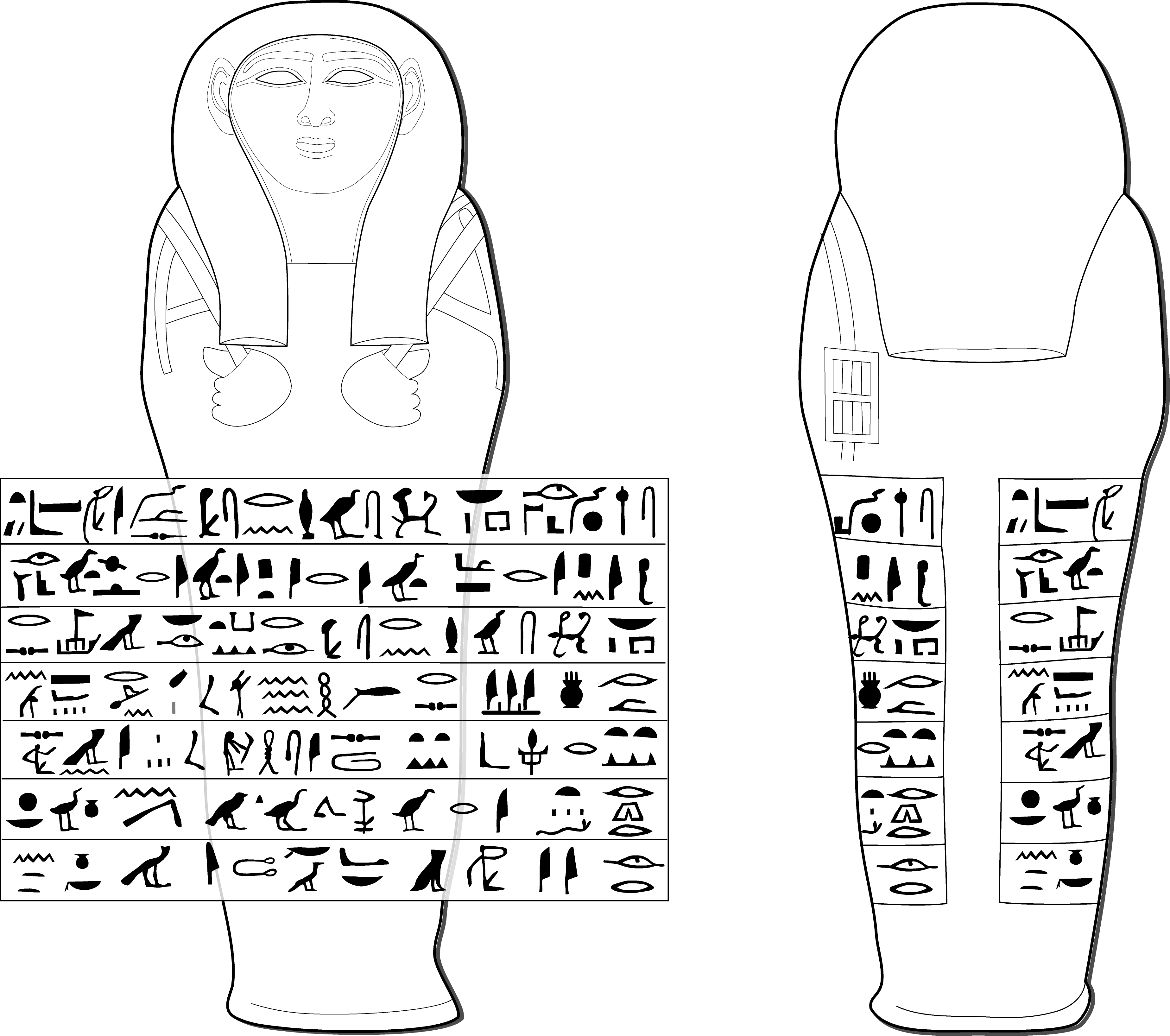
Udjarenes (or Wadjrenes) was an incredibly elite woman, who probably held not insignificant power and influence in her day. Daughter of Piankhy-Har and granddaughter of 25th Dynasty pharaoh Piye (d. 714 BC), Udjarenes held the prestigious, powerful positions of Priestess of Hathor and Singer of Amun in her own right. Ten other shabtis of Udjarenes have been found, including two in the British Museum (EA68986 and EA24715), two in the Egyptian Museum in Cairo, and one in the Berlin Museum (10663).
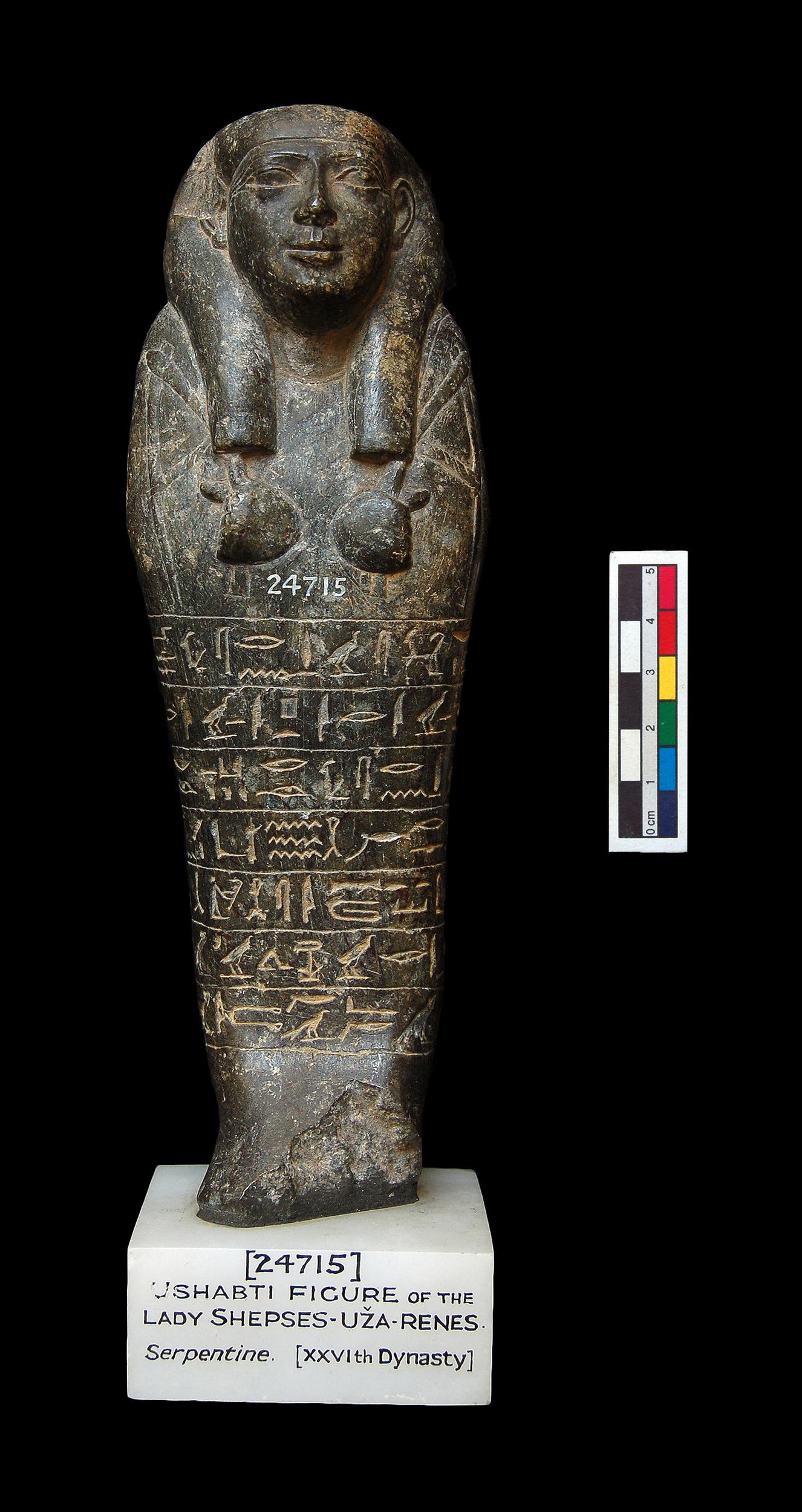
Image: Steatite ushabti of Udjarenes, The British Museum, London, EA2471
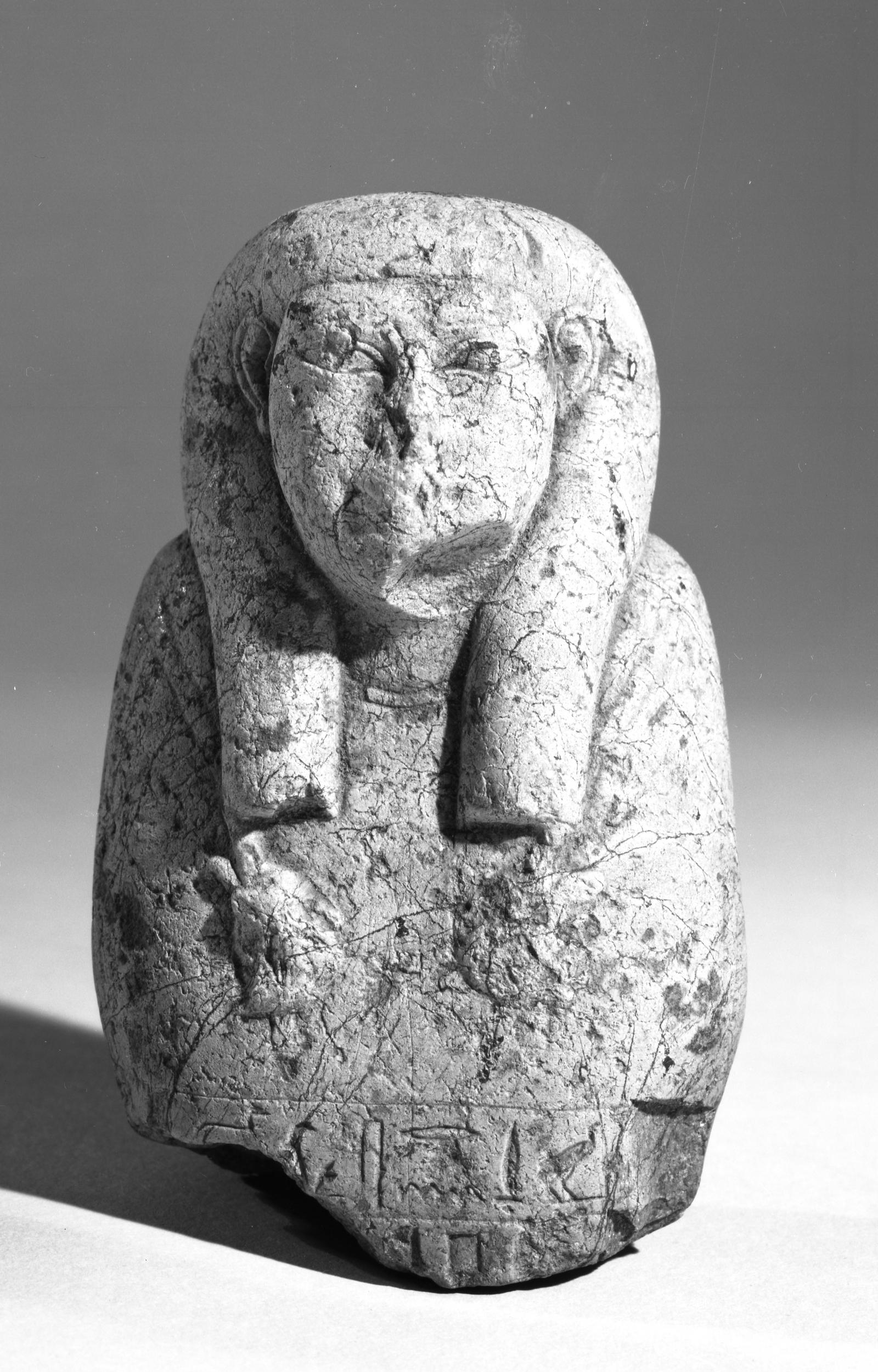
Image: Upper part of a serpentine ushabti of Udjarenes, The British Museum, London, EA68986
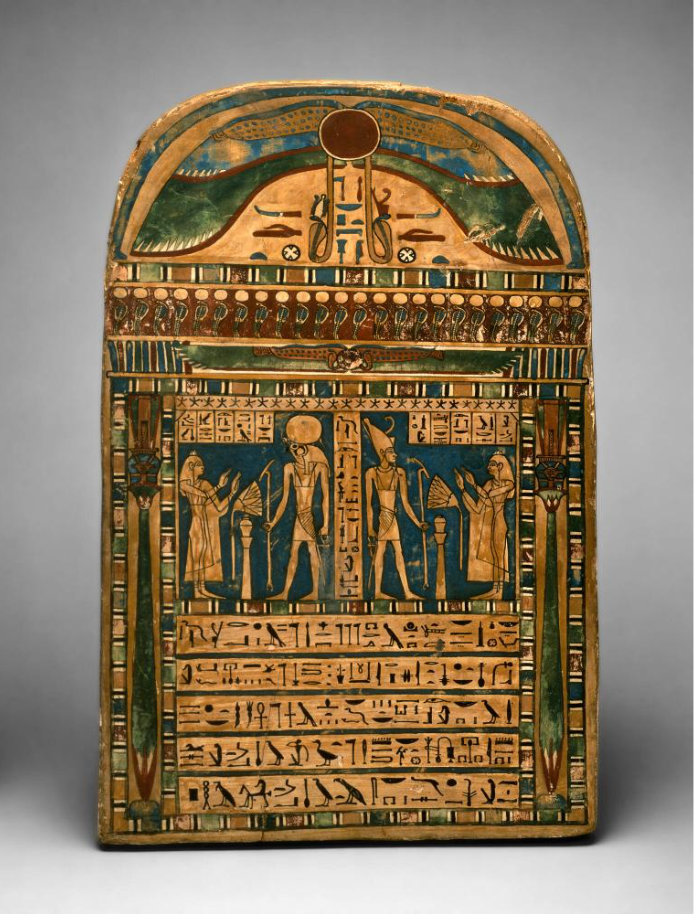
Image: Funerary stele of the house-mistress Udjarenes, 664-610 BC, Pigment and plaster on wood, Seattle Art Museum, Seattle, WA, 48.224
Even though Udjarenes was one of three wives of Montuemhat, she is the only one mentioned in his tomb in El-Assasif (TT34) – one of the largest ever constructed in ancient Egypt for a private individual, and carved with highly fine reliefs in archaising Old Kingdom style. Udjarenes was probably buried in this tomb alongside her husband, and was represented in the tomb’s statuary as well as its inscriptions.
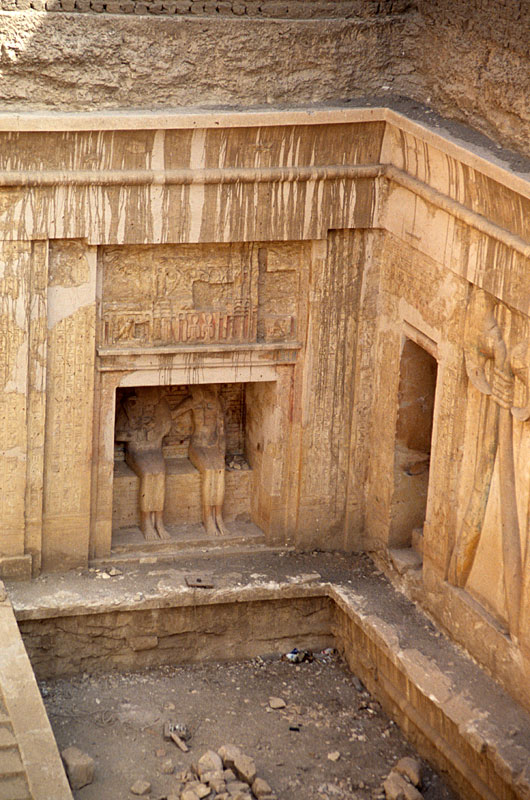
Image: Seated statues of Montuemhat and Udjarenes, TT34, Thebes
Leader of the ‘Crazy Heads’
When David Aaron gallery bought the ushabti in 2023, it was accompanied by the same provenance that was published in the Christie’s 2015 auction which featured the sculpture. The piece had been in the collection of industrialist Alton Edward Mills (1882-1970) and then passed down through his family by descent. After the 2015 sale, the ushabti was with the London art market, before it was sold to a private American collector in November 2018.
At this stage, the earliest publication for the ushabti was the 2015 Christie’s catalogue. An entry in a 1958 inventory of Mills’ collection refers to ‘3 ushabtis pierre noire’ (3 black stone ushabtis), but it is not clear whether this refers to the ushabti of Udjarenes specifically.
It was not until David Aaron’s researchers found this ushabti published and illustrated in a Sotheby’s catalogue dating to 1924 that its earlier provenance became clear.
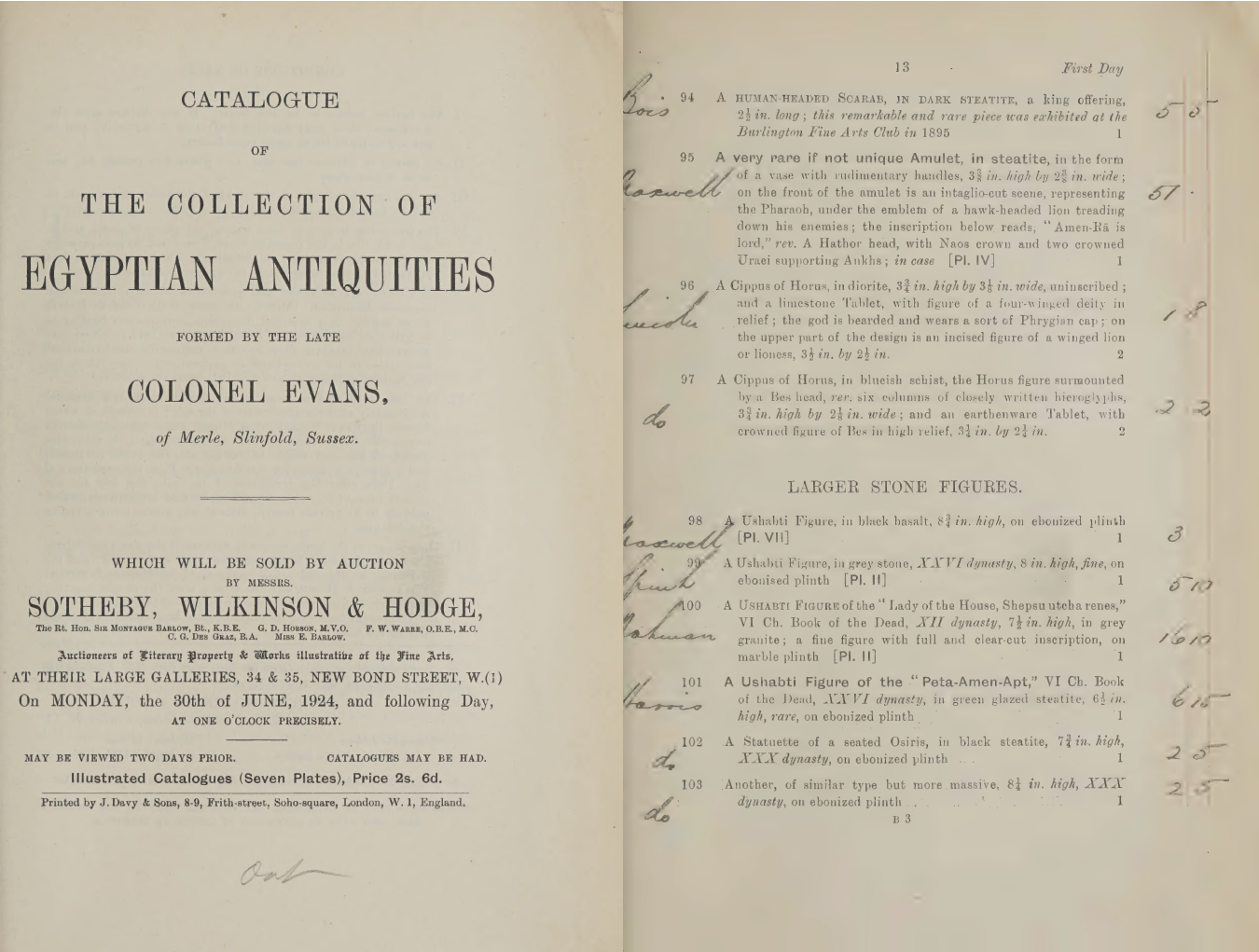 Image: Catalogue of The Collection of Egyptian Antiquities formed by the late Colonel Evans of Merle, Slinfold, Sussex, Sotheby, Wilkinson & Hodge, 30 June 1924, London, Lot 100
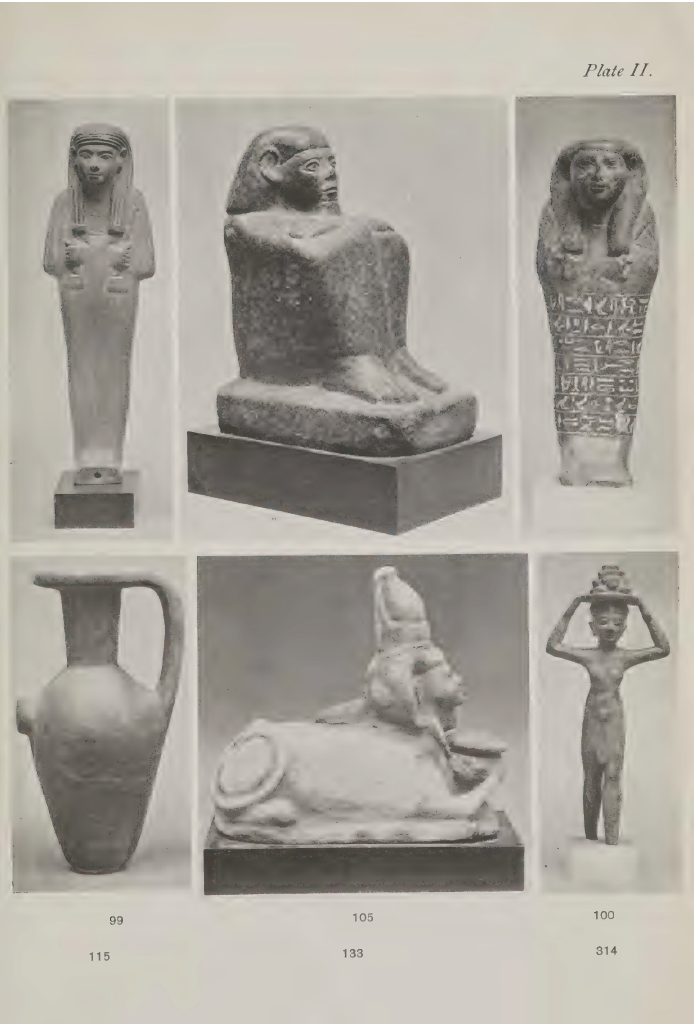
Image: Catalogue of The Collection of Egyptian Antiquities formed by the late Colonel Evans of Merle, Slinfold, Sussex, Sotheby, Wilkinson & Hodge, 30 June 1924, London, Lot 100
The ushabti for Udjarenes appeared as Lot 100 in the 30 June 1924 sale of the collection of Egyptian antiquities belonging to ‘Colonel Evans of Merle, Slinfold, Sussex’. This refers to Lieutenant-Colonel John ‘Bashi’ Evans (1828-1903), a member of a prominent family of bankers and industrials based in the historic mill village of Darley Abbey, Derbyshire. Evans was quite a character – he first purchased a Cornetcy in the 6th (Inskilling) Dragoons in December 1854, but was dismissed less than a year later for his involvement in a prank featuring a fake duel!
Although he was not the guilty party, Evans worked to save his reputation by volunteering for the personal staff of Major-General Sir W Fenwick Williams during the Crimean War. Once he arrived in Turkey, Evans organised reinforcements to defend the city of Kars, which was then under siege from the Russian army. He learned the Turkish language, and was soon given command of the Ottoman Bashi-Bazouk forces (literally translated as ‘crazy heads’). The Bashi-Bazouks were known for their great bravery, but also for looting and preying on civilians – they were expected to sustain themselves with food and other provisions. Evans led this guerrilla force to Erzeroum in eastern Turkey and began attacking and spying on the Russian army there. The colonel was awarded the Turkish General Service medal and the nickname ‘Bashi’ for his role defending Kars. According to Major Anson, who served alongside Evans at his next posting during the Indian Rebellion of 1857, ‘Evans slept in a puddle today. Strongest man I know. Yesterday two hours up to his breast in water under burning sun surrounded by alligators which he attempted to catch by their noses. He has only a slight cold today’. Evans also took to wielding a hog spear in battle, leading to its addition to the 9th Lancers’ Regimental silver. He returned to England in May 1859 and retired from active service some years later. He and his wife lived in the village of Slinfold in Horsham, Sussex until his death in 1903.
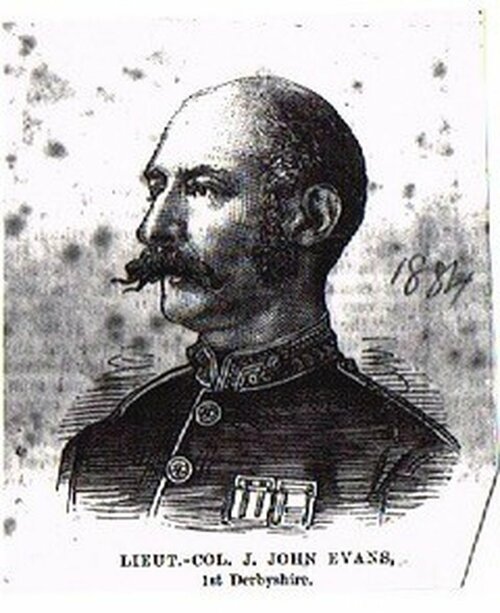
Image: Lieutenant-Colonel John ‘Bashi’ Evans
The 1924 catalogue, therefore, gives a confirmed provenance dating back to 1903 at the very latest. It is most likely that it entered Evans’ collection at an even earlier date, however. A keen Egyptologist, the core of Evans’ collection was formed in the late 1850s and early 1860s, while the 9th Lancers were stationed in Egypt. He frequently returned to Egypt between 1870 and 1900, and continued to add to his collection. From 1880 onwards, he was in frequent touch with renowned Egyptologists Francis Llewellyn Griffith, Percy Newberry, and Sir Flinders Petrie. Evans exhibited works from his collection at the Burlington Fine Arts Club in 1895, and a large number of his scarabs were published in Newberry’s 1905 book on the subject.
David Aaron’s research, therefore, uncovered around 100 years of additional history attached to the Ushabti of Udjarenes. The ushabti, originally crafted for a powerful princess in ancient Thebes, presented an enduring appeal throughout the centuries, attracting two successive Egyptologists into acquiring the pieces for their collections in the 19th and 20th centuries.



 Where to find us?
 Newsletter
 Instagram
 Linked in
 Email
Email