Grouped Pair of Standing Female Idols


Grouped Pair of Standing Female Idols
9.05 x 0 cm (3 ¹/₂ x 0 inches)
Plaster (lime)
Sold
 Enquire
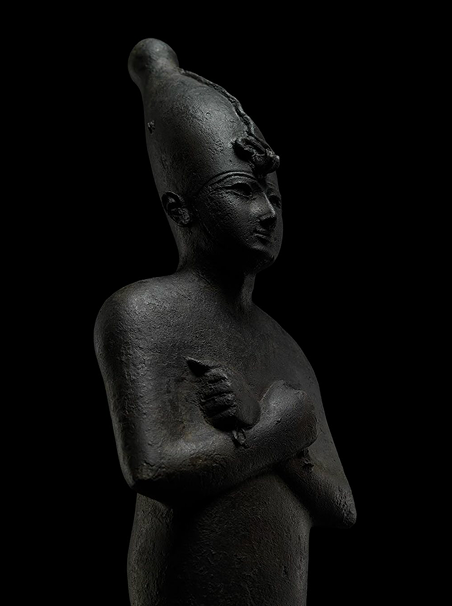
A grouped pair of nude steatopygous female figures, joined at the side with inside arm around the opposite’s shoulder. Each figure’s outer arm bent at the elbow, with hand resting above their naval. Belly and legs indicated by incised lines.
An unusual variation to the ‘Venus’ figures which are so synonymous with early neolithic art, this idol presents two female figures together, suggesting a familial, or even perhaps a more intimate, relationship. They date from a period when human beings were moving away from the traditional hunter gatherer societies and beginning to form communities based around arable farming and husbandry, settling and staying in areas which then became permanent villages. One of the best preserved and largest of these neolithic towns is Çatalhüyük in modern day Turkey, which existed from approximately 7500 B.C. to 5200 B.C. A number of female idols have been discovered there, giving weight to argument that these societies may have incorporated the worship of a female fertility goddess, or goddesses, into their religion.
The material used, lime plaster, is an unusual one, as most surviving neolithic figures tend to be of stone or terracotta. One of the only other few examples is a group of largescale lime plaster and reed figures which were discovered at the archaeological site of ʿAin Ghazal in Jordan. A total of 15 statues and 15 busts were discovered in the village, and have been dated to around 7200-6500 B.C.
The exact purpose and meaning of enigmatic and overtly female figures such as these has been lost, but links to fertility, fecundity and the harvest have often been assumed, especially when one considers that one of the finest examples, the Seated Woman of Çatalhüyük, was discovered within a grain storage container. They have been found as far back as the Palaeolithic period, nearly thirty thousand years ago, and continue into the early Bronze Age. The repetition of certain traits, such as them being often featureless, with large breasts, bellies and thighs, and often pregnant, has led some scholars to posit that they represent an overarching Mother Goddess, or female Supreme Creator, who was eventually supplanted by the patriarchal religions of the Bronze Age. The fact that almost all of them are petite, small enough to hold in the hand and easily portable, stems most likely from their origin amongst nomadic tribes, a tradition then carried on when the tribes settled into the earliest human villages.
These figures have fascinated experts and artists since their discovery, often being touted as the earliest examples of figurative art in the round. Judy Chicago included, in her iconic 1979 feminist work The Dinner Party, a ceremonial banquet table where each place setting celebrates famous women from history, ‘The Fertile Goddess’, a reference to these extraordinary female figures. Their aesthetic is celebrated by artists such as Fernando Botero, whose women share their ample proportions, and you can see in Jenny Saville’s exploration and celebration of the female body an homage to objects like the Venus of Willendorf, whose figure, it has been suggested, comes from the sculptor looking down at her own pregnant body and copying what she saw.
Metropolitan Museum of Art, New York, February 1988 - 26 November 2019, (accession no. L.1988.7.1, received as a consignment 21 February 1986 and accepted on loan February 1988).
Previously in the Private Collection of Jeannette and Jonathan P. Rosen (d. 2026), Boston, U.S.A., from at least 21 February 1986 (when consigned to the Metropolitan Museum).
ALR: S00224413, with IADAA Certificate, this item has been checked against the Interpol database.
Jeanette and Jonathan P. Rosen (d. 2026) began collecting antiquities in the 1970s and loaned many pieces to U.S. museums. Jonathan was the founder and CEO of Rosen Partners LLC, a successful real estate investment firm. They were also major philanthropic benefactors, supporting the Brigham and Women’s Hospital and other local Boston institutions.

 Established 1910


 Where to find us?
 Newsletter
 Instagram
 Linked in
 Email